


Editorial
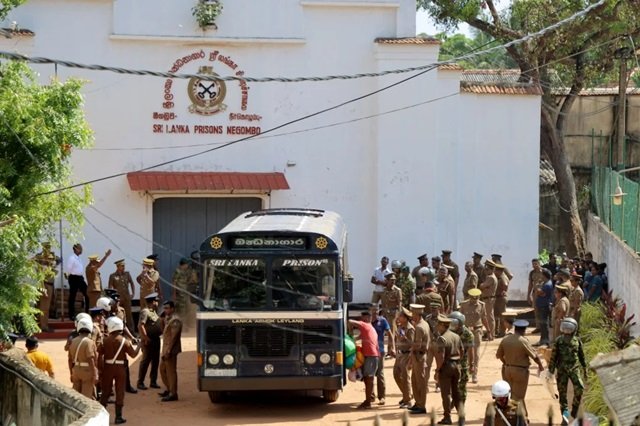
Negombo Prison is not merely the scene of another prison riot. It is the scene of a state failure. Twenty-six people are now reported dead. More than hundred have been injured. Families are left searching for answers while the country is asked to accept official assurances that “minimum force” was used. Such assurances are not enough. They never are when bodies continue to leave a prison compound.
The government cannot escape responsibility by reducing this tragedy to a conflict between drug gangs. Even if organised criminal groups played a role, that only raises another question. How did the State lose control of one of its own prisons? A prison is the one place where the Government exercises complete authority over every movement, every visitor, every gate and every inmate. If organised crime was powerful enough to dictate events inside a prison, then that is not merely a criminal failure. It is an administrative failure. It is a security failure. Above all, it is a failure of government.
There is another irony that deserves attention. Less than five years ago, following the Mahara Prison killings during the COVID-19 crisis, those who now govern Sri Lanka argued that the government of the day bore responsibility for every death that occurred inside prison walls. That argument was constitutionally sound then. It remains sound today. Elections do not rewrite principles. They only change who is expected to honour them. The standard cannot change because the occupants of power have changed.
Sri Lanka defeated COVID-19 through a coordinated national effort despite all the controversies that surrounded that period. Today the country faces another public health challenge with dengue. Reports from Negombo suggest overcrowding and disease had already created severe tensions inside the prison. If those reports prove accurate, they point to warning signs that should never have been ignored. Governments are not judged only by how they react after disaster. They are judged by whether they recognise danger before people die.
The administration has repeatedly promised a new political culture. It promised competence instead of excuses. It promised institutional reform instead of institutional decay. Yet Negombo presents the opposite picture. The public sees confusion. Officials issue changing narratives. Inmates describe something entirely different. Casualty figures continue to rise. Every hour without transparent evidence widens the gap between official statements and public confidence.
Sri Lanka also continues to cling to an outdated correctional model. Many of its principal prisons remain in densely populated urban areas. They are surrounded by homes, businesses and busy roads. These institutions were built for another century and another prison population. Modern correctional systems increasingly rely on purpose-built facilities with stronger security, greater isolation and room for expansion. Sri Lanka continues to depend on overcrowded compounds that have become difficult to manage even under normal conditions. Every government has inherited this problem. Every government has postponed solving it. The price of that neglect is now measured in lives.
The official explanation cannot be accepted simply because it comes from the State. The allegations made by inmates cannot be accepted simply because they are dramatic. Both require evidence. CCTV footage should be secured. Ballistic evidence should be preserved. Medical records should be examined. Witnesses should be protected. A genuinely independent investigation is now a constitutional necessity rather than a political luxury.
Negombo should not become another Mahara. Sri Lanka has already lived through one prison tragedy that produced outrage, promises and commissions. If this incident follows the same path, the country will once again mistake inquiries for reform. Reports will gather dust. Recommendations will be forgotten. Another prison will remain overcrowded. Another crisis will slowly take shape behind locked gates.
The Government may argue that it inherited a broken prison system. That is true. Every administration inherits problems. Governments are elected to solve inherited problems, not to inherit excuses. The measure of leadership is not the ability to identify yesterday’s failures. It is the ability to prevent tomorrow’s catastrophe. On that measure, Negombo raises questions that the Government cannot dismiss with press briefings or carefully crafted statements.
The dead deserve more than competing narratives. The living deserve more than assurances. The country deserves the truth, however uncomfortable it may be. If Negombo becomes another episode buried beneath official language and political blame, then the greatest failure will not be what happened inside the prison. It will be what the State chose not to learn from it.









