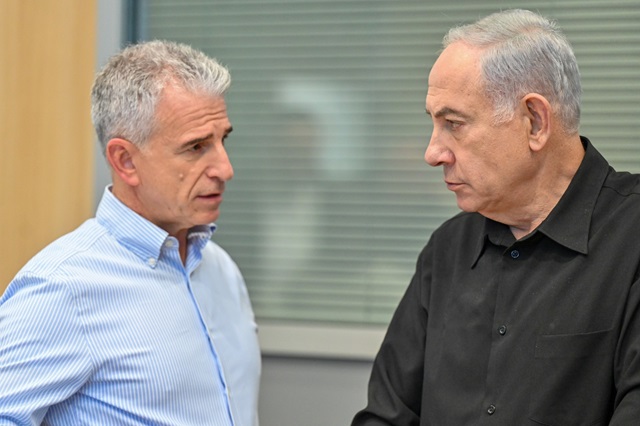
Israeli Prime Minister Benjamin Netanyahu’s coalition is under intense pressure as a pivotal vote in the Knesset looms on Wednesday, with ultra-Orthodox parties threatening to support a preliminary motion to dissolve parliament unless legislation is passed to maintain military service exemptions for religious students.
The dispute — centering on one of Israel’s most divisive political issues — comes at a critical time for the government, as the war with Hamas enters its 21st month, further polarizing opinion on national service.
The two ultra-Orthodox, or Haredi, parties in Netanyahu’s coalition — United Torah Judaism (UTJ) and Shas — have warned they will back the dissolution motion if an agreement is not reached. While the motion’s passage would not immediately collapse the government (as four readings are required for a bill to become law), it would intensify the coalition’s instability and raise the specter of early elections.
“We are not happy about bringing down a rightwing government, but we have reached a kind of breaking point,” Shas spokesperson Asher Medina said in an interview with Israeli public radio. “If there is no last-minute solution, Shas will vote on Wednesday in favour of the dissolution of the Knesset.”
Israeli media reported on Tuesday that the government is scrambling to delay the vote by at least a week. Coalition leaders have held multiple rounds of talks in recent days, and in a bid to buy time, Netanyahu’s bloc has flooded Wednesday’s Knesset agenda with dozens of other bills. His Likud party also controls the committee responsible for scheduling further readings of any dissolution bill, giving the prime minister tools to slow the process.
“If [Netanyahu] can get to the summer break, he will have three months of quiet to figure things out,” a source familiar with the matter told reporters, adding that officials are banking on parliamentary recess in July to temporarily defuse the crisis.
The controversy dates back to a 1948 agreement between Israel’s founding prime minister, David Ben-Gurion, and the ultra-Orthodox leadership, allowing 400 yeshiva (religious school) students to forgo military service. That number has since ballooned to over 80,000, stoking resentment among secular and non-Haredi Israelis, especially amid a protracted conflict that has seen widespread conscription.
Israel’s Supreme Court ruled the exemption unconstitutional in 2017, and several governments have since failed to pass new legislation. With the court pressing for a resolution, the coalition is sharply divided between Haredi factions demanding the exemption’s preservation and right-wing lawmakers who argue it must be ended.
Analysts caution that it would be a political gamble for the Haredi parties to collapse the government, as polls suggest a new election could result in a coalition without them. Despite the threats, some believe the dissolution motion may ultimately be withdrawn if it lacks sufficient support — a failed vote would bar its reintroduction for six months.