The trial of Serhij K., a Ukrainian army officer accused of masterminding the 2022 sabotage of the Nord Stream gas pipelines beneath the Baltic Sea, has opened in Hamburg with two central questions: how far responsibility for the operation extended into Ukraine’s military and political leadership, and whether the destruction of the pipelines constituted a war crime or an act of self-defence. The proceedings could shed light on a covert operation whose alleged participants have been linked to senior Ukrainian military figures, although the extent of President Volodymyr Zelensky’s knowledge remains unresolved.
According to German newspaper Die Zeit, which has investigated the case alongside Süddeutsche Zeitung and ARD, the prosecution alleges that Serhij K. coordinated a team of six people involved in the attack. The Federal Prosecutor General’s 108-page indictment reconstructs an operation involving divers, explosives specialists and a sailing yacht allegedly hired from the port of Höhe Düne in Rostock. The defence disputes the accusations, and K. has not publicly addressed the allegations in court.
The explosions occurred in September 2022, when six blasts damaged the pipelines on the seabed, approximately 80 metres below the surface. The detonations, recorded at 2.03am and 7.04pm on a Monday, sent large quantities of gas bubbling into the Baltic Sea. The devices allegedly weighed at least 14 kilograms each and contained hexogen and octogen, military explosives. Investigators believe the team repeatedly dived into the dark, cold waters over several days to position the charges before detonating them.
The investigation initially struggled to establish who was responsible. German authorities eventually identified DNA traces associated with members of the crew and obtained internal Ukrainian documents concerning the suspects. One document indicated that K. had been transferred, on 1 September 2022, to a unit responsible for “reconnaissance and destruction of infrastructure and the conduct of sabotage”, under the command of Roman Chervinsky, a former official of Ukraine’s domestic intelligence service, the SBU. The transfer took place only three weeks before the explosions.
Chervinsky, who subsequently commanded special unit A4027, responsible for ambushes and sabotage, appeared to acknowledge involvement in planning the operation during an interview with Die Zeit in 2024. He also said the mission had been “approved”. The evidence cited in the reporting points towards the involvement of at least parts of Ukraine’s military apparatus, but it does not establish the full chain of command or settle whether the country’s political leadership authorised the attack.
The strongest indications, according to Die Zeit’s account, suggest that Valerii Zaluzhnyi, Ukraine’s military chief at the time, was involved. Zaluzhnyi is now Ukraine’s ambassador to the United Kingdom and a political rival of Zelensky. American intelligence reportedly described the plan as a “rogue operation”. The CIA is said initially to have welcomed the proposal before warning against the conspiracy, while the Dutch intelligence service had also become aware of the plan by early summer 2022. Whether information about the operation ultimately reached Zelensky remains unknown.
The Ukrainian president has said only that Ukraine had “never officially” participated in an operation connected with the pipeline explosions. Both Zelensky and Zaluzhnyi recently left Die Zeit’s enquiries unanswered. The trial is therefore expected to examine not only K.’s alleged role but also the evidence connecting the sabotage team to a wider military command structure.
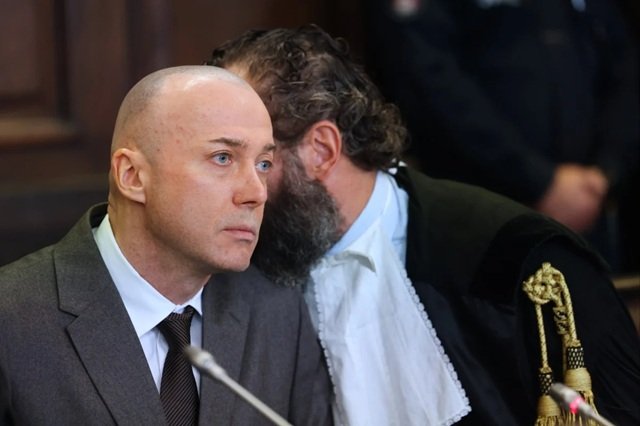
K., 50, was arrested on 21 August 2025 in Rimini, Italy, while holidaying with his family, before being transferred to Germany. His lawyers argue that German authorities secured his extradition on misleading terms because the allegation of war crimes was not included when Italian authorities approved the transfer. Defence lawyer Nicola Canestrini told the court: “What was authorised was one thing, what was then charged was another.” The defence has requested that the proceedings be discontinued, citing nearly a dozen grounds.
The alleged war crime is itself contested. The Federal Prosecutor General argues that the pipelines were civilian targets. The defence counters that Nord Stream cannot be understood as ordinary civilian infrastructure because Russia used gas exports as an instrument of economic and political pressure during the war. Defence lawyer Jes Meyer-Lohkamp described Russian gas as “a financial weapon, a military weapon, a political weapon”. On that reasoning, the lawyers argue, destroying the pipelines could potentially be characterised as an act of self-defence rather than a criminal attack.
The defence also says prosecutors have yet to present clear evidence establishing K.’s participation and alleged leadership of the sabotage team. It argues that he cannot provide a full account of events because he lacks permission from his superiors in the Ukrainian military to discuss the operation. The prosecution disputes the suggestion that he has been unable to speak about his involvement, saying K. discussed the operation extensively with his wife and lawyer while in extradition detention. According to the prosecution, he expressed concern that Ukraine’s military leadership was abandoning him despite his having followed orders.
The case has consequently become a dispute over both evidence and the circumstances in which an alleged wartime operation should be judged. Outside Hamburg’s regional court, about 20 demonstrators displayed Ukrainian flags and signs reading “What are war crimes?” and “Law does not always mean justice”, reflecting opposition to the prosecution’s interpretation.
The proceedings are scheduled to resume on 27 October, with hearings initially planned through the end of January 2027, although the trial is expected to continue considerably longer. K. remains in pre-trial detention as the court prepares to examine the allegations and the competing claims surrounding the operation.