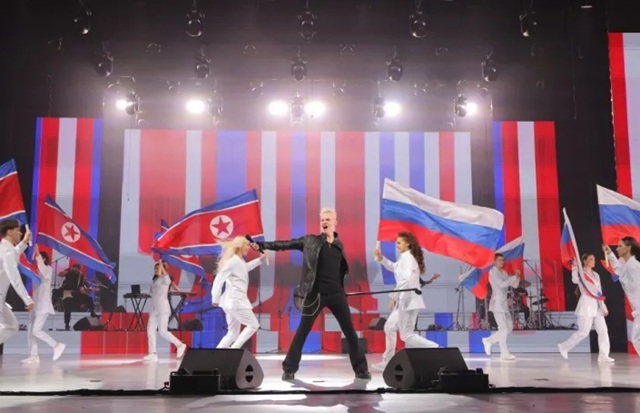
North Korea marked the 80th anniversary of the Workers’ Party of Korea with a spectacle that seemed more influenced by K-pop than traditional socialist pageantry, according to a report in The Times UK. While the country’s military parade featured the expected goose-stepping soldiers and intercontinental ballistic missiles, the subsequent entertainment at the Pyongyang Sports Palace drew attention for its surprising pop-style choreography and flashy stage production.
The performance, attended by senior foreign guests, included Russian singer Shaman, known for his nationalist songs supporting the war in Ukraine, singing a hymn in praise of Kim Jong-un. Yet even the North Korean performers displayed a sophistication and visual style that seemed to borrow from South Korean pop acts such as BTS and Blackpink, as well as the animated aesthetics of Netflix’s KPop Demon Hunters. Jong Hong-ran, a singer famous for her distinctive mushroom haircut, led highly choreographed routines in white pantsuits, accompanied by dancers in short skirts and high heels. The upbeat music, synchronized routines, and multimedia effects represented a stark departure from North Korea’s traditionally solemn productions.
This paradoxical embrace of pop culture reflects the duality of Kim Jong-un himself. Since succeeding his father in 2011, he has balanced the persona of a totalitarian ruler—with xenophobic ideology, harsh repression, and executions—with that of a 41-year-old globetrotting party enthusiast who enjoys basketball, electropop, and glamorous social displays. His early school days in Switzerland appear to have influenced his taste for Western-style entertainment, from Modern Talking songs to flashy sneakers, and past Pyongyang concerts featured women in Mickey Mouse and Donald Duck costumes.
Despite strict laws banning South Korean media and Western influences, smuggled films, TV dramas, and music have gradually infiltrated North Korean society over the past two decades. Mobile phones have further facilitated the spread of forbidden content, forcing the regime to criminalize exposure to foreign culture with prison sentences of up to 15 years. Yet even under these restrictions, the elite appear increasingly influenced by South Korean and global pop aesthetics, as evidenced by the glossier sets and computer-generated effects of the anniversary performance.
The celebrations also underscored Kim’s strategic geopolitical alliances. High-profile VIPs from China, Russia, Vietnam, Indonesia, and Laos attended, signaling the regime’s continuing reliance on international support to bolster its security and legitimacy. The combination of missile parades, pop-style performances, and high-profile foreign guests illustrates both the contradictions and adaptability of Kim’s North Korea—a state that insists on isolation and self-reliance yet selectively adopts global cultural elements to project power and modernity.
As Shaman sang in Russian during the event, “Comrade Kim Jong-un, he is leading Korea forward. And in step with him, the whole people march,” the performance encapsulated the unusual blend of militaristic display, cultural spectacle, and political messaging that defines Kim’s rule in 2025.