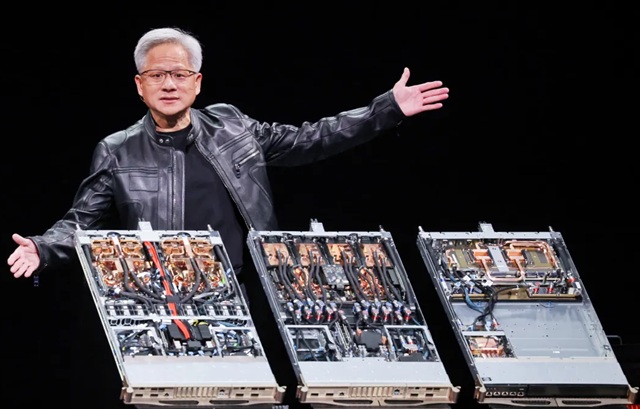
Days after meeting with former U.S. President Donald Trump at the White House, Nvidia Corp. CEO Jensen Huang was greeted with applause on a stage in Beijing, marking his third trip to China this year. In a striking display of cross-border diplomacy, Huang announced that Nvidia would resume sales of its H20 chips in China — a sharp departure from previous U.S. policy and a move that could reshape the landscape of AI and chip technology.
According to Bloomberg News, the surprise reversal highlights Huang’s growing role as a corporate statesman, carefully navigating the fraught political terrain between Washington and Beijing. He also opened a major supply-chain expo in Beijing, even addressing the audience in Mandarin — a gesture requested by Ren Hongbin, a former Chinese commerce official and host of the event.
The resumption of H20 chip sales comes amid rising geopolitical stakes and growing tensions over chip export controls. Huang, now the world’s ninth richest man, has quietly become a pivotal figure in the delicate balancing act between the globe’s two largest economies — even as he insists he holds no political ambitions.
“Huang is obviously on good terms with the Trump administration. Yet his chip business is one of the biggest flashpoints between Beijing and Washington,” said Feng Chucheng, founding partner at Hutong Research. “It’s possible the two leaders may want such a channel for messaging, but is he willing to?”
Despite Huang’s meeting with top Chinese trade officials — including Vice Premier He Lifeng and Commerce Minister Wang Wentao — he was not granted an audience with President Xi Jinping. “It would be an honor to see President Xi,” he told reporters. “I just wasn’t invited.”
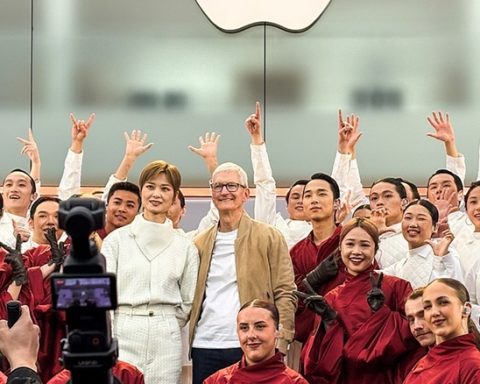
Still, his visit underscores how tech leaders are increasingly thrust into the role of unofficial envoys. In a business environment strained by suspicion and national security concerns, figures like Huang and Apple’s Tim Cook — who also frequently visits China — are among the few executives capable of sustaining open channels with both capitals.
Nvidia declined to comment on Huang’s role or influence when contacted by Bloomberg News.
While other tech leaders have seen relations sour — Elon Musk, for instance, has largely stayed silent on China since leaving the Trump administration — Huang has maintained a delicate neutrality. In contrast to Musk’s controversial comments aligning with Beijing’s views on Taiwan, Huang has kept his public statements carefully measured.
His past misstep — calling Taiwan a “country” during a visit in 2024 — prompted a rebuke from Beijing, but he quickly clarified that his words were a gesture of gratitude to local technology partners, not a political statement. “I wasn’t making a geopolitical comment,” he said days later.
Despite the political minefield, Huang has continued to push back against export restrictions, warning that banning U.S. chips could accelerate China’s domestic semiconductor ambitions, ultimately hurting U.S. leadership in artificial intelligence. “Letting Nvidia compete on Chinese turf is essential to winning the AI race,” he has argued.
Huang also dismissed speculation that he persuaded Trump to soften the chip ban, telling reporters in Beijing: “I don’t think I changed his mind.”
Still, Chinese state media heralded Nvidia’s decision to resume H20 sales, even though the chips are less advanced than the company’s top-tier offerings. Huang took the opportunity to praise Chinese tech entrepreneurs, pose with Xiaomi CEO Lei Jun, and lament that Xiaomi EVs aren’t available in the U.S., calling it a “misfortune” for American consumers.
Behind the business charm offensive lies a bigger strategic gamble. Tech remains the most contested terrain in the U.S.-China rivalry, with both sides eyeing long-term decoupling. Yet in the short term, companies like Nvidia could play a stabilizing role, said Dominic Chiu, senior analyst at Eurasia Group.
“In the midst of negotiations and back-and-forth, there could be some space for tech firms to be bridges,” Chiu said.
Whether Huang wants that role or not, it may now be his to play.