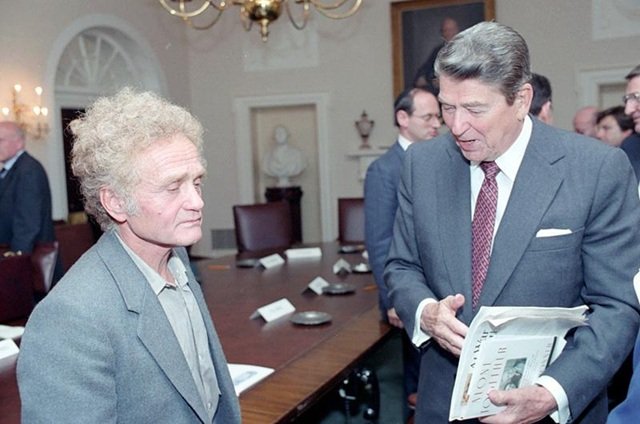
The confrontation between Washington and Moscow during the final years of the Cold War was not confined to nuclear weapons, military strategy and competing visions of global security. Newly declassified records published by the National Security Archive on 10 October 2026 reveal how President Ronald Reagan made human rights a central element of his dealings with Soviet leader Mikhail Gorbachev, using private diplomacy to press for the release of political prisoners, greater freedom of emigration and an end to the persecution of dissidents.
The documents show that Reagan’s approach combined public declarations with carefully managed private pressure. Rather than treating human rights as a separate humanitarian concern, his administration linked progress on individual cases to the broader political atmosphere required for meaningful negotiations on arms control and US-Soviet relations. The resulting diplomatic exchanges reveal both the limits of superpower cooperation and the influence that sustained pressure could exert on Soviet decisions.
Before the Geneva summit in November 1985, Reagan dictated a memorandum outlining how he intended to approach the Soviet leadership. He cautioned himself against presenting negotiations as a contest between winners and losers, writing: “let there be no talk of winners and losers.” Even if Washington believed it had prevailed, he warned, declaring victory could damage relations with Moscow.
His reflections on human rights were equally revealing. “I’m sorry we are somewhat publicly on record about human rights,” Reagan wrote, arguing that prominent public criticism might win applause in the United States without necessarily helping those suffering under Soviet repression. “Front page stories that we are banging away at them on their human rights abuses will get us some cheers from the bleachers, but it won’t help those who are being abused.”
The memorandum anticipated a distinctive diplomatic practice. During private meetings, Reagan would present Gorbachev with lists of individual dissidents and Jewish citizens seeking permission to emigrate. According to the National Security Archive’s account, Gorbachev subsequently acted on some of these cases, although progress was often slow.
At their Geneva summit on 20 November 1985, Reagan devoted considerably more time than scheduled to a private discussion of human rights. He explained why the issue mattered to American political institutions and public opinion, cited individual cases and promised not to claim public credit for Soviet concessions. Gorbachev, however, continued to regard American interventions as potential propaganda and interference in Soviet domestic affairs. He countered with criticisms of human rights practices in the United States and other Western countries.
The disagreement exposed a fundamental obstacle: Washington regarded individual freedoms as a legitimate subject of international diplomacy, while Moscow frequently portrayed such scrutiny as an infringement of national sovereignty.
The resistance within the Soviet system was not merely rhetorical. A July 1986 memorandum by KGB chairman Viktor Chebrikov proposed “special measures” to counter what Soviet officials described as an American anti-Soviet human rights campaign. The measures targeted Western diplomats and journalists discussing abuses, particularly those drawing attention to dissidents whose names featured in Western media.
The dispute became more dangerous after American journalist Nicholas Daniloff was arrested in Moscow in August 1986 on espionage charges that the US administration rejected as false. The Soviet move came after Gennady Zakharov, a Soviet national accused of espionage, had been detained in New York. Washington refused to treat the two cases as equivalent, insisting that Daniloff was a journalist rather than an intelligence operative.
In a letter dated 4 September, Reagan demanded Daniloff’s release and warned that failure to free him promptly “can only have most serious and far-reaching consequences for the relationship between our two countries.” The confrontation threatened the possibility of a summit that Gorbachev regarded as a major priority.
During meetings in September, Secretary of State George Shultz continued pressing Soviet Foreign Minister Eduard Shevardnadze over Daniloff, Zakharov and the cases of political prisoners and Jewish refuseniks. Shultz identified prominent dissidents and activists, including Andrey Sakharov, Elena Bonner, Ida Nudel, Yuri Orlov, Anatoly Koryagin, Anatoly Marchenko and Irina Ratushinskaya, whose cases Washington wanted resolved.
Shevardnadze agreed that the lists would be examined individually but resisted some demands, including Sakharov’s emigration. Both sides maintained that the detained citizens’ cases and the broader question of emigration were separate issues, even as their discussions connected them to the prospects for improved relations.
The negotiations produced concrete decisions ahead of the Reykjavik summit in October 1986. Soviet leadership records show that Gorbachev accepted the release of Yuri Orlov as part of the steps needed to make the meeting possible. The subsequent discussions also established arrangements for Daniloff and Zakharov to be released, while further dissident cases remained under consideration. The records indicate that Orlov’s release resulted directly from Reagan’s pressure and was not simply part of the exchange involving the two detained men.
At Reykjavik, the US delegation presented a detailed paper on human rights, highlighting Jewish emigration, divided families and prominent dissidents. It described the importance Washington attached to individual rights and the consequences when those rights were violated. The document also welcomed what it called a “new willingness on the part of the Soviet Union to consider human rights legitimate topic of discussion.”
The issue remained prominent as the relationship developed. In December 1987, Reagan’s advisers noted that progress had fallen short of expectations and urged him to press Gorbachev on religious freedom, psychiatric abuse and reforms that could make improvements more durable. Yet, as the preparations continued, Soviet authorities were arranging pardons and exit visas for hundreds of political prisoners and refuseniks.
During Reagan’s May 1988 visit to Moscow, he met dissidents, religious believers and Jewish emigrants seeking permission to leave the Soviet Union. A reception at the American ambassador’s residence brought together 42 leading dissidents and refuseniks, accompanied by their spouses and children. A subsequent State Department assessment recorded a 14-hour joint human rights meeting during the Moscow summit, at which officials reviewed more than 400 individual cases.
The progress was substantial but incomplete. Richard Schifter, the US assistant secretary of state for human rights, acknowledged the commitment of much of the Soviet leadership to further improvements while warning that “the gulf between that commitment and the reality throughout the country is enormous.”
The records support the National Security Archive’s conclusion that quiet American pressure contributed to important changes, including the release of political prisoners, the end of psychiatric confinement as a practice against dissidents, and the granting of exit visas to hundreds of Jewish citizens by the late 1980s. They also show that these outcomes emerged through prolonged bargaining rather than a single diplomatic breakthrough.
The history offers a reminder that arms control negotiations were shaped by more than calculations of military advantage. For Reagan, human rights became part of the diplomatic conditions surrounding strategic agreements; for Gorbachev, addressing those demands formed part of his wider effort to reform Soviet society and improve relations with the West. The documents reveal how the fate of individual people became intertwined with the struggle to reshape the relationship between two nuclear superpowers.