The long-sidelined ambition to construct a multi-billion-dollar natural gas pipeline from Qatar to Europe via Turkey might be back on the table, following the dramatic fall of Syria’s Bashar al-Assad. A plan that was once scuppered by Assad’s opposition, purportedly in favor of Russian interests, is now seeing renewed attention as geopolitical shifts could pave the way for its revival.
The ambitious Qatar-Turkey-Europe pipeline, originally envisioned in 2009, would transport natural gas from the world’s largest gas field, located in the Gulf, to Europe through a Turkish hub. With Qatar holding 14% of the world’s natural gas reserves, this pipeline promises to reshape European energy markets by offering a more direct, and potentially cheaper, alternative to the expensive LNG shipments currently in place.
The dream was initially quashed when Assad, perhaps influenced by his Russian allies, rejected the proposal, favoring a pipeline from Iran via Iraq to Syria—closely aligning with Russian energy strategies. However, with the recent collapse of Assad’s regime and the possibility of a Syria-friendly government taking shape, the idea could be back on track.
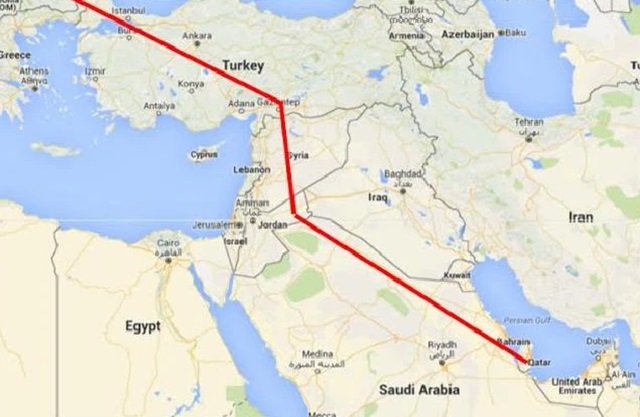
Alparslan Bayraktar, Turkey’s Energy Minister, recently expressed optimism about the project’s future, saying that a unified and stable Syria could pave the way for the pipeline’s construction. While security and political stability would be paramount, the renewed interest underscores Turkey’s ambitions to become a key gas hub for Europe, diversifying its energy routes and reducing reliance on Russian supplies.
If revived, the $10 billion, 1,500-kilometer pipeline could dramatically shift the balance of energy power in the region, reintroducing Qatar’s natural gas into the European market through a direct pipeline instead of costly LNG shipments. With geopolitical tectonic plates shifting, this once-forgotten pipeline project might soon become a reality—an energy game-changer for Europe, and a key piece of the Middle East’s new geopolitical puzzle.