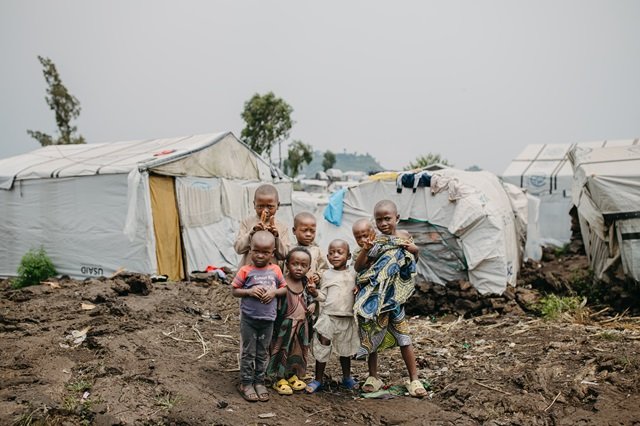
Around 5.8 million refugee children did not attend school in 2025, according to the United Nations refugee agency UNHCR, leaving 44 per cent of the world’s 13.2 million school-age refugee children without access to an educational institution. The agency warned that further cuts to humanitarian budgets could exclude millions more children from education.
The UNHCR identified the transition from primary to secondary education as one of the biggest challenges facing refugee children. While 65 per cent of refugee children of primary-school age attended school last year, the proportion fell to just 32 per cent at secondary level. Attendance at primary school was roughly equal among girls and boys, but the share of girls declined at the secondary stage.
The agency attributed the growing exclusion of girls from secondary education to poverty, security risks, early marriage and other pressures. These factors were cited as contributing to an increasing number of girls leaving school before completing their education.
For those who were able to continue beyond secondary school, however, the figures showed a significant increase in further education. More than 450,000 refugee children continued into universities or vocational education institutions in 2025, the first year in which the number exceeded that level. They represented 11 per cent of all refugee children, compared with 9 per cent in 2024.
UN High Commissioner for Refugees Barham Salih called for greater investment in education for displaced children. “Education means protection. But it is also a path to new opportunities and independence,” Salih said.
Salih, who is Kurdish and from Iraq, had himself experienced displacement. The UNHCR said donor countries needed to increase investment in education for people forced to flee their homes.
The warning comes as humanitarian and development funding faces reductions in countries including the United States and in Europe. The UNHCR cautioned that additional cuts to the budgets of aid organisations could prevent further millions of refugee boys and girls from attending school.
The United Nations has set a target for industrialised countries to devote 0.7 per cent of their gross domestic product to development assistance. Germany, however, is currently spending around 0.4 per cent, according to the source, leaving it well below the UN target.