Rolls-Royce has warned that it may move production abroad if it does not receive financial support from the United Kingdom government to re-enter the fast-growing market for single-aisle aircraft engines, setting up a critical test of the country’s industrial strategy and ambitions in advanced manufacturing.
The company’s chief executive, Tufan Erginbilgic, said the manufacturer is ready to return to the narrowbody engine sector after completing a three-year turnaround that stabilised its finances. However, he stressed that scaling its UltraFan engine from development to industrial production would depend on subsidies or other public funding, a model he noted is commonly used by competitor nations to support strategic industries.
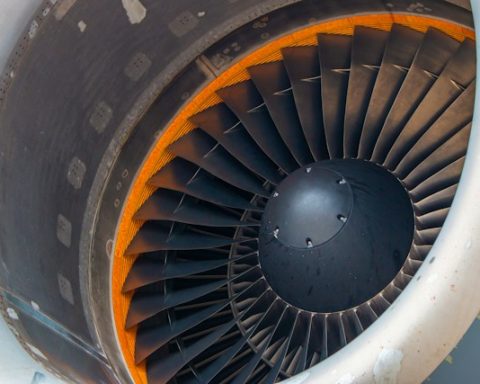
Rolls-Royce has already invested £1 billion over the past decade developing the more fuel-efficient UltraFan technology, but executives say additional backing is needed to commercialise the engine at scale. The company has reportedly sought up to £200 million in support and has held discussions with government officials as it evaluates where to locate future manufacturing capacity.
Erginbilgic argued that rival engine makers benefit from far greater state assistance, pointing to competitors such as Pratt & Whitney, GE Aerospace, and Safran, which he said receive two to three times more public funding. In a globally competitive environment, he said, such disparities directly influence decisions on where companies invest and build.
Without UK support, Rolls-Royce is understood to be considering shifting UltraFan production to facilities in Germany or the United States, where it already manufactures engines for business jets and military aircraft. The warning amounts to a significant leverage play as governments worldwide compete to anchor high-value aerospace supply chains.
The chief executive framed the project as aligned with Britain’s own industrial policy, which has identified narrowbody propulsion systems as a major long-term growth opportunity. He said domestic production could support as many as 40,000 jobs, generate at least £100 billion in economic value, and create an entirely new supply chain, adding that every £1 invested could yield £34 in broader economic impact.
Rolls-Royce exited the single-aisle engine market in 2011 when it sold its stake in a joint venture tied to aircraft produced by Airbus, a move widely viewed by analysts as one of the company’s most consequential strategic missteps. Since then, its civil aerospace division has relied heavily on engines for long-haul aircraft programmes, including those used on widebody jets built by Airbus and Boeing.
The potential re-entry comes at a moment of disruption among competitors. Airbus has complained that deliveries of its bestselling narrowbody aircraft have been slowed by production issues at Pratt & Whitney, while durability problems linked to a joint venture between GE Aerospace and Safran have forced airlines such as Wizz Air to ground parts of their fleets.
Erginbilgic said UltraFan would deliver significantly greater fuel efficiency than existing engines and meet airline durability expectations, adding that Rolls-Royce is in talks with multiple partners to share the risks of launching a full narrowbody programme.
The debate over subsidies also unfolds against a shifting political backdrop in Washington, where Donald Trump has proposed restricting dividends and share buybacks by major American defence contractors until they improve performance for the US military. Rolls-Royce, while a supplier to US defence programmes, is not among the prime contractors targeted by those proposals.
Erginbilgic maintained that the company is prioritising reinvestment, saying it is now investing roughly twice as much annually as it did in 2022 before returning surplus cash to shareholders. The outcome of negotiations with the UK government could determine whether one of Britain’s most historic engineering champions anchors the next generation of aerospace manufacturing at home or shifts that future overseas.