Russia is increasingly using missiles originally designed for air-defence training to sustain its growing ballistic campaign against Ukraine, according to a Reuters analysis of official Ukrainian data and interviews with Ukrainian investigators and military experts.
The repurposed RM48U missiles have accounted for more than half of the 228 ballistic and hypersonic missiles fired at Ukraine in July and early August, according to figures compiled by military analysts at Ukraine’s General Prosecutor’s Office and reviewed by Reuters. Their large-scale use has allowed Russia to intensify its aerial attacks while conserving more capable strike missiles such as the Iskander.
The consequences were illustrated by a missile attack on a railway platform near Kyiv last month that killed eight people, according to Ukrainian prosecutors. Ukrainian investigators said the strike was carried out by an RM48U rather than Russia’s main Iskander ballistic missile. Reuters could not independently verify the Ukrainian findings.
The RM48U, with “RM” referring to “raketa mishen”, or “missile target”, travels at high speed along a ballistic trajectory. Ukraine’s prosecutor’s office and military intelligence agency GUR told Reuters that the weapon is less powerful and less accurate than the Iskander. Ukrainian military experts said RM48Us can deviate from their intended targets by about 300 metres on average, while their warheads can scatter metal fragments across a wide area.
Ukrainian investigators concluded that an RM48U struck the railway platform after examining the crater beside the rail line, metal fragments and damage to the platform, trees and bodies. Commercial satellite imagery obtained from Planet Labs also showed damage to a warehouse complex near the Kvitnevyi railway station following the Russian missile barrage on August 5.
Russia has denied intentionally targeting civilians, saying it targets military infrastructure. Its defence ministry said on the day of the railway deaths that Russian forces had struck a logistics centre in Brovary that was being used to store drone components. The ministry did not respond to questions from Reuters about Russia’s use of RM48Us.
The scale of the attacks has increased sharply. In July, Russia fired 158 ballistic and hypersonic missiles, the largest monthly number since its 2022 full-scale invasion, according to Ukrainian data. Of those, 87 were RM48Us. During the first eight days of August, Russia launched another 70 ballistic and hypersonic strikes, including 36 involving RM48Us.
Sidharth Kaushal, a senior research fellow at London-based defence think-tank RUSI, said the use of the missiles could allow Russia to preserve more capable weapons for later operations. “Their use allows the Russians to husband the more capable missiles they have, the Iskanders, but also the KN-23s and the Zircons, for winter when they would want to really lean into their ballistic missile campaign,” he said.
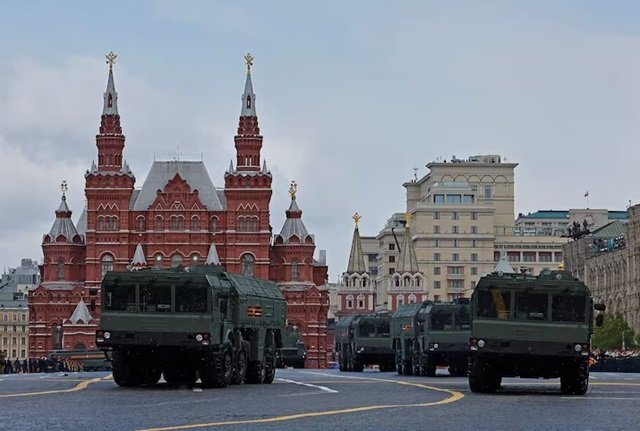
The Ukrainian data showed that as RM48U attacks increased in July, the number of Iskanders fired fell to 38 from more than 100 the previous month. The Institute for the Study of War estimated last month that Russia had about 100 Iskanders available, compared with 400 RM48Us. The GUR has also said Russia plans to more than double RM48U production to 480 missiles this year, from 200 last year.
The growing reliance on the cheaper missiles comes as Ukraine’s air defences face severe pressure. Kyiv has virtually exhausted its stocks of US-made Patriot interceptors, which are the only weapons in its arsenal capable of destroying Russian ballistic missiles, according to the source material. Ukraine has been pressing the United States and other Western allies for additional Patriots, although production has struggled to keep pace with increased demand during the Iran war.
The broader air campaign has already produced a sharp rise in civilian casualties. The United Nations recorded at least 437 civilian deaths in Ukraine in July, the highest monthly toll since the early months of the invasion, while the Conflict Intelligence Team said 327 civilians were killed in Russia during the first seven months of 2026.
Reuters said it could not independently verify the Ukrainian findings concerning the RM48U strikes. But the available data points to an intensifying aerial campaign in which Russia is combining large numbers of less accurate repurposed missiles with more advanced weapons, while Ukraine faces growing pressure on the interceptor systems needed to counter ballistic attacks.