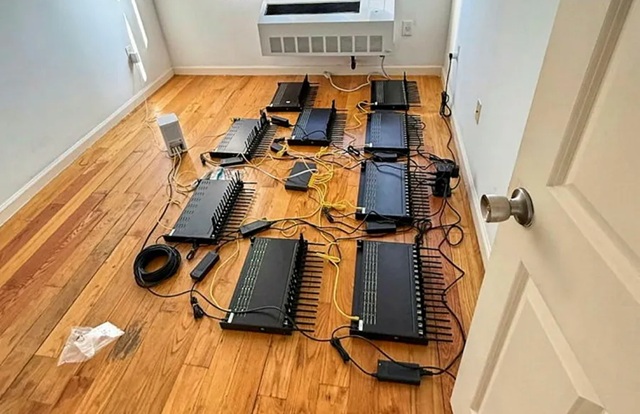
The U.S. Secret Service announced Tuesday that it uncovered and dismantled a sprawling network of devices in New York City capable of crippling the city’s cellular infrastructure during the United Nations General Assembly.
The network, discovered as world leaders prepared to descend on Manhattan, included more than 300 SIM servers and over 100,000 SIM cards spread across a 35-mile radius of the UN headquarters. Investigators say the system could have jammed cell towers, blocked 911 calls, and overwhelmed mobile networks at a critical moment.
Officials emphasized that no direct plot to disrupt the UN General Assembly was discovered, and there are no known credible threats to New York City at this time.
Encrypted Communications to Criminal Networks
Forensic analysis is still underway, but U.S. Secret Service Special Agent in Charge Matt McCool said evidence suggests nation-state actors may have used the system to send encrypted messages to organized crime groups, cartels, and terrorist organizations. Details regarding the specific governments or criminal entities involved have not been released.
“This is a highly organized, well-funded enterprise,” McCool said. “It could have taken down cell towers, preventing people from communicating. Coupled with any other event, the impact could have been catastrophic.”
A New Frontier of Risk
The operation was discovered as part of a broader investigation into telecommunications threats targeting senior government officials. The servers acted like banks of simulated cellphones, capable of generating massive volumes of calls and texts while masking encrypted communications. Investigators estimate the network could have sent up to 30 million text messages per minute.
McCool noted that the forensic review of the more than 100,000 active SIM cards—including examining all associated calls and messages—will take time.
“The U.S. Secret Service’s protective mission is all about prevention,” said agency Director Sean Curran. “This investigation sends a clear message: imminent threats to our protectees will be tracked down and dismantled.”
Officials warned the potential disruption could have been comparable to cellular outages experienced after the Sept. 11 attacks and the Boston Marathon bombing, when networks collapsed under strain. McCool added, “Could there be others? It would be unwise to think there aren’t networks like this being built in other U.S. cities.”