On a blustery September afternoon in Tuam, 20 miles north of Galway, the quiet streets of the Dublin Road estate conceal a harrowing past. Behind the rows of late-1970s terraced houses, a playground and open green space have been sealed off by high fences, gates, and security cameras. Through narrow slits in the fencing, mechanical diggers and mounds of earth hint at the work being carried out beneath the surface: forensic archaeologists are excavating what is believed to be the mass grave of nearly 800 children who died at the St Mary’s Mother and Baby Home between 1925 and 1961. The home, run by the Sisters of Bon Secours, housed unmarried mothers in a society where the Catholic Church dictated moral and social norms. The children were often taken from their mothers, boarded out to farms, placed in foster care, or adopted illegally, and many did not survive.
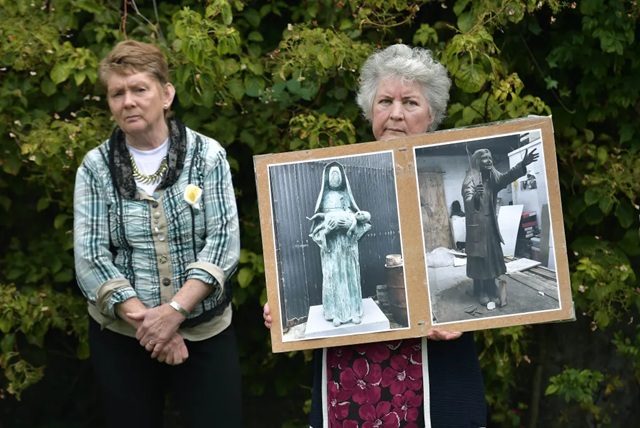
The investigation and subsequent excavation are the result of decades of painstaking research by Catherine Corless, a 71-year-old local historian whose work from her kitchen table first uncovered the extent of the tragedy. Corless meticulously examined birth and death records, newspaper archives, and local memories, gradually revealing that, while nearly 800 children died at the home, only two were recorded in the cemetery across the street. Her research suggested that the remainder had been buried in a disused sewage system beneath the playground. As The Times UK reports, Corless faced skepticism, hostility, and bureaucratic inertia, yet she persisted, determined to restore dignity to lives long silenced.
Corless’s work prompted national attention in 2014 when The Mail on Sunday published the story under the headline “A Mass Grave of 800 Babies.” The revelation shocked Ireland and the wider world, exposing decades of systemic neglect, misogyny, and institutional abuse. Families of survivors, campaigners, and researchers began to push for accountability, demanding proper burial and commemoration for the children. Among them is Annette McKay, whose mother Maggie gave birth to a daughter at the home in 1942. Maggie was subsequently separated from her child, sent to another institution, and told her baby had died. Decades later, McKay has become a vocal advocate for the families, insisting that the children be treated with dignity and the full story be acknowledged.
The excavation is now being conducted under the Office of the Director of Authorised Intervention, Tuam, led by Daniel MacSweeney, a veteran of the Red Cross with experience in conflict zones such as Afghanistan, Iraq, and Lebanon. His team, which includes forensic archaeologists familiar with handling co-mingled remains, approaches the site with the same rigor as a crime scene investigation. The process is painstakingly slow, expected to take two to three years, and involves careful documentation, DNA sampling, and consultation with families of the deceased. As The Times UK notes, this effort represents not only a scientific and archaeological undertaking but also a moral imperative to restore identity and respect to the victims.
The Tuam excavation highlights the grim realities of 20th-century Ireland, where unmarried mothers were often treated as criminals and subjected to forced labor, while their children faced neglect and, in many cases, death. The Catholic Church’s pervasive influence ensured that social norms were enforced with severity, and the work of historians like Corless has revealed the extent of institutional complicity. Even as the Bon Secours sisters have issued an apology and contributed to the cost of the excavation, questions remain about the identities of all the children, the possible falsification of death records, and the fate of children allegedly trafficked abroad.
The Tuam site is part of a broader pattern of abuse across Ireland’s mother and baby homes, where an estimated 9,000 children died over the 20th century. While memorials and partial excavations have been authorized, the full scale of the tragedy may never be fully known. Yet the work being carried out today, documented and reported by The Times UK, marks a critical step in acknowledging a hidden chapter of Irish history, ensuring that the lives of these children are remembered, their stories told, and their dignity restored. As Corless and survivors like McKay have shown, confronting the past is essential not only for justice but for the moral conscience of the nation.