The following article was originally printed in a supplement published by Ceylon Today, a Colombo-based daily newspaper.
by A Special Correspondent
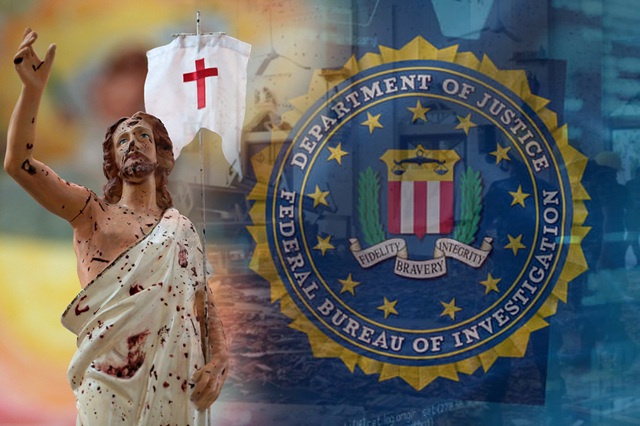
Following the submmsion of the FBI’s sworn affidavit on the 2019 Easter Sunday bombings in Sri Lanka, the United States Department of Justice formally unsealed terrorism charges against three Sri Lankan nationals. The defendants — Mohamed Naufar, Mohamed Anwar Mohamed Riskan, and Ahamed Milhan Hayathu Mohamed — were identified as central operatives within a local affiliate of ISIS, responsible for planning, coordinating, and carrying out the series of suicide bombings that left 268 people dead, including five U.S. citizens, and injured more than 500 others.
The charges are monumental. According to the Justice Department, the defendants conspired to provide material support to a designated foreign terrorist organisation — ISIS — and directly participated in the procurement of weapons, training of attackers, and even targeted assassinations in the lead-up to the bombings. Naufar, described as the “second emir” of ISIS in Sri Lanka, was responsible for leading propaganda efforts and multiple days-long military-type trainings, while Milhan allegedly executed a Sri Lankan police officer to steal his firearm and scouted locations for further terrorist activity. Riskan played a logistical role in manufacturing the IEDs that devastated churches and hotels across Colombo, Negombo, and Batticaloa.
This criminal complaint, filed in December 2020 in the U.S. District Court in Los Angeles, is the result of an exhaustive two-year investigation led by the FBI’s Joint Terrorism Task Force. The bureau, which dispatched over 30 agents and technical experts to Sri Lanka within days of the attack, worked alongside the Sri Lankan Criminal Investigation Department (CID), assisting in forensic analysis, victim interviews, digital forensics, and the seizure of critical evidence. Their findings are definitive — and unambiguous in the language used: “These defendants were committed supporters of ISIS… and murdered in the name of this deadly foreign terrorist organisation.”
And yet, despite the sheer weight of evidence, Sri Lanka remains suspended in a vortex of misinformation and conspiratorial speculation.
Instead of reckoning with the ideologically motivated nature of the attacks, a number of religious leaders, political actors, and amateur investigators have sought to pivot the narrative — from one grounded in transnational jihadism to one allegedly orchestrated by domestic political elements. Theories have flourished, most of them devoid of evidence, alleging that senior officials, former intelligence agents, or even rival political candidates “allowed” or “orchestrated” the attacks for electoral gain.
No such claims have produced verifiable proof.
Indeed, several of these conspirators have gone so far as to publicly name private individuals, labelling them “masterminds” based purely on content they watched online. One Catholic clergyman, in particular, facing defamation charges for making such unsubstantiated allegations, allegedly told authorities that he derived his conclusions from “watching YouTube videos and reading websites” — a line that would be laughable if not so deeply irresponsible. In other words, these claims — repeated with righteous conviction in public forums — would not stand for five minutes under judicial scrutiny.
This is not merely a matter of speculative overreach. It is a matter of public dishonesty, reckless endangerment, and in some cases, malicious defamation. While the FBI has published a meticulous trail of communications, technical evidence, weapon transfers, and personal confessions — conspiracy theorists have brought nothing to the table except innuendo and fabricated timelines.
The result has been a dangerous erosion of public understanding. Families of victims remain trapped between two realities: one built on fact and judicial procedure, the other on political utility and media manipulation. The full 72-page FBI affidavit, which we have also published, contains sworn testimony, surveillance summaries, photographs, statements under Miranda rights, and unambiguous identification of the perpetrators and their direct allegiance to ISIS leadership in Syria. What more is required?
And yet, this tragic disinformation campaign found its most dramatic institutional echo in President Gotabaya Rajapaksa’s 2022 request to the U.S. government for a renewed “independent investigation” into the Easter attacks. In response, U.S. authorities issued a stark — and diplomatically restrained — reply.
Writing on 7 April 2022, Christopher A. Landberg from the U.S. State Department’s Bureau of Counterterrorism responded through Sri Lanka’s ambassador in Washington:
“In the immediate aftermath of the attacks, and continuing to the present day, the U.S. government provided assistance in the investigation and prosecution of those responsible – to the point that the Department of Justice filed a criminal complaint… In light of that, even as we stand ready to continue providing support to your government, it would not make sense for the United States to conduct an additional investigation into the attacks.”
The message was clear: the case is not open-ended. It is not speculative. It is not missing evidence. It has been investigated, prosecuted, and documented.
Moreover, the letter confirms that 33 FBI personnel were dispatched to Sri Lanka in the days following the attack to assist with evidence collection, witness and victim interviews, and digital forensics, working side-by-side with Sri Lankan law enforcement. The implication? If Sri Lanka chooses to ignore the evidence and instead follow rumours and politically expedient “alternative theories,” it does so in defiance of international cooperation and judicial finality.
That some in Sri Lanka continue to amplify conspiracies not only mocks the memory of those who died in the Easter Sunday bombings, but it also imperils the possibility of justice. It revictimises survivors by shifting blame to imagined villains and absolves the real perpetrators of their ideological responsibility.
This is not how nations recover from trauma. It is how they spiral deeper into confusion, weaponising pain for political theatre.
The United States has done its part. The facts have been laid bare. And while Sri Lanka’s justice system continues to move slowly — and sometimes hesitantly — through the fog of post-war politics, there can be no excuse for distorting the truth. If the country is to honour the lives lost on that horrific morning of April 21st, 2019, it must start by rejecting the lie that justice is whatever one believes it to be.
There is a difference between not knowing and not wanting to know. Sri Lanka must decide which side it is on.