A controversial Sotheby’s auction featuring sacred artefacts believed to be linked to the historical Buddha has been indefinitely postponed following a formal objection from the Indian government. The move has reignited global debates about the ethics of trading religious relics and human remains, the legacy of colonial-era acquisitions, and the fine line between legal rights and moral responsibility. As reported by the Financial Times, the case has become a flashpoint in ongoing discussions about cultural restitution and the role of the international art market.
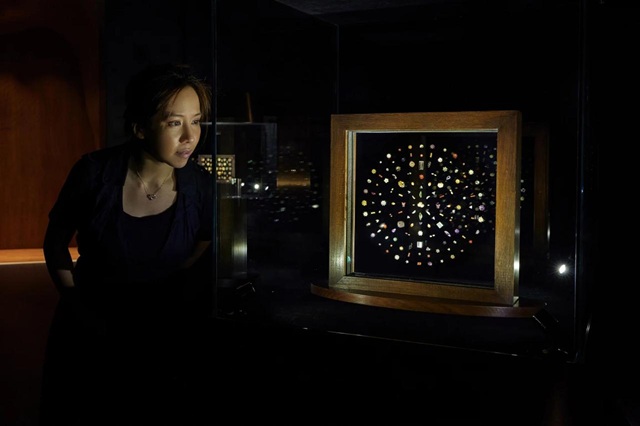
At the centre of the dispute is a collection of more than 300 jewels, ornaments and precious stones known as the Piprahwa gem relics, which were unearthed in 1898 by British colonial landowner William Claxton Peppé near the India-Nepal border. Believed to have been buried alongside some of the cremated ashes of Shakyamuni Buddha, the collection holds immense religious and historical significance for the global Buddhist community.
Sotheby’s had scheduled the sale of the relics in Hong Kong on May 7, with an unofficial valuation ranging from $1.3 million to $13 million. However, two days before the auction, India’s Ministry of Culture issued a legal notice demanding the sale be halted and the artefacts repatriated, citing the collection as “inalienable religious and cultural heritage” of India and of Buddhism as a whole.
India’s claim draws on a wide array of legal and diplomatic instruments, including its Treasure Trove Act of 1878, the Antiquities and Art Treasures Act of 1972, and several international conventions regarding the treatment of cultural property and human remains. Despite these assertions, legal experts note that the British Crown was likely vested with the original title at the time of excavation, complicating India’s legal standing.
“There is sympathy for India’s position, but the law doesn’t apply retroactively,” said Leila Amineddoleh, a cultural heritage attorney quoted by the Financial Times. “Law is one thing, morality quite another.”
The debate reflects broader global trends, including the intensifying push for the return of looted and sacred objects—such as the Benin Bronzes—which are also referenced in India’s official letter to Sotheby’s. However, Amineddoleh cautions that the Piprahwa case is distinct, lacking the violence that characterized the Benin seizure.
Questions have also been raised about whether the gems can truly be considered to contain “human remains.” While Brahmi inscriptions suggest they were buried with the Buddha’s ashes, some experts argue there is insufficient evidence to treat the relics as containing identifiable remains under existing laws.
“This is an ethical minefield,” noted Ivan Macquisten, an art market adviser. “There’s a lot of moral posturing without clear evidence that human remains are involved.”
Others argue that religious relics, including those from Christianity, Judaism, and Islam, regularly appear on the market—even as some religious traditions, like the Catholic Church, strictly prohibit their sale. The inconsistency raises further questions about how sacred objects should be treated under commercial and legal regimes.
Sotheby’s, for its part, insists that it is working collaboratively with India to find an acceptable resolution. “We are pleased to be working together to find the best possible outcome for all parties,” the auction house said in a statement.
Cultural heritage experts say the auction house may be motivated as much by reputational risk as by legal concerns. “Sometimes, adverse publicity can outweigh all other considerations,” said Macquisten. “It might not be good business to go ahead.”
Art law specialists, including Sarah Barker of Withers, agree that a negotiated solution is preferable to a protracted legal battle. “All parties are incentivised to find a resolution without having to resort to a difficult and complex legal process.”
One potential solution floated by Amineddoleh is for an Indian institution or private buyer to acquire the relics and repatriate them to a museum or Buddhist organisation. Such an outcome, she suggests, could satisfy both ethical imperatives and legal considerations.
As the Financial Times notes, while museums are bound by stricter ethical codes, auction houses are ultimately commercial entities with fiduciary duties to sellers — a reality that complicates how sacred artefacts are handled in the global art market.
In the end, the Piprahwa relics may serve as a powerful test case — not only for legal precedent but for the evolving moral compass of an increasingly scrutinized cultural marketplace. As one cultural commentator remarked, it’s the kind of case even Indiana Jones might say “belongs in a museum.”