


by Our Diplomatic Affairs Editor
“The Korean Wave did not just happen. It was engineered over decades,” said Miyon Lee, Ambassador of the Republic of Korea to Sri Lanka, this morning in Colombo while joining the Ambassadors Roundtable organised by the Pathfinder Foundation, a key think tank in Colombo on geopolitics and geo-economics.
In one of the most detailed public interventions delivered by a South Korean envoy in Sri Lanka in recent years, Lee outlined how South Korea transformed itself from a war-ravaged and impoverished state into one of the world’s leading technological, industrial and cultural powers. Her remarks moved beyond K-pop and Korean dramas and focused instead on the structural foundations that produced modern South Korea, including authoritarian economic planning, export-driven industrialisation, democratic transition, global trade integration, digital infrastructure, intellectual property protection and national strategic discipline.
Lee said South Korea’s transformation was never accidental and was instead the result of decades of painful political and economic choices. She stated that the country’s rise rested on three pillars: democratisation, economic transformation and global integration. Those three elements later created the conditions for the global expansion of Korean culture and public diplomacy.
She explained that South Korea emerged from the devastation of the Korean War under constant military pressure from North Korea and with virtually no natural resources, foreign reserves or industrial capacity. The government therefore concluded that survival depended on earning foreign currency through exports. According to Lee, South Korea initially exported whatever it could produce, including wigs made from human hair and even squirrels sold as pets overseas, simply to generate dollar reserves.
Lee said Japan served simultaneously as a historical enemy and an economic model for South Korea. Despite resentment over Japanese colonial rule, South Korea closely studied Japan’s export-oriented development strategy and attempted to replicate and surpass it. She added that the alliance with the United States also heavily influenced Korea’s economic philosophy, as many Korean economists trained in the US later returned to shape Korea’s liberalised and export-focused economic planning.
At the same time, Lee acknowledged that South Korea’s early development model was not purely liberal. Under former President Park Chung-hee, the state imposed strict top-down economic planning through a series of five-year national plans. Government officials directed industries and pressured private companies to move into strategic sectors ranging from textiles and footwear to steel, shipbuilding, petrochemicals and eventually semiconductors and information technology.
She admitted that the system involved political repression, mistakes and authoritarian controls. However, she argued that the country maintained a collective national determination driven by fear of North Korea, memories of Japanese colonialism and the urgent need to escape poverty.
Lee said South Korea’s economic transformation unfolded in stages. The first phase focused on light industries such as garments and footwear. The second phase shifted towards heavy industries including automobiles, shipbuilding and chemicals. The third stage concentrated on advanced technologies such as semiconductors, telecommunications and digital industries.
She noted that the 1997 Asian financial crisis became a major turning point rather than a national collapse. The crisis forced painful restructuring of large conglomerates, opened the economy further to global competition and accelerated democratic consolidation through a peaceful transfer of political power. It also convinced policymakers that cultural industries could become strategic economic assets.
According to Lee, Seoul recognised the economic potential of culture after policymakers realised that the revenue generated by a single Hollywood film could equal the export earnings of hundreds of thousands of manufactured goods. South Korea subsequently introduced legislation supporting the cultural industry and replaced censorship-oriented regulations with systems encouraging private investment in entertainment and media.
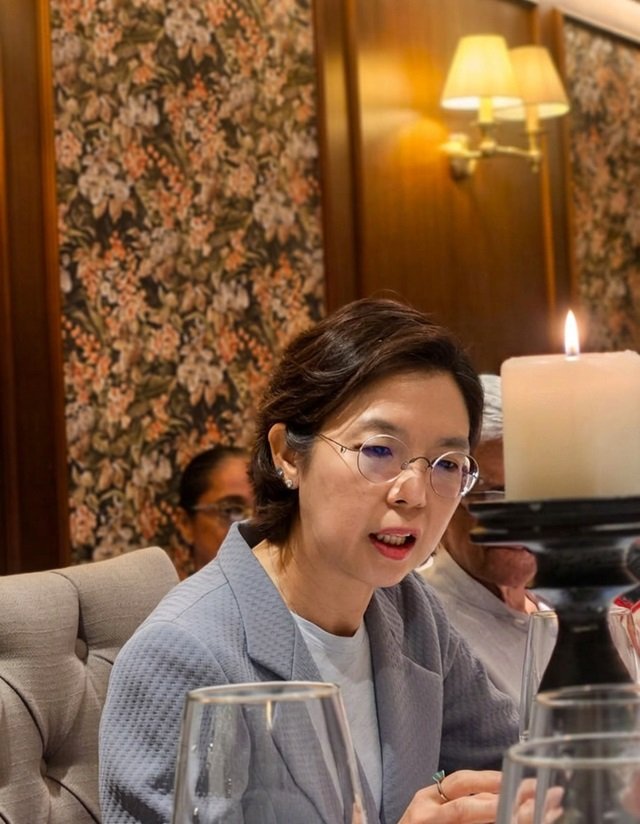
She cited the success of the Korean film “Shiri” as a major milestone proving that Korean storytelling could compete internationally. The film’s commercial success encouraged investment into entertainment firms including SM, JYP, YG and CJ, which later became central to the global K-pop industry.
Lee argued that democratisation after 1987 also transformed Korean cultural production by removing censorship barriers. Creative industries gained freedom to address corruption, inequality, political abuse, school bullying, social class discrimination and human rights issues. Korean dramas, films and music therefore developed both commercial appeal and social depth, increasing their international influence.
She stated that digitalisation later amplified Korea’s cultural expansion. Following the financial crisis, South Korea invested aggressively in broadband infrastructure and digital technologies, becoming one of the world’s most connected societies. This digital ecosystem enabled internet novels, comics, animation, streaming content and music industries to evolve together into an integrated cultural economy.
Lee said South Korea also institutionalised public diplomacy as a formal state strategy. Through the Public Diplomacy Act and the current “K-Initiative” five-year framework, Seoul now combines culture, technology, democratic governance and international development cooperation to strengthen its global influence.
The ambassador linked these policies directly to Sri Lanka, arguing repeatedly that economic openness, institutional reform and long-term planning remain essential for developing states. She warned against inconsistent policymaking and stated that countries which fail to modernise trade systems, investment regulations and digital governance structures would struggle to attract international investors.
During the discussion, participants repeatedly questioned whether South Korea’s development path remained relevant in an era marked by trade fragmentation, supply chain disruptions and geopolitical conflict. Lee responded that South Korea had already navigated multiple international crises including oil shocks, financial collapses, regional trade blocs and post-9/11 disruptions without abandoning open economic policies.
She insisted that free trade agreements and international integration remain essential even under current geopolitical tensions. South Korea continues pursuing new trade arrangements while strengthening economic security policies focused on securing supply chains and strategic resources.
Lee stressed that middle-income countries should cooperate to preserve the rules-based international trading system despite growing protectionist pressures. She argued that domestic institutional reforms remain critical for countries seeking deeper global integration.
Questions during the session also focused heavily on South Korea’s security posture amid growing tensions in the Middle East and Northeast Asia. Participants noted that US missile defence assets associated with South Korea had recently been repositioned during operations connected to Middle Eastern conflicts, raising concerns about the reliability of the American security umbrella.
Lee responded that debates about defence self-reliance have existed in South Korea for decades. However, she said the current administration still prioritises close security cooperation with the United States and Japan while also maintaining stable relations with China.
She acknowledged that relations with North Korea are currently at one of their lowest points in years. According to Lee, Pyongyang no longer frames South Korea as a brother nation pursuing eventual reunification but increasingly treats it as a hostile and separate state.
Despite worsening tensions, Lee insisted that Seoul continues pursuing peaceful coexistence and rejects military unification by force. She said South Korea has reduced provocative measures where possible while simultaneously strengthening domestic defence capabilities through increased military spending and advanced defence manufacturing.
Lee added that South Korea’s industrial development during the 1970s created the foundation for today’s advanced defence sector. The country now exports military equipment internationally and possesses the technological capacity to strengthen independent defence systems if geopolitical conditions require it.
On trade policy, Lee strongly encouraged Sri Lanka to pursue broader regional economic integration, including participation in regional trade frameworks such as the Regional Comprehensive Economic Partnership. She argued that such arrangements would make Sri Lanka more attractive to Korean investors and multinational firms operating across Asia.
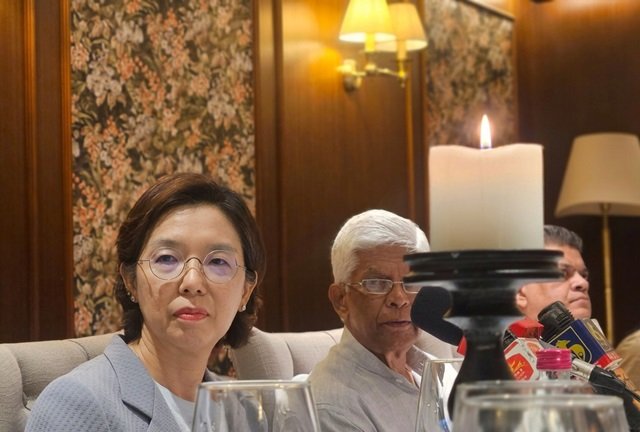
She repeatedly stressed the importance of upgrading customs systems, licensing procedures, tariff structures and trade facilitation mechanisms. According to Lee, bureaucratic efficiency and rules-based governance remain decisive factors for foreign investors evaluating emerging markets.
Lee described how South Korea restructured its own trade governance after the 1997 financial crisis by integrating trade negotiations into the foreign ministry system. This allowed negotiators to coordinate directly with businesses, ministries and industrial stakeholders during free trade negotiations and domestic regulatory reforms.
Digitalisation emerged as another major theme throughout the discussion. Lee explained that South Korean development projects in Sri Lanka increasingly focus on digital governance, taxation systems, transport management, agriculture, fisheries and waste management.
One example highlighted was an ongoing cooperation project with the Colombo Municipal Council to digitalise taxation systems based on South Korea’s own nationwide digital tax infrastructure. Lee said digital governance increases transparency, efficiency and accountability while reducing administrative inefficiencies.
She also confirmed renewed cooperation in ICT education projects and stated that artificial intelligence has become a major priority within South Korea’s development cooperation strategy. According to Lee, Seoul is prepared to support AI-related projects in Sri Lanka if local authorities identify clear priorities and implementation strategies.
At the same time, Lee argued that development assistance should remain recipient-driven rather than donor-driven. She said local ministries and institutions must take ownership of projects rather than depending entirely on foreign agencies.
Another major area discussed was intellectual property rights and innovation policy. Lee explained that South Korea initially possessed little understanding of intellectual property systems during the 1980s and only gradually adopted stronger protections under international pressure and trade agreements.
Over time, Korean companies themselves recognised the importance of protecting patents, copyrights and trademarks after facing widespread imitation overseas. Lee said strong intellectual property systems became particularly critical for protecting Korea’s entertainment industry, where music, films and performances are easily copied.
She argued that countries seeking to develop creative industries must ensure that artists and innovators receive reliable income from their work through effective copyright systems and performance rights protections.
Lee also stressed that innovation requires broader institutional support. South Korea established dedicated ministries and programmes supporting small and medium enterprises and providing seed funding for young entrepreneurs. She admitted that Korean society traditionally fears failure and stable employment within large corporations remains culturally dominant. Government programmes therefore attempt to encourage younger generations to experiment with new business models and digital platforms.
The ambassador repeatedly linked economic development to broader social cohesion and national identity. She argued that countries divided by political, ethnic or regional tensions struggle to create long-term national synergy.
Referring indirectly to Sri Lanka’s post-war reconciliation challenges, Lee stated that South Korea itself experienced severe ideological and regional divisions following colonial rule, civil war and authoritarian governments. Reconciliation and balanced development therefore became essential components of national recovery.
She praised efforts aimed at economic reconstruction in underdeveloped regions and described South Korea’s own long-term regional development strategies, including national land development plans introduced during the 1970s. These plans attempted to reduce regional inequality by encouraging provinces to specialise in different industries while avoiding unnecessary duplication and internal competition.
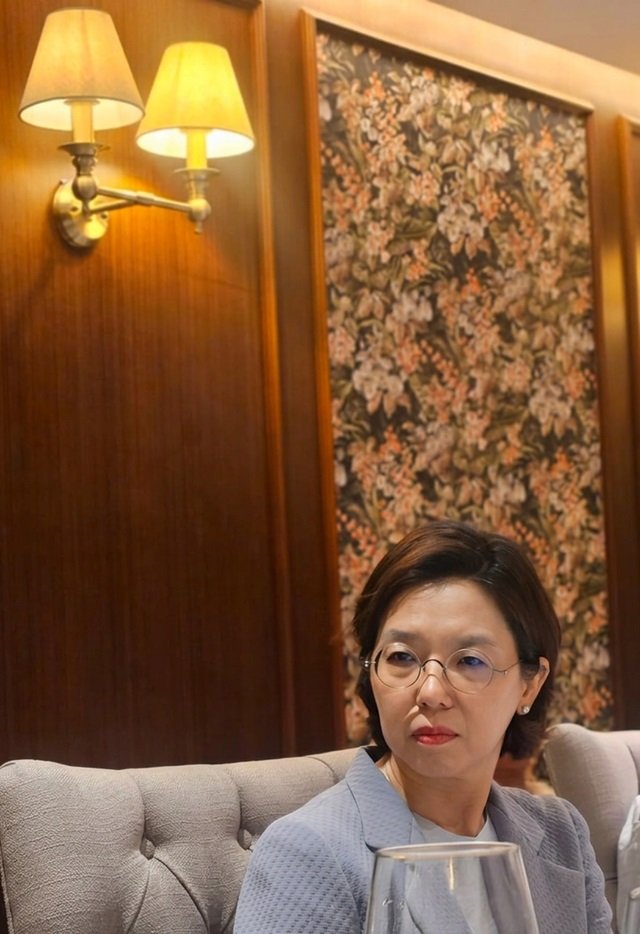
Lee said governments must consciously pursue balanced regional development through long-term planning rather than short-term political decisions. According to her, national development strategies should operate across decades and integrate infrastructure, industrial policy, education and regional economic planning into a unified framework.
Questions also focused on foreign labour and migration. Lee confirmed that approximately 20,000 Sri Lankans currently work in South Korea under labour programmes and said Korean authorities remain committed to protecting foreign workers under domestic labour laws.
She acknowledged concerns regarding labour abuses and stated that the current South Korean administration takes human rights complaints involving foreign workers seriously. Korean employers are expected to provide equal treatment and safe working conditions regardless of nationality.
However, Lee warned that future labour demand in South Korea may increasingly shift towards higher-skilled workers as Korean industries adopt automation, smart factories and artificial intelligence systems. She stressed that countries such as Sri Lanka must continuously upgrade workforce skills to remain competitive within evolving labour markets.
Throughout the roundtable, Ambassador Lee consistently returned to several central themes: disciplined long-term planning, export competitiveness, democratic accountability, technological adaptation, institutional reform, trade openness, balanced development and investment in human capital.
Her message was direct. South Korea’s rise was not built on slogans or temporary policies. It emerged through decades of coordinated state planning, difficult reforms, economic openness, global integration and constant adaptation to crisis. Countries that fail to modernise governance systems, improve competitiveness and maintain policy consistency risk losing both economic momentum and strategic relevance in an increasingly fragmented global order.










