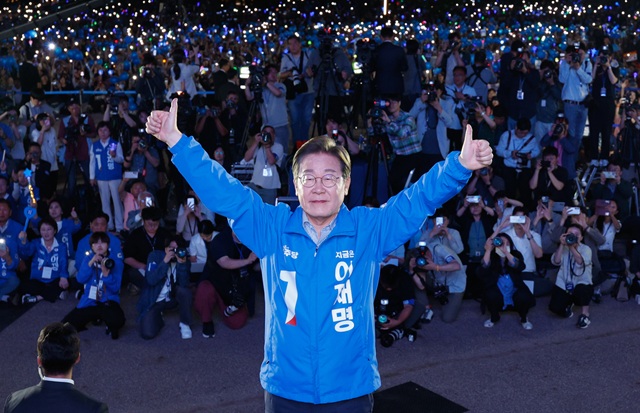
South Korea’s recently elected left-leaning president Lee Jae-myung has taken his first major step toward resetting inter-Korean relations by ordering an end to provocative loudspeaker broadcasts along the heavily militarized border. The move signals a dramatic shift in tone from his conservative predecessor and offers a glimpse into a potentially more conciliatory approach toward North Korea.
The decision, announced by presidential spokesperson Kang Yoo-jung, is aimed at de-escalating tensions that have built up over a year of high-decibel psychological warfare. “President Lee made this decision as a pre-emptive step to ease tensions, given the absence of any recent major provocations by North Korea,” Kang said. She added that Lee’s administration is committed to “restoring trust in inter-Korean relations and establishing peace on the Korean Peninsula.”
For months, both Koreas had engaged in a war of sound, with South Korea blasting K-pop, anti-regime messages, and reports of North Korean human rights abuses across the border, while the North retaliated with blaring sirens and metallic noises.
In a reciprocal move, North Korea has reportedly also ceased its broadcasts, according to the South Korean military, suggesting early signs of mutual restraint.
Lee has also discouraged activists — many of them defectors from the North — from launching propaganda-laden balloons filled with flash drives, medicine, Bibles, and anti-Kim Jong Un literature across the border. These actions had previously inflamed Pyongyang and were a key trigger for its trash-filled balloon counterattacks last year.
Lee’s predecessor, Yoon Suk Yeol, had adopted a hawkish stance and reintroduced the border broadcasts in retaliation to those provocations. Lee, by contrast, has criticized Yoon’s approach as unnecessarily inflammatory.
A Return to Engagement
Lee’s actions place him in line with a long tradition of South Korean leftwing presidents who have prioritized dialogue and cooperation over confrontation with the North. In his inauguration speech last week, Lee pledged to maintain military deterrence while also “keeping channels of communication open” and pursuing peace “through dialogue and cooperation.”
His strategy echoes that of Moon Jae-in, the progressive leader who governed from 2017 to 2022 and made historic efforts to end the Korean War with a formal peace treaty. While Moon’s overtures failed due to reluctance from Washington, Pyongyang, and Beijing, they set a precedent for engagement that Lee now seems eager to revive.
Yet Lee’s path forward is more complicated than ever. Kim Jong Un has recently abandoned North Korea’s long-held goal of reunification, raising doubts about the North’s willingness to engage with Seoul at all. “Kim has rejected [unification], and that has really changed the way that North Korea approaches the South,” said Jenny Town, a senior fellow at the Stimson Center in Washington. “Do they still see South Korea as playing a role in future negotiations, or have they written them off altogether?”
Nuclear Threat Still Looms
Despite gestures of détente at the border, North Korea’s nuclear weapons program continues to expand. Rafael Grossi, Director-General of the International Atomic Energy Agency, revealed this week that Pyongyang appears to be building a new uranium enrichment facility at its Yongbyon complex.
According to the US Congressional Research Service, North Korea may now possess enough fissile material for up to 90 nuclear warheads — a sharp increase from last year’s estimate of 60.
These developments underscore a persistent truth: nuclear escalation continues irrespective of Seoul’s domestic politics.
Trump Signals Renewed Interest in Diplomacy
Amid rising nuclear concerns, former US President Donald Trump has hinted at reviving his personal diplomacy with Kim Jong Un, despite the collapse of his 2019 Hanoi summit. Trump recently claimed his administration had resumed “communication” with Pyongyang, calling Kim a “very smart guy” and referring to North Korea as a “big nuclear nation.”
However, North Korean officials at the UN in New York reportedly rejected a letter from Trump, according to NK News, signaling Pyongyang’s reluctance to re-engage on those terms. Still, White House Press Secretary Karoline Leavitt noted this week that Trump “remains receptive” to restarting dialogue.
Complex Road Ahead
While Lee Jae-myung’s early de-escalatory moves are welcomed by proponents of peace, analysts caution that achieving any significant breakthrough will be a challenge. With North Korea distancing itself from unification, continuing its nuclear buildup, and remaining skeptical of both Seoul and Washington, Lee must tread carefully.
Nevertheless, the decision to halt loudspeaker broadcasts — once symbolic of South Korea’s defiance — marks a critical first step toward diffusing tensions and opening space for diplomacy on the long-divided Korean Peninsula.