If not for former Prime Minister Sir John Kotelawala and Ranil Wickremesinghe’s father, Esmond Wickremesinghe, Anura Kumara would not have had the opportunity to address the United Nations General Assembly.
It was Sir John who launched the diplomatic mission to secure Sri Lanka’s admission to the United Nations (UN). The first application for UN membership was submitted by the country’s first Prime Minister, D.S. Senanayake, three months after independence. However, the Soviet Union used its veto at the UN Security Council to reject the application.
The Soviet argument was that Sri Lanka could not be considered a fully free and independent state while British military bases remained in Trincomalee. From 1948 to 1955, this reasoning delayed Sri Lanka’s entry into the UN.
When Sir John became Prime Minister, he was determined to succeed where others had failed. He appointed Esmond Wickremesinghe—Ranil Wickremesinghe’s father and a close adviser to both him and the UNP—as a special envoy for this diplomatic mission.
Esmond travelled to New York and began the campaign. He observed how the United States and the Soviet Union were rejecting membership applications from countries aligned with their rivals, effectively turning the process into a Cold War battleground. Esmond reached out to countries rejected by both superpowers and formed a coalition. He was assisted by R.S.S. Gunawardena, Sri Lanka’s first permanent representative to the UN. Together, they pressured both Washington and Moscow to accept the admission of these countries, including Sri Lanka.
As a result, Sri Lanka finally gained UN membership in December 1955, six years after first applying. It was a major victory for Sir John. Although he eagerly anticipated addressing the next UN General Assembly, his hopes were dashed when he was defeated in the 1956 general election. The first Sri Lankan head of state to address the UN General Assembly was Sir John’s political rival, S.W.R.D. Bandaranaike, who seized the historic opportunity.
Bandaranaike was preparing for another address to the UN in 1959 when he was assassinated. His death occurred shortly after the final Cabinet meeting before his planned visit.
Since 1956, Sri Lankan leaders have regarded addressing the UN General Assembly as a great honour. Even if they skipped other international summits, they never neglected the UN. In 2003, a dispute arose between President Chandrika Kumaratunga and Prime Minister Ranil Wickremesinghe over who should attend. Chandrika argued that she should go as head of state, while Ranil insisted on his right as head of government. In the end, Ranil attended in 2003, and Chandrika went in 2004.
However, Sri Lanka’s first executive president, J.R. Jayewardene, never addressed the UN General Assembly during his 10 years in power. He did visit the White House at President Reagan’s invitation and received a warm welcome. On that 1983 trip, he stayed at the famous Astoria Hotel in New York but did not even visit the UN Secretary-General’s office. No one questioned his decision, and he never explained it. Perhaps he considered the exercise a waste of government funds with little real benefit.
President Premadasa followed J.R.’s example. During J.R.’s tenure, Premadasa did once address the UN General Assembly as Prime Minister. On that occasion, he went beyond simply giving a speech: he proposed that 1987 be declared the International Year of Shelter for the Homeless, to draw global attention to housing issues. The UN adopted his proposal and launched international housing initiatives in 1987, marking the first time a Sri Lankan leader had successfully influenced UN policy. Yet, after becoming President, Premadasa never again attended the UN, likely for the same reason as J.R.—that it was an unnecessary expense.
Despite not travelling to the UN, both J.R. and Premadasa secured significant foreign investment and aid for Sri Lanka. J.R. developed free trade zones and tourist infrastructure, while Premadasa obtained garment quotas and sparked a garment industry revolution. Though critics predicted the World Bank would not fund his Janasaviya programme, he managed to win their support.
Neither J.R. nor Premadasa relied on photo opportunities abroad to achieve results. Instead, they worked through skilled diplomats and officials, coordinating from Colombo.
By contrast, Sri Lankan leaders who travelled to the UN General Assembly rarely brought home tangible gains. Since 1956, countless leaders have attended, delivered speeches, and met foreign dignitaries, but such encounters have yielded little practical benefit. Meanwhile, J.R. and Premadasa—who avoided the UN stage—achieved substantial international successes.
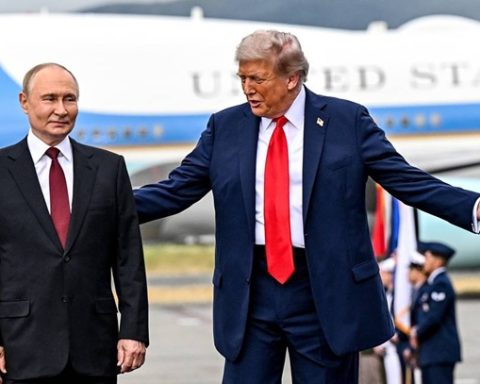
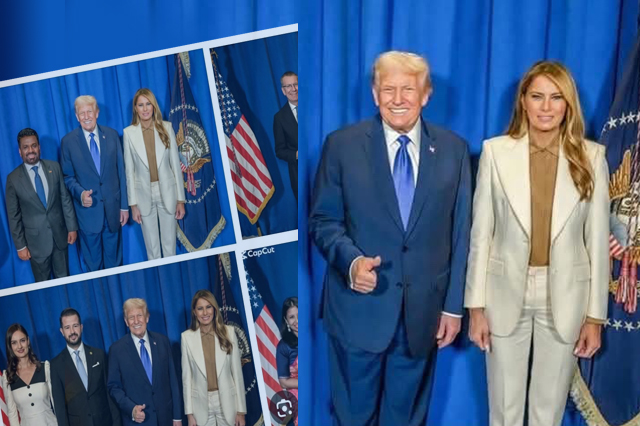
For many leaders, the UN General Assembly has become little more than a platform for photographs: standing at the podium, posing alongside the US President, and filling a personal album—gestures that do nothing for the country.
The JVP-led government, which came to power promising system change, did not break with this 76-year-old tradition. Like their predecessors, the JVP’s head of state travelled to New York, delivered a speech at the UN, posed for photos with other leaders, and returned home.