The World Bank’s International Debt Report 2024 paints a grim picture of Sri Lanka’s debt challenges, underscoring the nation’s precarious financial position within a global crisis that saw debt servicing costs and external borrowing surge to record levels in 2023. For low- and middle-income countries (LMICs), excluding China, total debt servicing costs climbed to $971.1 billion—double the levels seen a decade ago. Sri Lanka, already burdened with high debt and economic vulnerabilities, exemplifies the struggles faced by LMICs under these circumstances.
The report highlights that LMICs, including Sri Lanka, faced extraordinary external debt burdens exacerbated by the pandemic’s legacy and subsequent financial shocks. Key contributing factors included elevated interest rates, which reached their highest levels in two decades, and the depreciation of local currencies against a strong US dollar. These conditions placed severe strain on Sri Lanka’s fiscal capacity, diverting resources from essential public services to debt repayments.
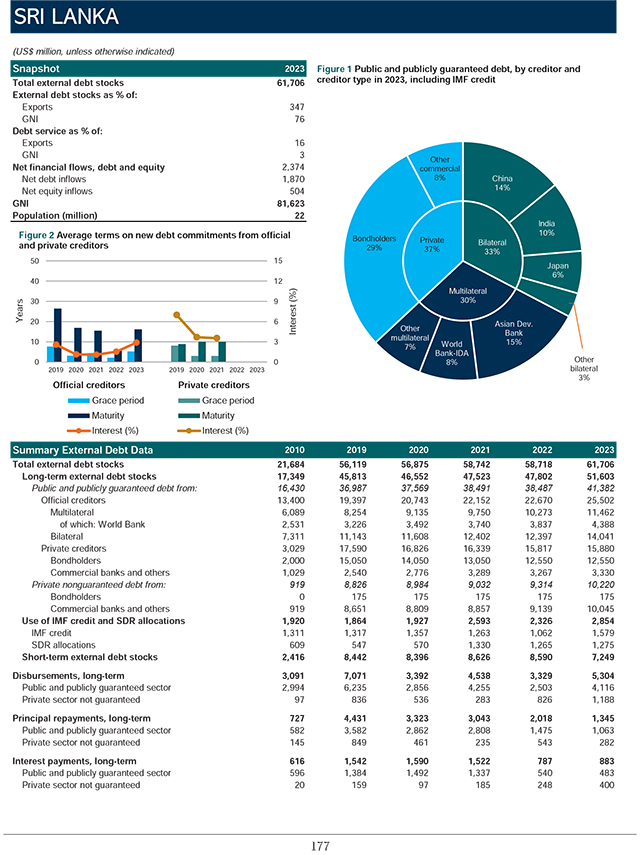
Sri Lanka’s external debt servicing has been particularly arduous. The country, heavily reliant on multilateral lending for balance-of-payments support, has seen its debt dynamics change significantly since the pandemic. Multilateral institutions such as the World Bank and the International Monetary Fund (IMF) have become central to the nation’s financial strategy, providing emergency relief and concessional financing. This trend reflects the broader pattern across LMICs, where multilateral creditors have increased their share of lending as private creditor financing has slowed considerably due to adverse market conditions and heightened risk perceptions.
Private capital withdrawal has also impacted Sri Lanka, with the report noting that net transfers from private creditors to LMICs have been negative for the past three years. In 2023, net transfers on external debt owed to bondholders across LMICs remained negative at $13.8 billion. This retreat underscores the diminished access to private financing, forcing countries like Sri Lanka to rely heavily on multilateral support, often at concessional terms.
Total external debt stock among LMICs hit a new high of $8.8 trillion in 2023, with Sri Lanka’s debt profile reflecting similar increases. The report indicates that debt stock owed to multilateral creditors rose by 6.8% globally to $1.3 trillion, further cementing the critical role of institutions like the World Bank and regional development banks in providing financial lifelines. The share of multilateral debt to IDA-eligible countries grew even more dramatically, rising by 10.1% in 2023.
For Sri Lanka, this growing reliance on multilateral borrowing poses both opportunities and challenges. While concessional financing terms have alleviated immediate repayment pressures, the rising cost of new commitments—driven by increased interest rates—adds a longer-term burden. The report notes that interest rates on new loans from official creditors climbed to 4.09% in 2023, while those from private creditors reached 6.0%, the highest since 2008.
The World Bank underscores the need for improved debt transparency and sustainable borrowing practices as Sri Lanka and other LMICs navigate these challenges. The report suggests that debt vulnerabilities, especially in poorer nations, have diverted resources from critical areas such as healthcare, education, and infrastructure development, adversely impacting economic growth.
Key Takeaways from the International Debt Report 2024
- Record Debt Servicing Costs: LMICs, excluding China, faced debt servicing costs of $971.1 billion in 2023, an increase of 19.7% from 2022.
- Shift in Debt Composition: Multilateral creditors have become the dominant lenders to LMICs since the pandemic, while private lending has slowed significantly.
- Net Transfers from Private Creditors: For three consecutive years, private creditors have registered negative net transfers, withdrawing financial support from LMICs.
- Rising Interest Rates: The cost of new loans increased in 2023, with official creditor rates at 4.09% and private rates at 6.0%, adding further financial strain.
- Debt Stock Growth: LMICs’ total external debt stock reached $8.8 trillion, with multilateral debt growing at a faster pace than private debt.
Sri Lanka’s economic recovery depends heavily on its ability to manage these mounting pressures, achieve sustainable debt restructuring, and ensure that borrowing supports long-term development goals. The report serves as a crucial reminder of the importance of transparent and equitable debt management in fostering resilience among vulnerable economies.