The Government of Sri Lanka has introduced a sweeping 50% surcharge on customs import duties for all imported motor vehicles, under an emergency order issued by President Anura Kumara Dissanayake in his capacity as Minister of Finance, Planning and Economic Development. The order, enacted under Section 10A of the Customs Ordinance, grants legal authority for the temporary measure, which applies broadly across all vehicle categories including cars, buses, vans, freight vehicles, ambulances, hybrid models, and fully electric vehicles.
According to the official gazette issued on May 15, 2026, the surcharge takes effect from May 16, 2026 and will remain in force for a fixed period of three months. The policy imposes an additional 50% charge on existing customs import duties, affecting both general and preferential tariff structures. Officials have stated that the primary objective is to discourage vehicle imports and reduce pressure on foreign exchange reserves during a critical economic adjustment phase.
A key exemption has been built into the order, allowing imports to proceed without the surcharge if Letters of Credit were opened on or before May 15, 2026. This provision effectively protects transactions already in progress, while placing all new import arrangements under the significantly higher cost structure.
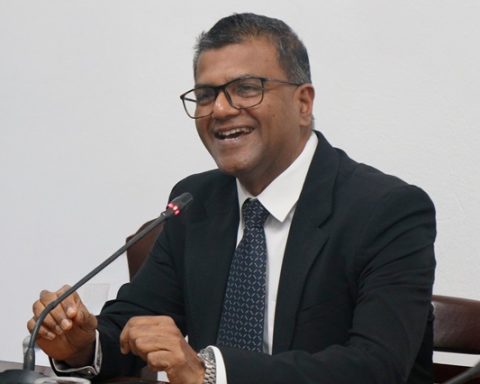
Speaking to the media, Minister Anila Jayantha confirmed that the measure is strictly temporary and designed to operate only for the designated three-month period. However, the policy’s broad coverage and immediate implementation have already raised concerns within the automotive trade regarding price escalation and supply disruptions.
Despite official assurances of temporariness, a reliable source within the top tier of government, speaking on condition of anonymity, has indicated that the three-month timeframe may not be final. The source asserted that the measure is likely to be extended beyond the initial period, potentially with revisions or reversals depending on fiscal performance. The same source further suggested that the decision is part of a broader effort to meet International Monetary Fund-linked economic benchmarks and secure promised financial instalments under ongoing support arrangements.
The source described the move as a “desperate attempt” to align import expenditure controls with IMF expectations, highlighting internal pressure to demonstrate fiscal discipline through import compression. While this claim has not been officially confirmed, it adds a layer of uncertainty to the government’s stated position that the surcharge will expire automatically after three months.
The policy, which covers detailed HS classifications under customs heading 87.02, is expected to significantly reshape Sri Lanka’s vehicle market in the short term. However, with speculation emerging over possible extensions, stakeholders in the automotive sector remain uncertain whether the measure represents a temporary stabilisation tool or the beginning of a longer-term structural shift in import taxation policy.