by Our Political Affairs Editor
The grotesque irony of Sri Lanka’s leadership posturing as champions of gender equity while presiding over a system that systematically exploits and discards its female workforce cannot be overstated. Prime Minister Harini Amarasuriya’s recent proclamations about women’s economic participation ring hollow, for they stand in stark contrast to the abysmal reality of Sri Lankan women’s lived experiences. The claim that Sri Lankan women are hindered from participating in the economy is not just an exaggeration—it is an egregious falsehood, an opportunistic misrepresentation designed to manipulate public perception and curry international favour.
To paint Sri Lanka as a nation shackling its women from economic contribution is to ignore the harsh truths of its labour dynamics. Women are not just participants in the economy; they are its sacrificial workforce. The garment sector, a cornerstone of Sri Lanka’s economic framework, is overwhelmingly dependent on female labourers, who toil under exploitative conditions for paltry wages. Beyond the confines of factory floors, Sri Lanka has institutionalised the mass export of its female citizens as domestic labourers to the Middle East, exposing them to chronic abuse, systemic harassment, and inhumane treatment, while the government remains complicit in its silence. The hypocrisy is breathtaking—while the Prime Minister sermonises about gender equity, her administration is conspicuously absent when Sri Lankan women endure torment in foreign lands with no legal or diplomatic recourse.
If the government were genuinely concerned about gender disparities, it would start by addressing its own house of horrors. The recent revelation that an individual accused of sexual harassment has been appointed as the Private Secretary to the Minister of Foreign Affairs is emblematic of the government’s cavalier approach to women’s safety. This is not a mere administrative oversight; it is a damning indictment of a system that thrives on impunity. The message is clear—women’s rights and dignity are disposable when they clash with the state’s political conveniences.
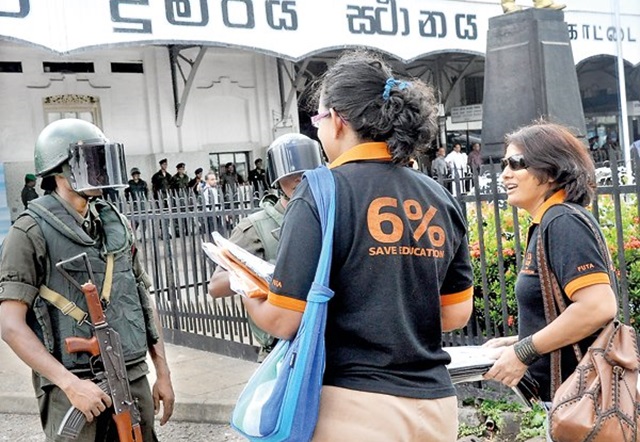
Before the Prime Minister lectures the nation on systemic barriers, perhaps she should reflect on the catastrophic state of the education sector, an ecosystem hijacked by unionist overlords and bureaucratic demagogues. The education system, rather than serving as an egalitarian force, has become a breeding ground for manipulation and stagnation. The unashamed elevation of a fraudulently credentialed individual to the esteemed position of Speaker of the Parliament underscores the moral decay infecting the nation’s institutions. Meanwhile, schoolchildren are subjected to archaic rituals of subjugation, kneeling in reverence before politicians who should be bowing before them in shame. This is the Sri Lankan reality: a government draped in reformist rhetoric yet actively perpetuating systemic degradation.
Prime Minister Amarasuriya’s invocation of gender disparities is not an earnest plea for reform—it is a calculated act of political theatre. The statistical diatribe about women’s labour force participation rates is deployed not to rectify inequities but to manufacture an illusion of progressive governance. The supposed 32% participation rate among Sri Lankan women is not an indictment of their exclusion but rather a testament to the conditions that force them into informal and precarious work. The gender disparity in the workforce is not the result of restrictive policies barring women’s entry; rather, it is symptomatic of a labour market that commodifies and exploits female workers while affording them no protections or dignities.
It is no coincidence that nations led by women, particularly in Asia, have often wielded gender rhetoric as a weaponised instrument for political mileage while remaining indifferent to tangible reforms. The elevation of women to high office has, in many instances, failed to translate into meaningful gender justice. In fact, some of the most egregious violations of women’s rights have occurred under female-led administrations. The notion that a woman’s ascension to power is inherently transformative is a myth that conveniently obscures structural inequities. Sri Lanka is no exception to this pattern; it is merely the latest stage upon which this grand illusion plays out.
The government’s perpetual refrain of “system overhaul” has become a comical farce, a smokescreen designed to placate a disillusioned populace. The Prime Minister’s effusive praise of international financial institutions and initiatives, such as the Women’s Entrepreneurial Financial Fund and the Asian Development Bank’s involvement, is nothing more than diplomatic choreography. While these initiatives provide a veneer of progress, they do little to dismantle the entrenched structural barriers that consign women to economic marginalisation. The hyper-focus on financial access as the panacea for gender disparity is a misdiagnosis—an intentional one, designed to deflect from the government’s failure to enact genuine social and legal protections for women.
The moral bankruptcy of Sri Lanka’s leadership is laid bare when it preaches empowerment while enabling oppression. The Sri Lankan missions in abroad, which ought to be safeguarding the rights of migrant workers, instead operate in a state of wilful indifference. Reports of abuse, assault, and even death of Sri Lankan domestic workers are routinely met with bureaucratic inertia and diplomatic cowardice. The government does not just fail its women; it actively betrays them.
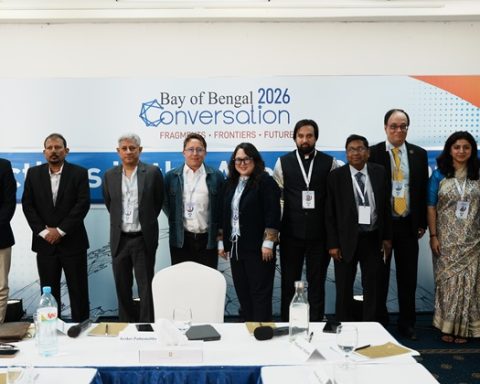
Prime Minister Amarasuriya’s declarations on gender equity, much like the broader reformist discourse of her government, are a masterclass in performative politics. The systemic challenges facing Sri Lankan women will not be ameliorated by grandiloquent speeches at luxury hotels or by parroting financial statistics sourced from global institutions. Real change demands a government that does not merely pay lip service to gender justice but enacts policies that confront exploitation, dismantle institutional impunity, and provide tangible protections for women. Until such a government emerges, the Prime Minister’s rhetoric remains what it truly is—a bluff, an opportunistic charade designed to placate the masses while sustaining the status quo of exploitation and systemic neglect.