Editorial
The recent BRICS summit in Kazan, Russia, was not just another diplomatic gathering; it was meant to be a defining moment for Sri Lanka’s foreign policy under the newly elected President. With an exclusive invitation to this critical summit, Sri Lanka had a golden opportunity to bolster its ties with BRICS and assert its role in the emerging multipolar world order. Instead, the nation sent a foreign secretary on extended service—an embarrassing decision that has been lambasted as a blatant disregard for Sri Lanka’s standing on the global stage. This tactical blunder led to a humiliating rejection of Sri Lanka’s aspirations even for “partner” status, leaving it out of a group that welcomed 13 other nations, including Cuba and Bolivia. This is not merely a diplomatic oversight; it’s a catastrophic failure that highlights the government’s complete lack of awareness and foresight, even as the mainstream media remains fixated on upcoming elections rather than this glaring national disgrace.
Sri Lanka’s exclusion from the Kazan summit reveals a profound diplomatic crisis. The absence of senior officials signifies not only a gross miscalculation but also a failure to recognize the shifting geopolitical landscape. The summit presented a rare platform for Sri Lanka to align itself with Global South priorities, yet it settled for routine representation instead of high-level engagement. In this blunder, the new administration continues a disturbing trend of its predecessors’ foreign policy failures, exhibiting an alarming inability to adapt at a time when Sri Lanka desperately needs strategic alliances to address its economic and political crises.
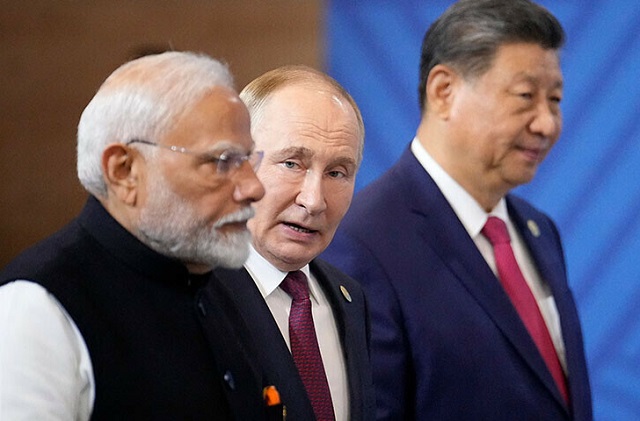
The stakes at Kazan were nothing short of monumental, with BRICS members exploring alternatives to the Western-dominated financial system. This summit was a pivotal moment, as leaders like Xi Jinping and Vladimir Putin pushed for a seismic reform of global governance and financial systems. Bolivia’s President Luis Arce characterized BRICS as a “shield” against Western hegemony, while countries from the Global South increasingly see BRICS as a bastion of sovereignty and economic independence. For Sri Lanka, grappling with an external debt crisis and the relentless pressure from Western financial institutions, aligning with BRICS is not just an option; it is a necessity.
Yet, by failing to attend Kazan, Sri Lanka underscores a broader strategic vacuum in its foreign policy. Lacking a coherent, self-driven agenda, the country appears adrift between competing geopolitical blocs. While nations across Asia, Africa, and Latin America aggressively seek inclusion in BRICS, Sri Lanka’s indecision reflects a troubling reluctance—or worse, indifference—to engage with the multipolar vision that BRICS advocates. The current administration, claiming to revitalize foreign relations, has squandered a pivotal opportunity to pivot away from the suffocating embrace of Western financial hegemony toward solidarity with the Global South.
As a direct consequence of its sidelining in Kazan, Sri Lanka has been relegated to the outskirts of BRICS’ strategic objectives, with its application for partnership stalled indefinitely. This diplomatic rejection stings deeply, especially considering that countries like Bolivia, Indonesia, and Nigeria, which face less immediate economic urgency than Sri Lanka, are now positioned within BRICS as vital partners in reshaping a more inclusive economic order. It seems Sri Lanka’s foreign policy machinery is stuck in a quagmire of inertia, with its representatives failing to grasp the monumental significance of the BRICS alliance.
The Sri Lankan Foreign Minister has assured that the country’s application for BRICS membership “will be considered,” reiterating intentions to join the BRICS New Development Bank (NDB). Yet, such assurances do little to rectify the damage inflicted by a lack of proactive diplomacy. Membership in the NDB might provide some financial relief, but the true path to reform and empowerment lies in committed engagement with BRICS, joining the very dialogues that shape the NDB’s policies.
During the Kazan summit, Xi and Putin aimed to cement BRICS as a cornerstone for the Global South, advocating for a transformative overhaul of international financial and political frameworks. This was Sri Lanka’s moment to champion its interests, yet by neglecting to attend, both the President and Foreign Minister have diminished the nation’s voice at a critical juncture. Every other Global South nation, united by shared values of sovereignty and self-determination, has found a strong advocate in BRICS, while Sri Lanka has chosen the path of silence.
As BRICS grows in influence, the Kazan summit should serve as a stark warning to Sri Lanka’s leadership. Remaining a passive observer instead of an engaged participant risks not only diplomatic irrelevance but also economic marginalization. The BRICS Kazan Declaration, which emphasizes the importance of Global South solidarity and reforming Western-led institutions, resonates profoundly with Sri Lanka’s urgent needs.
In the wake of Kazan, the Sri Lankan government must radically reassess its foreign policy approach. Failing to do so risks not only further diplomatic isolation but also an erosion of public trust in the administration’s ability to assert Sri Lanka’s rightful place in a rapidly changing world. The stakes have never been higher, and the consequences of inaction could be disastrous.