by Luxman Aravind
Sri Lanka’s latest controversy over Chabad Houses has become something far more revealing than a dispute over a religious centre in a tourist town. It is becoming a case study in how political anger, communal suspicion and poorly examined claims can be turned into an apparently authoritative narrative. The Hiriketiya protest on 14 August brought local residents and Buddhist monks onto the streets demanding action against a newly established Chabad House. Protesters alleged that the centre had been established without the necessary approvals and called for its removal if those allegations were substantiated. Separate reports from Chabad representatives alleged that stones and firecrackers were thrown towards the premises and that Israeli visitors were threatened. Those allegations should be investigated rather than simply repeated as established fact. If the centre has breached Sri Lankan law, the authorities should investigate it and act according to the law. But when a religious institution becomes the subject of a campaign built on assumptions rather than evidence, the issue stops being merely about regulation. It becomes a test of whether Sri Lanka still understands the difference between legitimate scrutiny and collective suspicion.
The most glaring problem is the description of Chabad Houses themselves. In sections of the Sri Lankan debate, Chabad is being presented almost as though it were Israeli intelligence or political infrastructure operating under the cover of religion. That claim requires evidence, and evidence concerning individual Chabad Houses in Sri Lanka has not been publicly demonstrated to justify such a sweeping conclusion. Chabad-Lubavitch is a global Hasidic Jewish religious movement, and Chabad Houses generally provide religious and community services including prayer, Shabbat meals, kosher food, religious education, assistance to Jewish travellers and communal activities. Many Chabad Houses also function as synagogues or contain dedicated prayer spaces. A Chabad House is better understood as a broader Jewish community centre that may incorporate a synagogue, rather than as an institution separate from Jewish worship. That distinction matters because describing Chabad Houses as though they were inherently political or security institutions obscures what these centres actually do.
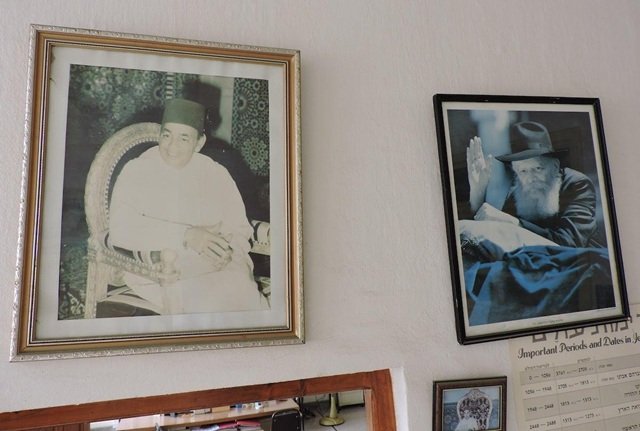
The international record should make Sri Lankan campaigners pause before turning Chabad into a synonym for Israeli geopolitics. Chabad operates in Muslim-majority countries, including societies where relations with Israel are politically sensitive or where diplomatic relations with Israel have not existed. Chabad has an established presence in Bali, Indonesia, where Jewish travellers can access religious services and communal facilities. Morocco has maintained Chabad institutions for decades, including a Chabad House in Casablanca. Chabad centres have also existed in other Muslim-majority societies with very different political systems and relationships with Israel. None of this proves that Chabad has no political dimensions. It proves something more basic and more important. A Chabad House cannot simply be defined as an Israeli political outpost merely because it is associated with a Jewish movement that has ideological and historical connections to debates about Israel.
There is certainly material worth examining about Chabad’s relationship with Israeli religious nationalism. Influential Chabad figures have opposed territorial concessions and expressed strong attachment to Eretz Yisrael, while sections of the movement have developed relationships with Israeli right-wing and religious-nationalist circles. Those facts deserve scrutiny, particularly in the context of the Gaza war and the continuing political crisis surrounding Israel’s treatment of Palestinians. But this is where some Sri Lankan commentary appears to make its most reckless leap. A relationship between parts of a religious movement and particular Israeli political currents is transformed into an assertion about every Chabad House everywhere. The political views of some Chabad figures become evidence against a religious centre in Hiriketiya. An ideological debate in Israel is imported wholesale into Sri Lanka without first establishing what the particular institution actually does. That is guilt by association dressed up as geopolitical sophistication.
If there are legitimate questions about Chabad Houses in Sri Lanka, they are remarkably straightforward. Who owns the premises? Who operates them? Under what legal registration? What activities are conducted there? Who finances them? Are the operators complying with immigration and employment laws? Are there unauthorised commercial activities? Are there planning violations? Are political organisations using the premises? Is there evidence of foreign funding being channelled for purposes prohibited by Sri Lankan law? These questions can be answered through documents, financial records, registration records, immigration data and law-enforcement investigations. If violations exist, expose them. If there is evidence of a security threat, act on it. But if the evidence is absent, a campaign should not be allowed to manufacture a threat simply by repeating the words “Israel”, “Chabad” and “security” until they become indistinguishable in the public mind.
The timing of this controversy is also difficult to ignore. While Sri Lanka is becoming embroiled in a political storm over Jewish religious centres, Parliament is confronting the reported crisis involving around 7,000 Sri Lankan workers in Israel who are facing immigration and employment problems. The figure was raised in Parliament by Opposition MP Chamara Sampath Dassanayake, who said that around 30,000 Sri Lankans are currently working in Israel. The reported problems include workers who entered Israel for employment in designated sectors but subsequently moved into other jobs, with some facing the prospect of deportation. The Government says it is negotiating to resolve the problem. This is a substantial consular and employment issue involving thousands of Sri Lankan citizens. It requires transparency about recruitment, employment agreements, visa conditions and the actions of both the previous and present administrations. It does not need another round of political blame-shifting in which responsibility is endlessly pushed backwards. If workers were sent abroad without proper clarity about their employment status, the public deserves a factual account of who authorised the arrangements, who failed to supervise them and what is being done now.
Yet the political energy being directed towards Chabad Houses appears disproportionate to the evidence publicly produced about them. Sri Lanka has experienced this pattern before. The halal controversy became a national political storm in which questions about certification, commercial practices and transparency became mixed with much broader claims about Muslim influence and national identity. Regulatory questions were legitimate. Collective suspicion was not. Sri Lanka has repeatedly demonstrated how quickly a technical issue involving religion can be converted into a much larger political campaign, and how difficult rational discussion becomes once communal mobilisation takes over. The fact that a religious organisation or institution may have financial arrangements worth examining does not establish a wider conspiracy. Money should be traced, regulations should be enforced and violations should be prosecuted. That is how a functioning state operates.
The lesson should be especially obvious after the Easter Sunday attacks. Sri Lanka had genuine extremist networks, genuine radicalisation, genuine failures in intelligence and investigative coordination and genuine institutional shortcomings. Parliamentary investigations identified serious deficiencies in preparedness, intelligence sharing and political oversight. The appropriate response should have been stronger scrutiny of extremist recruitment, financing, foreign connections and unlawful activities. Yet years later, parts of the public debate still drift towards unproven masterminds and political conspiracies while the harder work of establishing financing chains, monitoring extremist networks and enforcing existing laws receives far less sustained attention. If Sri Lanka truly learned anything from Easter Sunday, it should be that security policy must follow evidence rather than political convenience.
The same standard must now apply to Chabad. If a Chabad House has violated Sri Lankan law, prosecute the violation. If its finances are unlawful, investigate the money. If its operators have breached immigration rules, take action. If there is credible evidence of political or extremist activity, place that evidence before the public and the courts. But if none of those things can be demonstrated, demanding the closure of Jewish religious institutions because of assumptions about Chabad’s ideological associations is not national security. It is religious discrimination wrapped in geopolitical language. The Hiriketiya dispute deserves investigation, but investigation means establishing facts, not converting allegations into conclusions. Sri Lanka has every right to regulate foreign organisations and protect its national security. It has no legitimate reason to abandon the basic principle that religious institutions must be judged by their conduct rather than by the identity of the people who operate them.