Exporters in Sri Lanka have raised serious concerns over a government decision to transfer export inspection responsibilities from the Board of Investment of Sri Lanka to Sri Lanka Customs starting in July, warning that the move could severely disrupt the country’s already fragile export sector.
For more than a decade, export goods produced in free trade and investment promotion zones have been cleared through a streamlined “Green Channel” managed by the BOI, allowing faster inspections and direct institutional coordination on behalf of exporters. Industry representatives say this system enabled efficient shipment handling for 10 to 15 years and played a critical role in sustaining Sri Lanka’s export competitiveness, particularly in sectors such as garments that generate vital foreign exchange.
Exporters fear that transferring this function to Customs—described by many in the trade community as the most corrupt public institution in the country—will introduce bureaucratic delays, procedural uncertainty, and vulnerability to trade union actions. They warn that if inspection bottlenecks mirror existing delays associated with Customs operations, exporters could miss strict international delivery deadlines, leading to cancelled orders and long-term reputational damage in global markets. Business leaders stress that once buyers lose confidence in timely delivery, they rarely return with new contracts.
Concerns have intensified over the risk of industrial action. Exporters note that if Customs trade unions resort to strikes, shipment flows could halt entirely, triggering a collapse in export-driven industries and cutting off a key source of dollar inflows at a time when Sri Lanka is still recovering from its economic crisis.
According to reports published by Mawbima, the change is being implemented at the request of a senior government official despite resistance from sections of the BOI itself. Some officials within the investment agency have opposed allowing Customs to conduct inspections outside the long-established Green Channel framework, arguing that it undermines investor-friendly mechanisms designed to ease business operations.
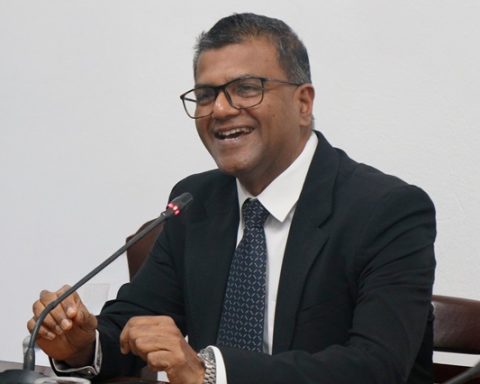
Customs authorities, however, defend the transition as a legal correction. Media Spokesperson Chandana Punchihewa has stated that BOI-led inspections are inconsistent with Section 57 of the Customs Ordinance, emphasizing that all import and export inspections must legally be carried out by Customs. He further clarified that the new arrangement will not be a temporary pilot but a permanent change to enforcement procedures.
A senior BOI official indicated that the shift is also linked to policy expectations tied to the International Monetary Fund, which has set benchmarks requiring that statutory functions assigned to Customs be performed solely by that institution. Both agencies have reportedly agreed to proceed in line with these requirements, though exporters remain unconvinced that the transition has adequately accounted for operational realities on the ground.
With implementation scheduled to begin in July, the dispute has opened a new fault line between regulatory reform and trade facilitation, leaving Sri Lanka’s export community bracing for what many fear could become a major test of the country’s ability to balance governance changes with economic survival.