Sri Lanka’s government is preparing a five-year community development plan running from 2027 to 2031 under its Praja Shakthi national programme, an initiative designed to reduce rural poverty and strengthen communities through coordinated, long-term investment. The strategy aims to move beyond isolated infrastructure projects towards a development model that addresses the underlying causes of poverty and vulnerability across rural, urban and plantation communities.
The programme comes as poverty and regional disparities remain significant national challenges more than 75 years after Sri Lanka gained independence. Recent data cited from the International Food Policy Research Institute (IFPRI) indicate that approximately one-quarter of Sri Lankans experience multidimensional poverty, while nearly half the population faces multidimensional vulnerability. The reported poverty rate is 12 per cent in urban areas, 25 per cent in rural areas and 62 per cent in the plantation sector. The United Nations Development Programme’s 2023 report placed the proportion of Sri Lankans experiencing multidimensional vulnerability at about 55 per cent.
Regional differences are also pronounced. Puttalam District records the highest multidimensional vulnerability index, at 71.8 per cent, while Matale District has the lowest, at 41.5 per cent. These disparities have strengthened the case for a sustained development strategy rather than short-term interventions that address individual needs without tackling their underlying causes.
Praja Shakthi is being implemented under the active coordination of the President’s Office through the Ministry of Rural Development, Social Security and Community Empowerment. It operates alongside two other national initiatives, Clean Sri Lanka and the Digital Economy programme, as part of the government’s wider development agenda.
More than 14,000 villages and communities across the country have established Community Development Councils (CDCs) under Praja Shakthi. Each council consists of 25 members, a structure intended to ensure broad community representation and encourage local participation in identifying development priorities.
By the end of July 2026, more than 100,000 projects had been submitted under the programme, of which 15,646 had received approval. Of these, 8,323 projects, or 53.2 per cent, focus on livelihood development, while 7,323, or 46.8 per cent, concern infrastructure. The government has allocated Rs25 billion for the approved projects.
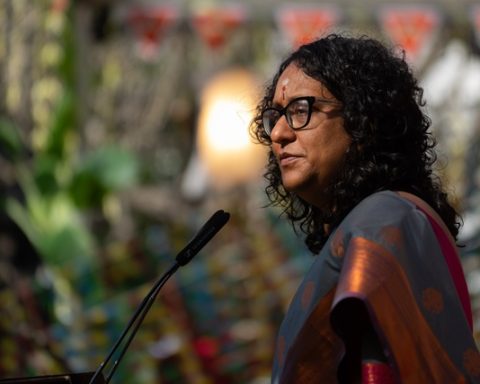
The proposed five-year Community Development Plan was discussed at a workshop chaired by Dr Upali Pannilage, Minister of Rural Development, Social Security and Community Empowerment. Participants emphasised the use of the term “community” rather than “village” because the programme covers rural, urban and plantation populations, each with distinct development needs.
The proposed approach differs from conventional planning, which has often concentrated on compiling lists of infrastructure requirements, such as roads, irrigation systems, drinking water facilities and community halls. Although such projects can meet immediate needs, the plan argues that they do not necessarily constitute a coherent long-term strategy capable of addressing the root causes of deprivation.
Praja Shakthi has identified six development pillars: production economy, food security, supply chain development and access, social environment, human resource development, and care and protection. These are intended to guide interventions towards reducing multidimensional poverty and vulnerability.
The programme also identifies eight forms of community capital to support those objectives: physical, human, natural, technological, economic, social, cultural and institutional capital. Rather than concentrating mainly on infrastructure, skills, natural resources and technology, the proposed framework calls for investment across all eight categories.
Youth unemployment illustrates the intended approach. Addressing it would require not only skills development but also access to finance and market information, transport and digital connectivity, and coordination among relevant institutions. These elements would be treated as complementary components of a single development response rather than separate interventions.
The plan is intended to guide the sequencing of projects across 2027, 2028, 2029, 2030 and 2031, with the central planning questions being what kind of communities Sri Lanka seeks to build by 2031 and how existing and future investments can progressively achieve that objective.