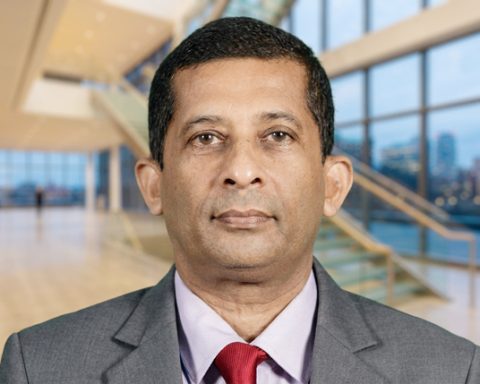
Cheng Li-wun, the leader of Taiwan’s main opposition Kuomintang (KMT), has warned that the island must avoid becoming “the next Ukraine” as she defends a controversial strategy of renewed engagement with Beijing. Speaking in an interview with El País, Cheng described her recent meeting with Chinese President Xi Jinping in April as a moment of “goodwill” and a signal that dialogue across the Taiwan Strait remains possible despite years of political rupture and escalating military pressure.
Her remarks come at a sensitive moment in East Asian geopolitics. Since the election of Taiwan’s President Lai Ching-te of the Democratic Progressive Party (DPP) in 2024, Beijing has intensified military drills around the island and reiterated its position that Taiwan is a breakaway province that must eventually be “reunified,” by force if necessary. Formal communication channels between Taipei and Beijing have remained frozen since 2016, leaving the KMT as one of the few political forces still advocating structured engagement with the mainland.
Cheng, who assumed leadership of the historically China-friendly KMT in the autumn, argues that deterrence alone cannot guarantee peace. “Today everyone fears a war in the strait,” she told El País. “We don’t want to become the next Ukraine.” Her position, however, has triggered accusations from critics in Taiwan who claim she is leaning too close to Beijing. She rejects that characterization, insisting instead that stability depends on rebuilding political, cultural, and civic communication channels that have largely disappeared in recent years.
The April meeting between Cheng and Xi Jinping in Beijing marked a symbolic turning point. It was the first time in a decade that a sitting KMT leader had been received by the Chinese president, and the encounter was carefully staged to project calm continuity rather than confrontation. Cheng later said she perceived “genuine goodwill” and a willingness to acknowledge Taiwan’s distinct way of life. She emphasized that any future relationship must not follow the Hong Kong model, a comparison that remains deeply sensitive in Taiwan due to concerns about political freedoms under Chinese oversight.
According to Cheng, Xi expressed recognition that Taiwan has developed a “completely different” social and political system from mainland China, even as he called for mutual respect and acknowledgment of broader Chinese national identity. Cheng insists that such engagement does not require Taiwan to compromise its democratic system. “If we want a lasting and peaceful relationship across the strait, we cannot sacrifice Taiwan’s democracy or its way of life,” she said in her conversation with El País.
Her vision centers on incremental engagement through cultural, academic, sporting, and commercial exchanges rather than immediate political negotiations over sovereignty. She argues that rebuilding trust must precede any discussion of long-term constitutional arrangements. “We need creativity and new institutional formulas,” she said, suggesting that flexible frameworks could reduce tensions without forcing either side into immediate concessions on core political positions.
The historical weight behind these tensions remains heavy. In the KMT headquarters in Taipei, a portrait of Sun Yat-sen, founder of the Republic of China and an ideological symbol shared across the strait, overlooks the present political debates. The KMT’s identity is inseparable from the legacy of Chiang Kai-shek, whose nationalist forces retreated to Taiwan after losing the Chinese civil war to Mao Zedong’s communists in 1949. That unresolved conflict still shapes the island’s contested international status and its fragile diplomatic balance, particularly in relation to the United States and China.
The geopolitical dimension has further intensified with renewed great-power competition. During Cheng’s diplomatic outreach, US President Donald Trump visited China, where Xi Jinping reportedly underscored that Taiwan remains the most sensitive issue in US–China relations and warned of potential “extreme danger” if mismanaged. Following the meeting, Trump suggested in interviews that neither Washington nor Beijing should be pushed toward conflict, and raised questions about US military support for Taiwan, including a proposed $14 billion aid package that has drawn scrutiny in Beijing.
Cheng is scheduled to visit the United States in June as part of what she describes as a “triangulation” effort aimed at reducing tensions between Washington, Beijing, and Taipei. She intends to argue that confrontation is not inevitable and that a peaceful resolution serves the interests of all parties. “What everyone fears—a US-China confrontation—can be avoided,” she said, again speaking to El País. She also believes recent US signals indicate a shift toward discouraging unilateral moves toward formal independence in Taiwan.
Despite her optimism, Cheng does not dismiss the risk of conflict. She warns that military escalation in the Taiwan Strait is accelerating and that political polarization on the island is deepening. She accuses the ruling DPP of gradually moving toward a de facto independence stance, which she says risks crossing China’s red lines. “We are very concerned that in the coming years a military conflict could occur,” she said. “That is why I feel such urgency to show that we must not go down that path.” For Cheng, Taiwan’s survival strategy rests on one core principle: the island should not become “a pawn in the game of great powers,” but an active participant in shaping its own fragile and contested future.