As reported on September 2, 2026, the Afghanistan United Front (AUF) killed a Taliban official, Qari Aghagol, from the Ministry for the Propagation of Virtue and Prevention of Vice, in the 18th Security District of Kabul.
As reported on August 31, 2026, AUF killed a Taliban intelligence operative in the Minar Chowk area of the Spin Boldak District of Kandahar Province.
On August 31, 2026, AUF forces attacked a Taliban security command center in Ghor Province, in which five Taliban fighters were injured. AUF cadres hit the entrance of the command center with a grenade during the attack.
On August 30, 2026, AUF targeted a Taliban outpost in the Gereshk District of Helmand Province, killing three Taliban fighters and seizing their weapons and ammunition.
In the night of August 29, 2026, AUF forces attacked the Taliban’s First Police District in Asadabad, the capital of Kunar Province, killing two Taliban Police personnel.
As reported on August 29, 2026, AUF forces launched an offensive operation against a Taliban checkpoint in the Nawzad area of Nawzad District in Helmand Province, killing six Taliban fighters.
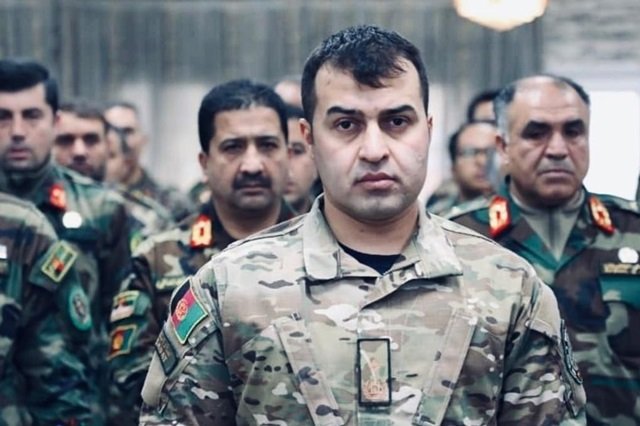
AUF was publicly launched on October 19, 2023. However, the group’s website confirms that Lt. Gen. Sayad Sami Sadat was voted leader on May 12, 2023, indicating that the organisation’s formation process predates its public launch in October that year. General Sadat, a Pashtun, was serving as the Deputy Chief of the Afghan Army in 2021, before the Taliban takeover of Afghanistan. He earlier commanded the Afghan National Army’s 215th Corps in Helmand Province and served in the National Directorate of Security (NDS), the former Afghan government’s intelligence and security service. He is reportedly a graduate of the Joint Services Command and Staff College at the United Kingdom’s Defence Academy, Class of 2011; and at the Polish National Defence University, he completed the Battalion Command Course. He also holds an MA in Strategic Management and Leadership from the UK Charter Management Institute. As reported on August 6, 2026, Sadat has appeared frequently in US media since the Taliban’s takeover in 2021, and he maintains relationships with Capitol Hill. AUF subsequently developed a military wing, claimed its first military operation on July 30, 2026, and announced a broader armed campaign on August 1, 2026.
According to partial data collated by Institute for Conflict Management, AUF has killed 28 Taliban fighters and injured 11, in 14 incidents, since its formation (data till September 2, 2026). Most of these attacks have been concentrated particularly in two districts – Kabul and Kandahar, the former being the capital of Afghanistan, and the latter the nerve centre of the Taliban, the location of its Amir, Hibatullah Akhundzada. A few attacks have also taken place in the Helmand, Kunar, and Ghor provinces.
However, on September 1, 2026, AUF Spokesperson Hilal Kakar claimed that the group had carried out at least 43 operations against the Taliban in 14 provinces over the preceding month, claiming 74 Taliban members were killed and 35 were wounded. “We will save Afghans from the Taliban and seek a prosperous and free Afghanistan,” Kakar declared.
As posted on its verified X handle on October 19, 2023, AUF declared that its office had been established in Washington DC a day earlier, on October 18, 2023. This office is headed by ‘Governor’ Masood Bakhtawar. He was the former Deputy Governor of Helmand Province.
AUF’s leadership council consists mainly of former Afghan Army and intelligence general officers, governors, committed, combative, and capable Afghans, as well as young politicians and human rights activists. The council members come from diverse ethnicities, including Hazaras, Pashtuns, Tajiks, and Uzbeks. AUF declares, “Our mission is to unite Afghans and return Afghanistan to the constitutional order, ensuring that Afghans can enjoy freedom, peace, and prosperity,” adding that its campaign has three major pillars – civil, political, and military fronts:
We will deliver a comprehensive national strategy to stabilize Afghanistan by political and military means, to establish a just, democratic system of government, with equality for women and minorities. We will be one people formed of many, united under the flag, and governed under an agreed constitution with the consent of the people.
AUF’s principal concerns since the Taliban’s takeover include:
- The re-emergence of terrorism in Afghanistan, owing to the presence of large number of terrorists affiliated with Al Qaeda, Tehreek-e-Taliban Pakistan (TTP), and other such groupings;
- Chinese exploitation of Afghanistan’s minerals; and
- The humanitarian catastrophe experienced by Afghan people.
On June 5, 2024, the Front claimed that the Islamic State-Khorasan Province (IS-KP) had 9,000 fighters in Afghanistan and could conduct attacks “throughout the region”, and further, that “the IS-KP group has the ideological, human resources, and recruitment capacity to carry out attacks in Europe and the United States, and they have demonstrated this capability in Afghanistan and Iran as well.”
AUF has accused the Taliban of beating, torturing and humiliating young people; detaining, torturing, and murdering security and defence personnel of Afghanistan’s former government; and harassing and extorting local residents.
Interestingly, on August 27, 2026, AUF asserted that at least 180 religious scholars from across Afghanistan had issued a fatwa calling on the group (AUF) to carry out military operations against the Taliban. The fatwa had been issued by religious scholars, Islamic academics and researchers specialising in Quranic interpretation, theology, hadith, jurisprudence, the Prophet’s biography, creed and other fields of Islamic studies. These scholars also called on the opposition to “take up the sword” and free citizens from what they described as this “tyranny”.
The emergence of AUF introduces new security challenges for the Taliban, compounding existing pressures from other opposing groups such as the National Resistance Front (NRF), Afghanistan Freedom Front (AFF) and National Mobilization Front (NMF), among others; recurrent hostility and internal fractures in Badakhshan province; and regional tensions with Pakistan. Under the circumstances, the Taliban needs a multi-pronged defensive approach to maintain its dominance, both administratively and militarily, in Afghanistan.