Control over information has long been a defining instrument of authoritarian rule. When governments attempt to restrict what citizens can hear, question or investigate, the consequences extend beyond journalism: public accountability weakens, historical narratives become politically managed, and societies lose access to information essential for informed decision-making. Afghanistan’s latest confrontation with the BBC World Service illustrates this problem, raising questions about the Taliban regime’s approach to governance, dissent and its responsibilities to the Afghan people and neighbouring countries.
On 13 October 2026, the Taliban authorities suspended BBC World Service radio broadcasts on FM frequencies across Afghanistan, affecting its Dari, Pashto and English-language services. The BBC confirmed the suspension and said it was engaging with the authorities to resolve the matter. Taliban Information and Culture Ministry spokesperson Khubib Ghufran cited “repeated violations” but did not publicly specify the alleged breaches.
The immediate dispute may concern regulatory compliance, but the wider context points towards a more fundamental conflict: whether the authorities will tolerate independent reporting when it examines politically sensitive episodes, challenges official narratives or records statements that expose uncomfortable aspects of the Taliban’s history.
According to Afghanistan International, sources familiar with the matter identified a BBC documentary marking the anniversary of Kabul’s fall as a possible reason for the Taliban’s dissatisfaction. The programme featured Abdullah Sarhadi, a former Taliban governor who acknowledged responsibility for the destruction of the historic Buddha statues and said he did not regret the decision. However, the reported connection between this interview and the suspension has not been independently established as the definitive cause.
The episode nevertheless illustrates why historical reporting can become politically contentious. The destruction of the Bamiyan Buddha statues in March 2001 attracted international condemnation and remains a defining event in Afghanistan’s cultural history. By revisiting the episode through the testimony of a former Taliban official, the BBC brought a consequential decision by the movement back into public discussion.
Independent journalism does not merely reproduce the statements of those in power; it also preserves testimony, examines past decisions and enables audiences to assess competing accounts. For a governing authority seeking to control the boundaries of public discourse, such scrutiny can create friction, particularly when reporting concerns its own record. The issue, therefore, is not whether a broadcaster should be exempt from legitimate media regulations. It is whether those regulations are transparent, consistently applied and open to scrutiny, or whether vaguely defined violations can become a mechanism for restricting unwelcome coverage.
The BBC suspension must be considered alongside the broader restrictions imposed on Afghanistan’s media since the Taliban returned to power in August 2021. A November 2024 report by the United Nations Assistance Mission in Afghanistan (UNAMA) and the UN Human Rights Office documented 336 instances of human rights violations affecting journalists and media workers between 15 August 2021 and 30 September 2024. These included 256 instances of arbitrary arrest and detention, 130 instances of torture and ill-treatment, and 75 instances of threats or intimidation. The report also identified censorship, restrictions on access to information and interference in editorial operations.
These findings provide a documented basis for examining the authoritarian characteristics of the Taliban’s governing model. Restrictions on independent scrutiny, uncertainty over permissible reporting and the use of coercive measures against journalists narrow the space in which public debate can take place.
Such practices carry consequences beyond individual media organisations. When journalists face uncertainty about which subjects may trigger punishment, self-censorship becomes a foreseeable risk. Citizens may consequently receive less independent information about public policy, governance and decisions affecting their lives.
The BBC suspension is not, by itself, proof of every allegation concerning Taliban governance. It is, however, another significant development to assess against a documented pattern of restrictions on media freedom.
Why This Matters for Afghanistan’s Future?
A country’s long-term development depends on more than territorial control or the ability to enforce regulations. It also requires functioning institutions, access to information, public accountability and opportunities for citizens to participate in discussions about their future.
Afghanistan faces substantial economic and humanitarian challenges. In this environment, independent journalism can help expose administrative failures, communicate public needs and provide information to communities with limited access to alternative sources. Restricting established broadcasters can make that task more difficult, particularly for audiences dependent on conventional radio.
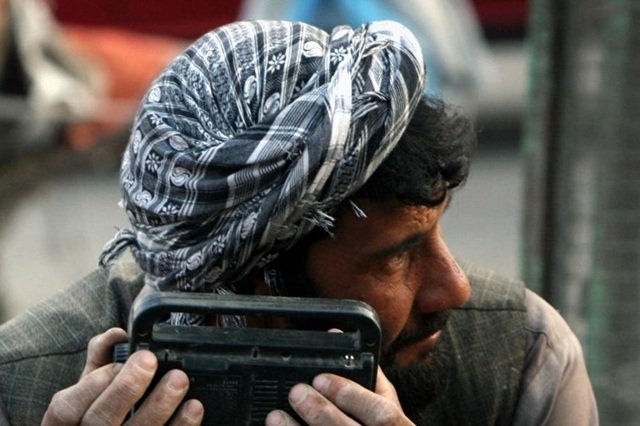
The BBC’s FM broadcasts are especially relevant because radio does not require the same level of internet access as digital news platforms. Although the suspension does not necessarily eliminate BBC access through every other distribution channel, it creates an additional barrier for listeners who rely on FM receivers.
The broader concern is that a political system that places restrictions on scrutiny can weaken the mechanisms through which mistakes are identified and corrected. The resulting costs are borne not only by journalists but also by ordinary Afghans whose access to reliable information is essential to understanding public affairs.