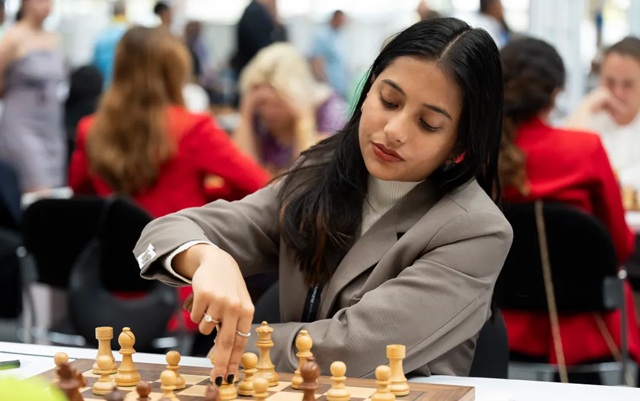
In a moment that could redefine the future of Indian chess, 19-year-old Divya Deshmukh made history this week by becoming the fourth Indian woman to achieve the title of Grandmaster—clinching victory at the prestigious FIDE Women’s World Cup in Batumi, Georgia.
Deshmukh’s emotional final move, which saw her defeat compatriot and long-time Indian chess icon Koneru Humpy, marked not only the peak of her young career but a potential turning point for women in the sport. Her win drew accolades from across the country, including Prime Minister Narendra Modi, who hailed the victory as one that would “motivate many people” and expand the game’s popularity among Indian youth.
“It was fate,” Deshmukh said after the win. “Before the tournament, I was thinking that I could maybe earn a grandmaster norm here. And at the end, I became a grandmaster.”
As Times UK reports, India now boasts 88 grandmasters, but Deshmukh’s rise is especially significant in a country where chess is traditionally dominated by men. Though Indian chess has seen remarkable growth in recent years—with Gukesh Dommaraju becoming the youngest world champion in 2024, and Rameshbabu Praggnanandhaa famously becoming a grandmaster at age 12—female representation has lagged behind.
Deshmukh’s success is being celebrated as a beacon for change in that landscape. Her former coach, RB Ramesh, told The Indian Express: “She didn’t have that negative side, the inner voice of doubt that ruins so many players. She was always confident.”
Her victory also exposes the systemic barriers many aspiring female players still face in India. From societal expectations to lack of financial backing, girls pursuing chess often struggle to gain equal footing. “If a family has to spend money to support a child’s chess career, they’re more likely to choose their son,” grandmaster Abhijit Kunte told Times UK. “Girls need chaperoning for travel, and there are fewer women’s events offering serious prize money.”
Despite these hurdles, Deshmukh’s parents—both doctors from Nagpur—broke the mold. They took turns accompanying their daughter to tournaments across the country, providing the kind of support that many girls lack. Their dedication is already inspiring a wave of new interest. At Dibyendu Barua’s chess academy in Kolkata, he reports more and more parents bringing in their daughters for lessons. “We invented the game and now we are ruling the world,” Barua said.
Still, challenges persist. One enduring concern, according to Barua, is that even the most talented girls are often expected to give up chess after marriage. “Their in-laws will expect her to be a wife, a mother, a housewife,” he noted, “and chess will go out of the window.”
Deshmukh’s win, however, may prove to be a powerful counterpoint to that narrative—especially given her growing visibility. She shared a celebratory selfie with her trophy on Instagram, connecting with a generation of young fans eager for relatable champions.
With the backing of the chess community, government recognition, and a growing fan base, Deshmukh stands as a symbol of a changing India—where girls are no longer just participants in chess, but leading it.