The first address delivered by Iran’s newly appointed leader following his assumption of office was notable for its clarity, tone, and strategic intent. It was not a speech designed to soften geopolitical tensions or to reassure global audiences through diplomatic ambiguity. Instead, it projected firmness, signalling a leadership prepared to articulate Iran’s security posture with confidence and resolve. From the very beginning, the address conveyed a message that national defence, sovereignty, and strategic independence will remain central pillars of Iran’s policy direction.
Such first speeches often carry symbolic importance. They provide the earliest indication of how a leader intends to position the country in the global arena. In this instance, the message was unmistakable: Iran’s strategic doctrine will remain anchored in resilience and deterrence rather than accommodation to external pressure.
For more than four decades, the Islamic Republic has built its national narrative around resistance to political and economic pressure from the West, particularly the United States. Sanctions, diplomatic isolation, and periodic military tensions have shaped Iran’s strategic outlook and institutional culture. Rather than weakening the state, Iranian leadership often portrays these pressures as factors that have strengthened national unity and self-reliance.
The new leader’s speech reaffirmed this narrative. By speaking directly about sovereignty and national defence, he signalled continuity in the country’s long-standing doctrine of resistance. This was not simply rhetoric. It reflected the strategic identity that Iran has carefully cultivated since the 1979 revolution — a state determined to maintain autonomy in its political, economic, and security policies regardless of external pressure.
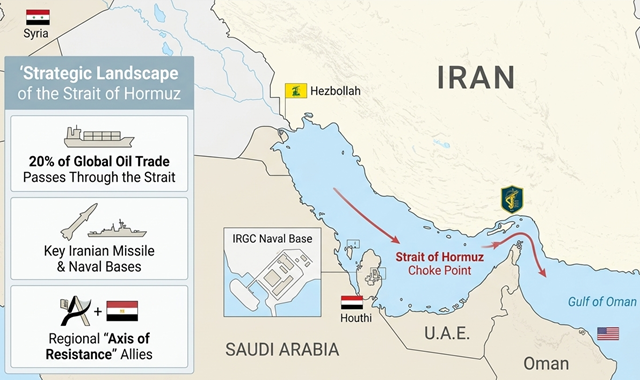
The broader geopolitical context adds further significance to this message. The Middle East remains one of the most strategically sensitive regions in the world. The Persian Gulf, in particular, continues to serve as a vital artery of global energy supply. A significant share of the world’s oil exports passes through the narrow Strait of Hormuz, making stability in this area essential for the global economy.
In such an environment, Iran occupies a uniquely influential position. Its geography alone provides strategic leverage, while its military capabilities and regional relationships enhance its ability to shape events beyond its borders. Statements from Tehran therefore carry implications far beyond Iran itself. They are carefully observed by regional states, global powers, and energy markets alike.
Iran’s approach to deterrence has evolved significantly over the past several decades. Rather than relying solely on conventional military strength, the country has developed what many analysts describe as a multidimensional deterrence strategy. This includes ballistic missile development, asymmetric naval capabilities in the Gulf, cyber operations, and strategic partnerships across the region.
Together, these elements form a layered security architecture designed to complicate any potential military confrontation. The objective is not necessarily to match the conventional military power of major global powers, but rather to create enough strategic uncertainty that adversaries are forced to think carefully before escalating tensions.
The new leader’s address appeared to acknowledge this framework implicitly. By emphasising Iran’s ability to defend itself and protect its sovereignty, the speech reinforced the idea that deterrence remains the cornerstone of Tehran’s national security doctrine.
Equally important was the ideological dimension embedded within the address. Iranian leadership frequently frames geopolitical tensions through the lens of resistance and independence. This narrative presents Iran as standing against external domination while defending national dignity and sovereignty.
Such narratives play an important role in modern strategic competition. Domestic audiences often draw strength from messages of resilience, particularly during periods of economic hardship or international pressure. At the same time, ideological framing can influence perceptions across the wider region, where political legitimacy is often closely tied to concepts of independence and resistance.
Beyond ideology, Iran’s regional influence remains a central factor in Middle Eastern geopolitics. Over the years, Tehran has cultivated relationships with a range of political movements and security actors across several countries. These relationships provide Iran with strategic depth and a degree of influence in regional affairs.
Supporters of this strategy describe it as a defensive network intended to deter external aggression and preserve regional stability. Critics, however, argue that it contributes to instability by expanding geopolitical competition across multiple theatres. Regardless of interpretation, there is little doubt that Iran’s regional relationships represent a significant component of its strategic posture.
The timing of the speech also reflects broader shifts within the international system. The global order is gradually transitioning towards a more multipolar structure, with regional powers increasingly asserting their interests and influence. In such an environment, countries like Iran are seeking to reinforce their strategic autonomy while navigating complex relationships with both global and regional actors.
Despite the economic challenges created by sanctions, Iran has demonstrated a notable degree of resilience. Its ability to maintain military development, regional engagement, and diplomatic activity under sustained external pressure has become a defining feature of its geopolitical strategy.
Against this backdrop, the new leader’s address should be interpreted as a message of continuity rather than transformation. It suggests that Iran intends to maintain its established security doctrine while adapting to evolving regional dynamics.
Public speeches by national leaders often function as instruments of strategic signalling. They shape perceptions, influence expectations, and communicate intentions to both allies and adversaries. The tone and content of this address suggest that Tehran’s leadership is keenly aware of the importance of such signals during moments of political transition.
Ultimately, the significance of the speech lies not merely in its words but in the strategic posture it represents. It reflects a leadership determined to project confidence and to reaffirm Iran’s commitment to safeguarding its sovereignty and national interests.
In the final analysis, the first address of Iran’s new leader can be seen as more than a ceremonial introduction to office. It was a deliberate strategic message to the region and the wider world. By speaking with clarity on defence, sovereignty, and resistance to external pressure, the speech reaffirmed Iran’s long-standing security doctrine while signalling continuity in its geopolitical posture. In a region where perceptions of power often shape reality, such messaging carries considerable weight. Whether it ultimately contributes to stability through deterrence or intensifies geopolitical competition will depend largely on how other actors interpret and respond to the signals emerging from Tehran. What is clear, however, is that the new leadership has chosen to begin its tenure by emphasising strength, preparedness, and strategic resolve.