by Our Economic Affairs Editor
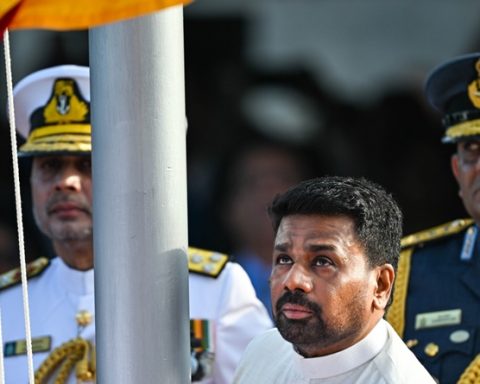
President Anura Kumara Dissanayake’s 2025 Budget Speech paints a grand vision of economic transformation, promising prosperity, stability, and justice for the Sri Lankan people. However, beneath the rhetoric of “structural reforms” and “economic revival” lies a budget riddled with unrealistic revenue projections, unsustainable expenditure, and political maneuvering that prioritizes short-term electoral gains over long-term economic stability. The numbers simply do not add up, and despite claims of a progressive economic shift, Sri Lanka appears to be heading towards another fiscal deadlock, where borrowed funds fuel unsustainable policies, and the economy remains hostage to debt and inflationary pressures.
The budget deficit alone is Rs. 2,200 billion, with total expenditure projected at Rs. 7,190 billion, while revenue, including grants, is estimated at Rs. 4,990 billion. The government is promising a primary surplus of 2.3% of GDP, yet no clear strategy has been outlined on how it intends to generate the necessary revenue. While increasing tax revenue by 15% is projected, this assumption is deeply flawed, given the current economic environment. Overburdening the tax base while failing to stimulate productivity and efficiency will only lead to economic stagnation rather than growth. If the government hopes to bridge this gap by further external borrowing, Sri Lanka risks falling into a deeper debt spiral, effectively handing over its economic sovereignty to creditors like China, India, and the IMF.
The most glaring contradiction in the budget is the unrealistic economic growth assumptions. According to IMF data, Sri Lanka’s GDP growth in 2022 was -7.3%, one of the worst economic contractions in its history. The following year, in 2023, GDP growth remained negative at -2.3%, mainly due to an industrial sector slowdown. However, thanks to the rigorous economic reforms imposed by former President Ranil Wickremesinghe and the IMF austerity measures, Sri Lanka’s economy rebounded in the fourth quarter of 2023 with a 4.5% growth rate. While this marked a fragile recovery, it was nowhere near enough to erase the economic collapse of previous years. The GDP growth for 2024 is estimated to be between 2.2% and 5%, signaling some stabilization but not a full recovery. Against this backdrop, the government’s target of a stable 5% GDP growth in 2025 appears highly overambitious and disconnected from economic reality.
The government’s spending policies further expose the contradictions in the budget. Rs. 110 billion is allocated for public sector salary increases, despite the public service being one of the least productive in South Asia. Overburdened state institutions continue to drain the economy without undergoing proper forensic audits on their productivity. The bloated state sector, which accounts for nearly 15% of government spending, is being rewarded without any real accountability or re-engineering measures. Instead of introducing modernization and efficiency reforms, the government is effectively playing Santa Claus for state workers, using public funds as a tool to win the forthcoming local government elections. This approach is not only unsustainable but also deeply irresponsible, as it prioritizes political expediency over sound economic management.
Debt restructuring remains another high-risk gamble in the budget. The public debt-to-GDP ratio, which currently stands at 103%, is expected to be reduced to 85% by 2028. However, such projections do not account for the economic vulnerabilities Sri Lanka faces, including low foreign investment, an unstable rupee, and high inflation risks. Sri Lanka has already defaulted on its foreign debt once, and creditors such as the IMF, China, and India will not be lenient unless strict austerity measures are imposed. The government’s reliance on Rs. 2,500 billion in projected foreign investment raises serious questions about feasibility, as Sri Lanka has struggled to attract stable FDI even before its economic collapse. Investor confidence remains low due to political instability, lack of policy continuity, and excessive red tape in business regulations.
The proposed economic reforms in the budget also fail to address core structural weaknesses in the economy. The government is expecting to generate Rs. 19 billion in export revenue for 2025, a 45% increase from 2024’s figure of Rs. 13 billion. This assumption is highly unrealistic, given Sri Lanka’s limited industrial capacity and competitive disadvantages in global markets. The garment and tea industries, which form the backbone of Sri Lanka’s export sector, are struggling against global price pressures, supply chain disruptions, and declining international demand. The target of $5 billion from tourism revenue assumes Sri Lanka can attract 2.5 million tourists, despite ongoing concerns over infrastructure limitations, safety, and global travel uncertainties.
The budget’s approach to state-owned enterprises (SOEs) raises another critical issue. The government has allocated Rs. 20 billion for SriLankan Airlines, despite the airline being a financial black hole that continues to accumulate losses. Instead of privatizing or restructuring inefficient SOEs, the government continues to bail them out with public funds, adding further strain to an already fragile fiscal system. Similarly, Rs. 10 billion has been allocated for pension revisions, yet there is no discussion on how to make the pension system financially sustainable in the long term. These expenditures do not reflect strategic economic planning but rather populist spending to maintain political support.
The taxation policies in the budget also present significant challenges. The government expects to increase tax revenue by 15%, yet there is no clear mechanism on how this will be achieved. Over-taxing businesses in an already fragile economic environment will deter investment and slow down growth. Small and medium enterprises (SMEs), which are key drivers of employment and innovation, are already struggling with high costs due to supply chain disruptions and inflation. Increasing their tax burden will further cripple their ability to expand, leading to lower-than-expected revenue collection and an even larger budget deficit.
Inflation control is another area of concern. Although inflation has dropped from 70% in 2022 to around 7% by late 2024, the budget’s expansionary policies could reignite inflationary pressures. Pumping more money into the system through salary increases, welfare benefits, and infrastructure spending without increasing productivity will drive up prices again. The government claims inflation will be kept under control, yet the economic mechanisms to achieve this remain unclear and inconsistent with historical trends.
Perhaps the most concerning element of the budget is its lack of a clear roadmap for structural economic transformation. The government has earmarked Rs. 3,000 billion for digital infrastructure, AI research, and fintech development, yet there is no detailed execution plan on how these investments will be utilized. Sri Lanka lacks the skilled workforce necessary to implement such high-tech projects, making these allocations more of a political statement rather than a realistic development strategy. Investing in digitalization without first addressing fundamental economic weaknesses—such as labor productivity, education reform, and public sector efficiency—suggests misplaced priorities.
The 2025 Budget is less of an economic roadmap and more of a political document designed to appease multiple interest groups while avoiding the tough decisions necessary for long-term economic stability. The reliance on optimistic growth projections, speculative investment inflows, and excessive borrowing indicates that Sri Lanka is heading toward another financial reckoning. Unless the government implements strict fiscal discipline, enhances revenue collection without stifling business activity, and executes genuine structural reforms, the promises outlined in this budget will remain nothing more than empty rhetoric, setting the stage for yet another economic crisis in the near future.