
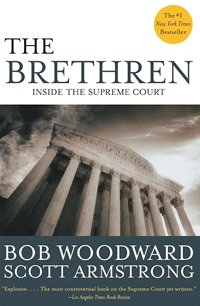
More than four decades after its publication, Bob Woodward and Scott Armstrong’s The Brethren remains one of the most controversial books ever written about the United States Supreme Court. It is frequently remembered as an exposé of judicial personalities, institutional rivalries and confidential deliberations, yet to read it merely as a historical account would be to miss its enduring significance. The book has become increasingly relevant precisely because democracies across the world now place extraordinary faith in constitutional courts while simultaneously demanding unprecedented transparency from public institutions. Woodward and Armstrong force readers to confront an uncomfortable paradox: how can the most powerful unelected institution in a democracy command public trust when its most consequential decisions emerge from processes almost entirely hidden from public view? That question has only become more urgent in an age of judicial polarisation, constitutional litigation and accusations of activist judging. Far from being a relic of the 1970s, The Brethren feels less like history than a warning that judicial legitimacy can never rest on institutional mystique alone.
The book opens with a devastating observation that still resonates today: “For those nearly two hundred years, the Court has made its decisions in absolute secrecy… No American institution has so completely controlled the way it is viewed by the public” (p. 8). This is not simply a description of judicial procedure but a challenge to democratic accountability itself. Woodward and Armstrong question the assumption that secrecy necessarily safeguards judicial independence. Instead, they invite readers to ask whether absolute confidentiality can itself become a source of institutional weakness. Warren Burger’s earlier warning that “A court which is final and unreviewable needs more careful scrutiny than any other” (p. 14) acquires profound irony because the Chief Justice who once demanded accountability later presided over a culture of extraordinary opacity. The authors never argue that judicial deliberations should become public spectacles, but they relentlessly expose the dangers of an institution that ultimately controls its own public narrative.
The book’s greatest achievement lies in its demolition of the comforting myth that judges decide cases through detached legal reasoning alone. Instead, constitutional law emerges as a profoundly human enterprise shaped by ambition, personality, friendship, rivalry and strategic calculation. Brennan’s extraordinary instruction to a law clerk—”I’m not going to lose another one,” before revising an opinion so “the result came out the opposite way” (p. 126)—is perhaps among the book’s most provocative revelations. Equally revealing is Thurgood Marshall’s occasional habit of writing “follow Bill” (p. 50), suggesting that even one of the twentieth century’s most celebrated jurists sometimes deferred to trusted colleagues. These disclosures remain controversial because they undermine the romantic image of judges as detached legal philosophers. Yet Woodward and Armstrong avoid descending into cynicism. Their point is not that judges are corrupt but that they are irreducibly human.
Perhaps the book’s most enduring contribution is its portrait of Warren Burger, who emerges as one of the most fascinating and tragic institutional leaders in modern American constitutional history. Potter Stewart’s caustic assessment that “The Chief is the show captain. All we need now is a real captain” (p. 373), later expanded into the devastating metaphor of the ceremonial captain entertaining passengers while someone else actually steers the ship (p. 373), has become one of the defining judgments on Burger’s leadership. Yet the authors resist caricature. Burger appears less as an authoritarian figure than as an insecure administrator consumed by suspicion. His fear that clerks might “leak” ideas to fellow justices (p. 60) and his belief that intellectual exchange threatened rather than strengthened judicial deliberation (p. 61) reveal a conception of leadership built upon control rather than persuasion. In an era when many institutions struggle with internal distrust, Burger’s failures feel remarkably contemporary.
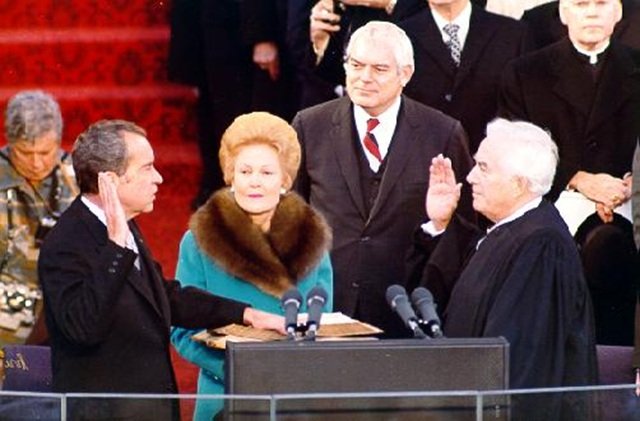
The Brethren is equally compelling because it demonstrates that constitutional law is inseparable from politics without becoming reducible to politics. Nixon’s determination to reshape the Court, his rapid appointment of Burger, and his broader campaign against perceived judicial liberalism reveal how constitutional courts inevitably become arenas of political conflict. Yet the book carefully resists simplistic claims that judicial decisions merely reflect partisan loyalties. Instead, the justices repeatedly surprise both political allies and opponents. The Burger Court, expected by many conservatives to dismantle the Warren Court’s civil rights legacy, instead reaffirmed school desegregation, declaring that “The obligation of every school district is to terminate dual school systems at once” (p. 59). The lesson remains strikingly relevant today. Governments may appoint judges, but they cannot reliably control constitutional reasoning once judicial office is assumed.
The chapters dealing with abortion, capital punishment and criminal justice possess an extraordinary contemporary relevance. Few constitutional disputes have diminished in intensity since the 1970s; most have become even more polarised. Justice White’s condemnation of Roe v. Wade as “an exercise of raw judicial power” (p. 278), Cardinal Krol’s claim that it carried “disastrous implications for our stability as a civilized society” (p. 283), and the anonymous gratitude expressed by “Mary Doe”—”I’ll never be able to thank you for what you have done” (p. 284)—illustrate how constitutional judgments become moral battlegrounds rather than purely legal decisions. Similarly, the death penalty debates expose profound disagreements about justice itself. Stewart’s unforgettable observation that existing death sentences resembled being “struck by lightning” (p. 255) remains one of the most powerful judicial metaphors ever written because it attacks arbitrariness rather than punishment alone.
The Pentagon Papers and Watergate chapters explain why this book continues to matter far beyond American constitutional history. Justice Hugo Black’s insistence that “the duty” of a free press is to prevent government deception (p. 172) speaks directly to contemporary debates about state secrecy, whistleblowing and investigative journalism. Equally timeless is Leon Jaworski’s warning during the Watergate litigation that constitutional government itself would be endangered if “the President… is to say that the Constitution means what he says it does” (p. 357). The unanimous decision compelling President Nixon to surrender the tapes demonstrated that constitutional democracy depends not upon virtuous leaders but upon institutions willing to restrain them. In an age increasingly characterised by executive assertions of extraordinary power, these chapters feel startlingly modern.

If the book possesses a significant weakness, it lies in the very qualities that made it famous. Woodward and Armstrong occasionally privilege anecdote over deeper constitutional analysis. Memorable conversations, personal rivalries and dramatic exchanges sometimes eclipse sustained engagement with the jurisprudential reasoning underlying landmark decisions. Readers searching for a comprehensive theory of constitutional interpretation may therefore find the narrative frustratingly episodic. There also remains an enduring ethical question surrounding the extensive use of confidential interviews and internal deliberations. While the revelations unquestionably transformed public understanding of the Court, they also initiated a continuing debate about whether judicial confidentiality protects institutional independence or merely shields public officials from legitimate scrutiny. The authors deliberately leave that tension unresolved.
Yet it is precisely this refusal to offer comforting conclusions that explains the book’s remarkable longevity. The Brethren ultimately argues that constitutional democracy depends not upon the mythical perfection of judges but upon recognising their imperfections. The justices appear brilliant, principled, ambitious, insecure, strategic, compassionate and occasionally petty—often within the same case. Rather than diminishing respect for the Court, this human portrait paradoxically strengthens appreciation of constitutional government by revealing how fragile judicial legitimacy actually is. Institutions endure not because those within them are flawless but because constitutional structures constrain human weakness. That insight has become even more important in the twenty-first century.
The Brethren should therefore be read today not because it explains how one Supreme Court functioned in the 1970s but because it illuminates enduring questions that every constitutional democracy continues to confront. How much secrecy can judicial independence tolerate before it undermines democratic confidence? Can unelected judges remain politically independent while deciding profoundly political questions? Does legal reasoning ever exist entirely apart from personality and institutional culture? Woodward and Armstrong offer no definitive answers, but they insist that such questions cannot be ignored. More than forty years after publication, their investigation remains one of the finest studies ever written of how immense constitutional power is actually exercised. The names, personalities and cases belong to another era; the dilemmas belong unmistakably to our own.