


by Durga Velayudham
Greta Thunberg, barely out of childhood, became the centrepiece of a global spectacle once again. This month, she sailed into a war zone on a flotilla of boats, allegedly detained and mistreated by Israeli forces. In Stockholm, she later claimed that she and other detainees had been “kidnapped and tortured” while held, though she declined to provide any concrete evidence. She spoke of being denied clean water and essential medication but refused to elaborate, explaining that she did not want headlines screaming “Greta has been tortured,” because she insisted the focus should be on Gaza.
A child, whose proper place is in school, reading and learning about the world, became the central figure in a highly orchestrated drama. Her claims, uncorroborated and vague, became instant news fodder, amplified across global media outlets, and celebrated as heroic moral outrage. And yet, this very episode lays bare the hypocrisy, selectivity, and performative nature of much of modern activism. A teenager, incapable of contextualising the centuries-deep, violent complexities of war, is elevated into a symbol of injustice, while millions live under terror that receives barely a whisper of attention. This is not heroism; it is theatre, expensive, sophisticated, and meticulously staged. Of all the oddities, one must take the time to have activist Greta taught international law, as she missed much of her schooling for yet another ‘choreographed drama’ on climate change. She missed a great deal.
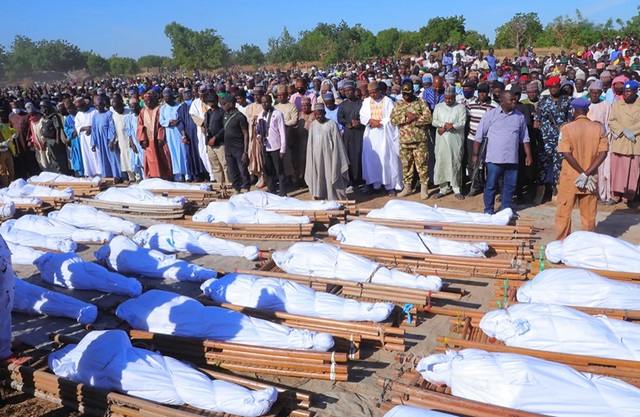
Meanwhile, in Nigeria, over seven thousand Christians have been slaughtered this year alone. Entire villages have been razed, more than 1,200 churches destroyed, schools closed, and children abducted. Families are torn apart by systematic campaigns of terror, yet there is no flotilla, no televised vigil, no social media storm. Their suffering does not fit the neat, consumable narratives that the global media prefers. It is raw, complex, and inconvenient—difficult to package into the moral drama the world has come to applaud.
The contrast is stark and morally jarring. Greta Thunberg’s detention, whatever its discomforts, was temporary, largely publicised, and surrounded by cameras, sympathetic journalists, and a global platform eager to amplify every word she spoke. Nigerian Christians face relentless terror, often without access to humanitarian aid, without anyone chronicling their daily suffering, and without recourse to protection or justice. Yet the world’s attention, energy, and moral outrage overwhelmingly gravitate toward the spectacle, not the slaughter.
Thunberg herself acknowledged the disparity, stating that what she endured “paled in comparison to what people in Gaza experienced daily.” And yet, even this measured statement reflects a broader pattern of selective empathy. The media and activists, eager to create a narrative that is visually compelling, emotionally digestible, and morally flattering, amplify the minor suffering of a teenager while ignoring mass killings that occur every day. The world cheers the easily packaged story, not the tragedy that resists simplification.
The reality is uncomfortably clear: this is not about concern for human suffering. It is about performance. It is about orchestrated attention, choreographed outrage, and a marketable narrative of virtue. A child who should be in school, learning and growing, becomes the symbol of moral correctness. Adults, meanwhile, profit from the attention this child generates, trading on her image to advance agendas, secure donations, and dominate media cycles. This is not advocacy; it is exploitation of visibility.
Now consider Nigeria. Over seven thousand Christians killed, thousands more kidnapped, churches destroyed, villages abandoned. Children grow up under terror, forced to witness violence that warps childhood into perpetual fear. Women are abducted, sometimes never seen again. Communities are fractured, economies destroyed, and futures stolen. And yet, the international community remains largely silent. Where are the flotillas for these children? Where are the hashtags? Where are the editorials decrying mass murder? Silence. This is the true cost of selective outrage: human lives rendered invisible because they do not fit the theatre of moral consumption.
The dissonance is glaring. A minor inconvenience for a teenager becomes the catalyst for global outrage; the systematic annihilation of entire communities barely registers. This selective attention exposes the moral bankruptcy of the world’s conscience. Empathy is no longer an exercise of human solidarity; it is a commodity, measured by spectacle, optics, and narrative convenience. The Nigerian massacre is inconvenient. The flotilla is profitable. That is the reality.
Furthermore, the way Thunberg handled her claims underscores the performative element of this spectacle. She spoke of being tortured but refused to substantiate her allegations, fearing it would dominate the headlines. Her unwillingness to produce evidence—combined with the global amplification of vague claims—demonstrates how easily the world rewards performance over truth. It is not concern that drives attention; it is visibility, drama, and media-friendly moral symbolism. Meanwhile, those enduring genuine terror are left unseen, unheard, and unrepresented.
This is the new normal of selective justice. The world applauds minor suffering when it can be marketed, documented, and simplified, yet ignores mass terror when it is complex, inconvenient, or politically uncomfortable. Children, whose lives should be spent learning and growing, are forced into roles they do not understand and cannot meaningfully execute, becoming props in a global theatre. Meanwhile, the dead in Nigeria remain just numbers, their humanity stripped away by our unwillingness to confront the horror fully.
The lesson is clear: spectacle substitutes for action, and selective outrage substitutes for justice. By elevating a child to the centre of moral drama, the world effectively trains itself to prioritise visibility over reality. It conditions audiences to care only for suffering that can be consumed, celebrated, and shared. Those who actually endure extreme terror—Nigerian Christians, Gaza’s civilians, and countless others—are treated as background, their suffering inconvenient to the moral narratives we prefer.
This is more than hypocrisy; it is a failure of moral imagination. It is a world in which empathy is performative, justice is selective, and human suffering is traded like currency. Children who should be learning about history, society, and humanity are instead made actors in media spectacles. Entire communities, slaughtered for their identity and faith, are left uncounted, unnamed, and unremarked. The gap between what is celebrated and what is ignored is not accidental. It is deliberate, nurtured by a system that rewards visibility over truth and applause over action.
In Nigeria, the death toll rises daily. Villages are emptied. Churches lie in ruins. Survivors live under constant threat. And yet, while the world amplifies every minor inconvenience suffered by a Swedish teenager in a war zone, it fails to respond to the ongoing carnage that dwarfs any staged drama. The moral lesson is unambiguous: human suffering is not judged by its severity, but by its marketability. The theatre of selective outrage is complete, and we are complicit in its creation.
Greta Thunberg may continue to shout at governments and lead flotillas. She may continue to generate global headlines, awards, and media cycles. But the cost of such theatre is real: it distorts our sense of justice, warps our priorities, and leaves the truly oppressed—those living under real terror—forgotten. Nigerian Christians, slaughtered and kidnapped, burned from their homes, abandoned to terror, will not have flotillas in their name. Their suffering is inconvenient, and therefore invisible. And until the world chooses to recognise the truth of that suffering without filtering it through the lens of spectacle, selective empathy, and moral theatre, humanity will remain hypocritical, biased, and morally immature.










Greta is 22, factually not a teenager. Please fix your incorrect reporting. Also the author bias in this article is wild.