There hadn’t been a previous instance of India having to contradict a sitting US President, literally, to his face. But, the swift Indian rejection of President Donald Trump’s offer to mediate in the renewed Indo-Pakistan conflict over flashpoint Jammu and Kashmir underscored India’s longstanding national policy that Kashmir wouldn’t involve any third party, under any circumstances.
US President Donald Trump’s claim that he warned both India and Pakistan that there would be significant increase in trade if they agreed on an immediate ceasefire was rejected by India. Pakistan appreciated the US President’s initiative.
Responding to Indian Premier Narendra Modi’s strongly worded statement on May 12, Pakistan, while declaring its backing for a “peaceful resolution of the Jammu and Kashmir dispute, in accordance with the UN Security Council resolutions and the aspirations of the Kashmiri people, reiterated their support for President Trump’s efforts aimed at the resolution of this dispute, which remains a source of instability in South Asia.”
For whatever reasons, Modi wanted to be in the high company of white Western powers and jumped headlong into being a member of the US-led quad to rub it into China without realising that the West only wanted to use India against Beijing and there was no quid pro quo in the event of an unforeseeable need for help by New Delhi. Had he not been so cussed to Chinese, Beijing would have been a friend- in-need whatever their differences of the past.
India, however, was explicit in its response to President Trump’s cheap shot that he brokered a ceasefire between India and Pakistan. In the wake of the humiliating Indian rejection, the US was compelled to call for direct communication between India and Pakistan.
In spite of the Indian blunt denial, President Trump, like so many of his other wild claims in recent weeks, on how he has got lucrative trade deal offers from many countries advantageous to Washington, reiterated his preposterous claim with regard to the ceasefire, nuclear escalation and trade when he addressed the US military, based in Qatar. India, in no uncertain terms, has denied President Trump’s repeated claims of nuclear escalation.
Close on the heels of the now-rejected claims regarding the ceasefire, nuclear escalation and increased trade, President Donald Trump again surprised India with another unsubstantiated declaration when he asserted, at a business forum in Qatar, that India had offered the United States a trade deal with “literally zero tariffs”.
Responding to President Trump’s claim, Indian External Affairs Minister S. Jaishankar declared that the ongoing negotiations were complex and far from final. Having to contradict a sitting US President is no easy task.
If India found the US propagating a narrative of its own problematic to counter, one can understand Sri Lanka’s plight in countering Western propaganda projects targeting it. But, India, unlike Colombo, swiftly and decisively set the record straight thereby prevented the US from disseminating a false narrative.
The Indian High Commission in Colombo recently reacted strongly to the Tribune report, headlined “India removes its top military spy after RAW leaks”, reproduced in the May 05 edition of The Island. Having faulted The Island for carrying the said factually incorrectnews item on page 02 without a fact check, the Indian HC reminded us of the devastating 2019 Easter Sunday carnage here caused by terrorism. As expected the Indian HC statement made no reference to terrorism caused by India in Sri Lanka in the early ’80s. Terrorism sponsored by India bled Sri Lanka till May 2009.
India, too, paid a heavy price. The Indian-led destabilisation project almost overwhelmed Sri Lanka. India simultaneously conducted a proxy war while spearheading high profile diplomatic efforts meant to advance its own interests. The Indian intervention here in the ’80s should be examined keeping in mind their extremely close relationship with the then Soviet Union.
Universities of global terrorism
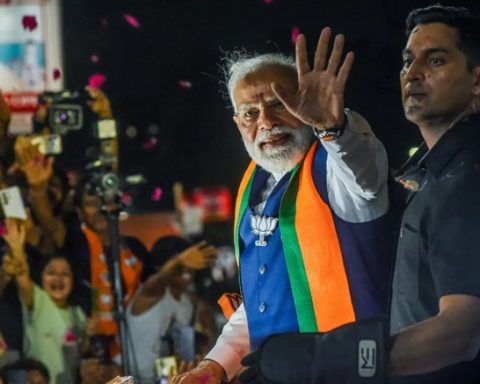
Prime Minister Modi’s May 12th address to the nation explained India’s stand on Pakistan vis-à-vis what he called terrorism. The Pahalgam massacre carried out on April 22, 2025, brought the country together and the armed forces were authorised to wipe out terrorist infrastructure in Pakistan.
Prime Minister Modi declared: “Terrorist bases, like Bahawalpur and Muridke, are universities of global terrorism. The big terrorist attacks of the world, be it 9/11, be it London Tube bombings, or the big terrorist attacks which have happened in India in the last many decades their roots are somehow connected to these terrorist hideouts. The terrorists had wiped out the Sindoor of our sisters and India responded by destroying their terrorist headquarters. More than 100 dreaded terrorists have been killed in these attacks by India. Many terrorist leaders were roaming freely in Pakistan for the last two and a half to three decades who used to conspire against India. India killed them in one stroke.”
Of course there was no reference to Sri Lanka. The English rendering of the Indian leader’s original speech, made in Hindi, conveniently left out Sri Lanka though there cannot be a better example than Sri Lanka to highlight the successful eradication of terrorism here through military means.
Modi joined the Bharatiya Janata Party (BJP) in 1987, the year India forced Sri Lanka to accept the deployment of the Indian Army here. One of the key objectives was to supervise the swift disarming of separatist Tamil groups that were fully sponsored by them. The Indian destabilisation project was meant to compel Sri Lanka to forgo its right to deal with terrorists militarily. A case in point is the Indian demand to call off ‘Operation Liberation’ aimed at clearing Vadamarachchi. India deployed its Air Forces across the Palk Straits in late June 1987 to rescue Prabhakaran and finalise an agreement that suited their overall objectives. Five years later Prabhakaran ordered the assassination of Congress leader Rajiv Gandhi who deployed the Indian Air Force to save Prabhakaran from certain death at the hands of the Sri Lanka Army. Had that happened, the India-created terrorist project could have collapsed. Thousands of lives, including that of Gandhi, and over 1,300 Indian soldiers, could have been saved and a sea-borne attack on the Maldives wouldn’t have materialised.
Premier Modi, too, contradicted President Trump’s claims of direct US role in the halt to Indian offensive action. Modi declared that the suspension of their retaliatory action was the result of the Pakistan Army reaching out to the Director General of Military Operations (DGMO), India.
Premier Modi’s declaration that their greatest strength is India’s unity against all forms of terrorism. “This is certainly not the era of war but this is also not the era of terrorism. Zero tolerance against terrorism is the guarantee for a better world.”
Obviously that hadn’t been India’s position during the Congress reign in the 1980s. India owed Sri Lanka an apology, at least now. Modi’s India should set the record straight, particularly against the backdrop of Western powers pursuing an anti-Sri Lanka campaign.
The anti-Sri Lanka project has taken a new turn with the unveiling of the Tamil genocide monument in Brampton, Ontario, Canada. The monument is widely reported to have been dedicated to the memory of Tamils killed in the war. The unveiling of the monument coincided with the preparations for commemorative events to mark, what the interested parties called, the Mullivaikkal massacre – 40,000 according to the highly exaggerated hatchet job of the UN Secretary General’s Panel of Experts (PoE) that inquired into military operations conducted in the Vanni theatre.
A section of the media quoted Mayor of Brampton Patrick Brown as having told the monument unveiling ceremony: “Genocide deniers, you are not welcome in Brampton, you are not welcome in Canada. Go back to Colombo.” Brown surely knows how to inspire Tamils living in his area. The Canadian media reported that about 12,000 Canadians of Sri Lankan origin live in the Brampton area.
Canada has some nerve to rake up such unsubstantiated claims against Sri Lanka despite so much innocent blood of natives there on its own hands from its colonial past. Even if we just go back to as recently as the mid-1990s when a growing outcry there forced them to close down for good church-run schools after finding remains of several thousand native children in unmarked graves on grounds of those schools that were used to ‘civilise’ them.
Tamil victims
Those who propagate the lie about deliberate massacre of Tamils during the last phase of war that was brought to a successful conclusion on May 18, 2009, conveniently forget that India launched the Sri Lanka terrorism project way back in early ’80s. Over the years various interested parties, both here and abroad, gave unsubstantiated claims regarding the number of dead. But their focus was always on those killed fighting for the LTTE. Let us remind the likes of Patrick Brown who spotlighted the fact that thousands of Tamils were killed by Tamils fighting for supremacy in the Northern and Eastern regions during the conflict.
(1) Members of various Tamil terrorist groups killed in intra-group fighting.
(2) Those killed in fighting between/among Tamil groups sponsored by India
(3) Members of Tamil groups killed in fighting Sri Lankan military and police
(4) Tamil youth killed during weapons training in India and transfer to and from Tamil Nadu via sea
(5) Terrorists killed by rival groups during their stay in India. The killing of 13 Sri Lankans, including EPRLF leader K. Padmanabha in Madras (now Chennai) in June 1990, about three months after the Indian military pulled out from Sri Lanka, exposed New Delhi’s failure to neutralise the LTTE. Their next major target was the assassination of Congress leader Rajiv Gandhi in the following year.
(6) LTTE terrorists killed by the Indian military in the Northern and Eastern regions
(7) LTTE terrorists killed during confrontations with the Indian Navy/Coast Guard
(8) Members of PLOTE (People’s Liberation Tigers of Tamil Eelam) killed by Indian forces deployed to avert Sri Lankan terrorist attack on the Maldives
(9) Tamil National Army (TNA), a group that had been hastily established by India ahead of the Indian military pullout from Sri Lanka in early 1990 to protect the EPRLF puppet administration, suffered significant loss of life as a result of LTTE operations facilitated by Sri Lanka. That was the period, May 1989 to June 1990, when slain President Ranasinghe Premadasa played ball with Velupillai Prabhakaran
(10) LTTE cadres killed on the orders of Velupillai Prabhakaran. Gopalswamy Mahendraraja alias Mahattaya, whom the writer met at Koliyakulam, near Omanthai, in early January 1990, was the senior most LTTEer executed on the orders of Prabhakaran. Having accused Mahattaya of betraying the LTTE’s cause to India, Prabhakaran demanded his surrender and carried out his execution.
(11) Indian law enforcement authorities killed those who had been involved in the heinous LTTE plot to assassinate Rajiv Gandhi in May 1991. Those who had been demanding justice for Tamils killed during the conflict do not talk of members of that community who perished in India following Gandhi’s assassination.
(12) Tamils who paid the supreme sacrifice fighting for the Sri Lankan government.
(13) Deaths among the LTTE fighting cadre following the breakup of the group in 2004 that eventually paved the way for the armed forces’ success in the north.
(14) The LTTE deployed thousands of children for combat. The number of children killed due to battlefield deployment remains unknown. Those who shed copious tears for terrorists must be reminded that until the Sri Lankan military eradicated the LTTE, Velupillai Prabhakaran continued the despicable practice of forcible recruitment of children.
Elimination of Tamil political leadership
The Tamil Diaspora believe that the world can be deceived with the blatant lie that all Tamils who had been killed during the conflict were civilians. If their lies were accepted, people from the moon must have fought for the LTTE.
There is no doubt that Tamils – men, women and children who had nothing to do with the LTTE or other Tamil terrorist groups that entered the political mainstream during President Ranasinghe Premadasa’s tenure – perished in government military action. There had been serious human rights violations. There is no point in claiming ‘zero’ casualties. That claim is stupid and the government shouldn’t have resorted to such foolish propaganda projects.
Immediately after the government declared victory over the LTTE on May 18, 2009, it should have tendered an apology to the innocent Tamil speaking people killed due to military action. The government should have explained the efforts made over the years to reach a consensus with Tamil terrorist groups with the direct involvement of India. Unfortunately, the war-winning government pathetically failed in its responsibility. President Mahinda Rajapaksa gravely erred in his refusal to make representations to the UN PoE. Had that happened, Sri Lanka could have explained the circumstances leading to the war in August 2006 and avoided falling victim to hatchet jobs done by UN bodies in support of Western agendas.
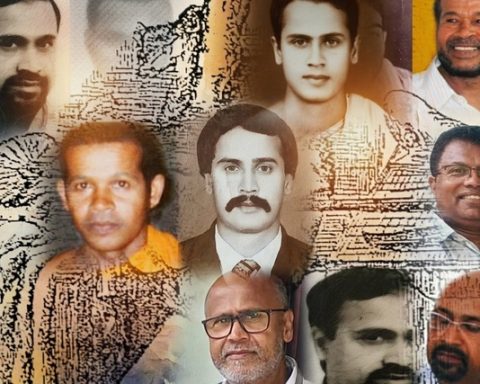
Those who had been propagating Tamil genocide narrative deliberately forget how the LTTE and other Tamil groups killed elected representatives of Tamil speaking people. They should be ashamed for playing politics with slain Tamil politicians. Have you ever heard of LTTE sympathisers questioning the assassination of Tamil political leader and former opposition leader Appapillai Amirthalingam along with ex-Jaffna MP Vettivelu Yogeswaran on July 13, 1989 at a rented house in Colombo 07.
Yogeswaran’s wife, Sarojini was shot five times at her residence near Jaffna on May 17, 1998. The LTTE assassinated her because she accepted the post of Jaffna Mayor. The LTTE killed indiscriminately. Sarojini Yogeswaran was killed as the LTTE couldn’t stomach Sri Lanka’s efforts to restore normalcy in the Jaffna peninsula.
Many people tend to forget that the Jaffna peninsula and the nearby islands were brought under government control in 1995 during Chandrika Bandaranaike Kumaratunga’s tenure as the President. The TULF decision to contest the Jaffna Municipal Council election on January 29, 1998, infuriated the LTTE. The TULF’s move weakened the LTTE’s position. Political process always frightened the LTTE.
The writer covered the Jaffna district local government elections conducted on January 29, 1998. The TULF contested only the Jaffna MC and Waligamam (north) Pradeshiya Sabha out of 17 local government authorities
Those who organised high profile events in honour of the LTTE dead must make a genuine effort to identify and formulate a list of Tamils – members of rival groups and politicians killed during the conflict. And a separate list of forcibly conscripted children. If Brampton Mayor Patrick Brown is so concerned about Tamils, he can easily check why those 12,000 Sri Lankan Tamils ended up in his area. Did they flee Sri Lanka armed forces, Indian military, or the LTTE? An attempt should be made to identify those who had fought for the LTTE or other Tamil groups living therein.
‘Forgotten Sri Lanka’s exiled victims’
Those who had been accusing Sri Lanka of, what they called, enforced disappearances during and after the conclusion of the war in May 2009, refuse to acknowledge thousands of ex-terrorists (of LTTE and other groups) who live overseas. Refusal on the part of Western governments to share information with Sri Lanka has deprived the country of an opportunity to address accusations of disappearances.
Sometime ago, an expensive survey carried out by the International Truth and Justice Project (ITJP), affiliated to the Foundation of Human Rights in South Africa, revealed ex-LTTE cadres taking refuge in western countries. The survey was titled ‘Forgotten Sri Lanka’s exiled victims.’
The release of the report in June 2016 coincided with the commencement of the on-going 32 sessions of the Geneva-based United Nations Human Rights Council (UNHRC). The report inadvertently revealed the existence of clandestine networks, facilitating Sri Lankans of Tamil origin, including former members of the LTTE, reaching Europe, through illegal means.
The study disclosed that LTTE personnel, including those who had been with Shanmugalingam Sivashankar alias Pottu Amman’s dreaded intelligence service, had secured citizenship in European countries, including the UK.
The report dealt with information obtained from 75 Tamils, living in the UK, France, Switzerland and Norway. Almost all of them had fled Sri Lanka after the conclusion of the war, in May, 2009. The vast majority of interviews had been conducted in London. However, an ITJP bid to include some of those ex-LTTE cadres, based in Germany, had gone awry. The report claimed that the targeted group declined to participate in the process, in protest against the role of the international community in supporting the transitional justice process in Sri Lanka.
Surprisingly, ITJP hadn’t bothered about those who took refuge in India during the conflict and post-conflict period.
A group of human rights experts, international prosecutors, investigators and transitional justice experts, who had previously served the United Nations (UN) International Criminal Tribunal for the former Yugoslavia (ICTY) and the International Criminal Court (ICC), produced the report under the guidance of Yasmin Sooka, one of the three persons on UNSG Ban Ki-moon’s PoE on Sri Lanka. Sooka teamed up with Marzuki Darusman and Steven R. Ratner to produce a Report of the Secretary General’s Panel of Experts on Accountability in Sri Lanka. Sooka functions as the executive director of the Foundation as well as ITJP
According to the report: “She is a former member of the South African & the Sierra Leone Truth and Reconciliation Commissions and was a legal advisor to Ban Ki-moon on Sri Lanka. She was the Soros inaugural Chair at the School of Public Policy and recently sat on the Panel investigating sexual violence by French peacekeeping troops in the Central African Republic.”
The writer sought a clarification from UNSG’s deputy spokesperson, Farhan Haq, regarding Sooka’s tenure as a Legal Advisor to UNSG on Sri Lanka. The Island received the following response from Haq: “Yasmin Sooka has been on high level panels, including on Sri Lanka, but she has not been the legal adviser to the Secretary-General.”
Unfortunately, Sri Lanka never really bothered to conduct a comprehensive investigation into unsubstantiated allegations taking into consideration all available facts. Thereby Sri Lanka deprived itself an opportunity to set the record straight, even 17 years after the conclusion of the conflict.
Wartime GoC of the celebrated 58 Division Shavendra Silva, who retired on Dec. 31, 2024, after serving the military for over four decades on the eve of 16th anniversary of triumph over the LTTE, squarely blamed successive governments of failing to counter war crimes accusations. In his exclusive interview with Derana anchor Chathura Alwis the Gajaba Regiment veteran held the governments, including the war-winning Mahinda Rajapaksa administration, of failing to clear the armed forces of false allegations.
Isn’t it an indictment on the entire political party leadership of this country?