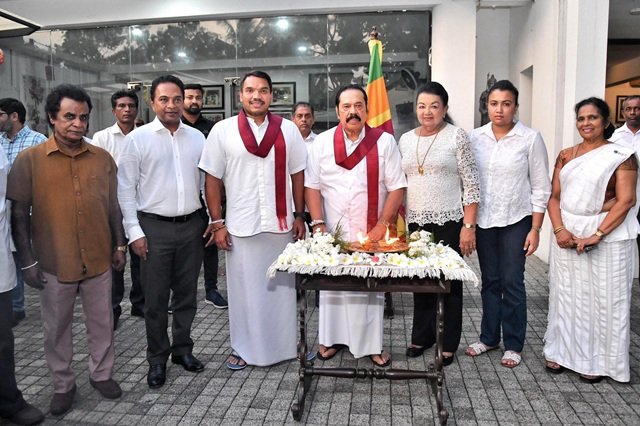
“The power in the village lay with Mahinda. Mahinda was not just a politician. Mahinda was a culture. And where did that culture fit best? In the village. Isn’t that so…?”
These words were spoken not by anyone else, but by the current President, Anura Kumara Dissanayake. He did not make the remarks publicly, but during a closed lecture to party cadres, away from media coverage. They came after the Rajapaksas re-emerged following the 2019 presidential election. A video of Anura’s remarks later surfaced on social media, beyond his or his party’s control.
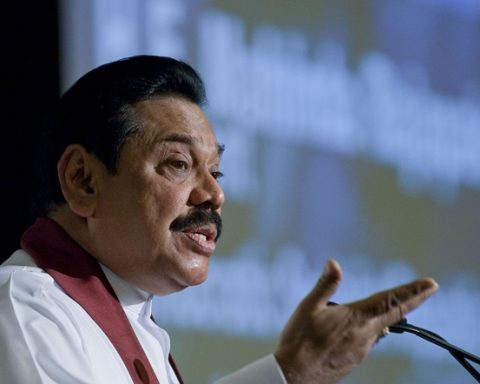
Anura’s words reflected a careful study of Mahinda’s role in Sri Lankan politics. He was explaining to his party members the challenge posed by the “Mahinda culture”. That culture was not created by Mahinda alone; the JVP itself, including Anura Kumara, had helped create it. When Mahinda contested the 2005 presidential election, he was not widely known. It was the JVP that helped craft his image—his shawl, his sarong and his moustache—turning them into symbols of a new political culture. The chief architect of this image was Wimal Weerawansa, and the JVP helped bring his vision to life.
After Mahinda’s military victory over Prabhakaran in 2009, this “Mahinda culture” became deeply rooted in Sri Lankan soil, blending into the national identity like temples, reservoirs and stupas. It was built on three pillars:
- The patriotic monks – Their influence helped make Mahinda Prime Minister in 2004 and later contributed to securing his presidency.
- The war heroes – Soldiers and their families became guardians of the Mahinda culture following his leadership during the war.
- Fear and intimidation – Anyone who criticised Mahinda or the Rajapaksa family was branded a traitor, while violence and assassinations reinforced the climate of fear.
Confronting this culture was like banging one’s head against a rock. Yet, in 2008, the JVP broke away from Mahinda’s government, despite having helped create the very culture that would eventually threaten to destroy it. Later, in 2015, the JVP worked quietly to support Maithripala Sirisena’s victory, seeking to dismantle Mahinda’s cultural dominance.
Anura and his allies sought to dismantle each of these pillars:
- By pursuing legal action against nationalist monks, they sought to weaken the religious base.
- By pursuing corruption and human rights cases against military leaders, they targeted the war-hero pillar.
- By exposing corruption within the Rajapaksa family, they sought to erode the pillar of fear.
But Sirisena and Ranil Wickremesinghe did not fully carry out these plans. Instead, they used the threat of imprisonment to strengthen their own positions while striking deals with Mahinda. This allowed the Rajapaksas to regroup, form the SLPP and return to power with greater strength by 2019.
Ultimately, Mahinda’s culture survived because of compromises by Sirisena, Ranil and even the JVP. Had Anura’s strategy succeeded then, either Ranil or Sirisena might be president today, with the JVP as the main opposition. Instead, Anura himself is now president, continuing the mission of dismantling the Mahinda culture—a mission he frames as a new kind of rebellion. Unlike Rohana Wijeweera’s armed insurrections, Anura’s rebellion is being waged through the law and constitutional power. Whether it will succeed, only the gods know.