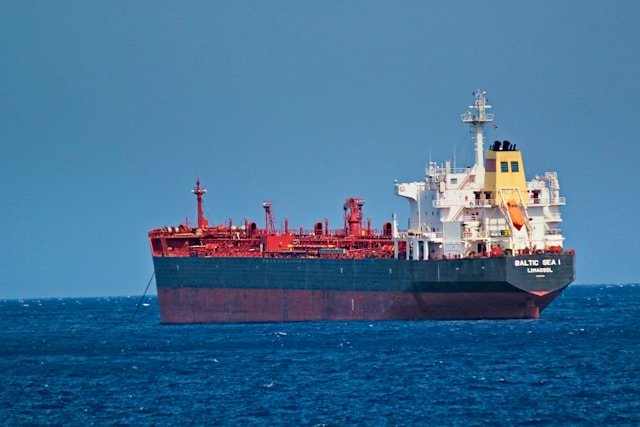
The war in Iran is reshaping maritime transport as the closure of the Strait of Hormuz disrupts one of the world’s most important arteries for energy supplies. Until March, the strait channelled 20% of the world’s hydrocarbon supply. Oil and gas are still leaving the Persian Gulf, but only with increasing difficulty, through tactics that would once have seemed unthinkable, including switching off the satellite tracking systems of supertankers and transferring cargoes at sea. The risks are rising, the costs are escalating and there is no date for a return to normality.
In that environment, owning an oil tanker is acquiring a significance that extends well beyond ordinary commercial calculation. For countries producing crude, having vessels of their own offers a means of ensuring that their cargo can still reach markets at a time when navigating Hormuz is becoming more dangerous and expensive. The result is a fierce competition for ships whose supply is already limited.
The pressure is being felt most sharply in the market for large crude carriers. The chief executive of French oil company TotalEnergies put the cost of transporting oil through Hormuz at $20 million at the end of August. Shipowners and shipping companies must accept substantially greater risks to operate in the area, costs that are feeding directly into freight rates and marine insurance. At the same time, the value of oil tankers is rising sharply, particularly for VLCCs, or Very Large Crude Carriers, which are designed for long-distance maritime routes and can carry around two million barrels of crude.
The shortage has produced an unusual distortion in the tanker market: older vessels can now be worth substantially more than new ones. “The price of second-hand tankers has surged since the closure of the Strait of Hormuz, and some second-hand vessels are now valued higher than newbuilds, due to the two or three years it would take to build a new vessel,” explains Erica Tsirikou, a specialist in shipping prices at the British commodities and energy consultancy Argus.
According to Tsirikou, a second-hand VLCC is currently valued at around $182 million, compared with approximately $130 million for a newly built vessel. For Suezmax tankers, which have a smaller capacity and are designed to pass through the Suez Canal, the second-hand price is around $130 million, compared with $89 million for a new vessel. Aframax tankers, medium-sized ships intended for shorter routes, are valued at about $95 million on the second-hand market, against $75 million for newbuilds.
“There is fierce competition to acquire these second-hand tankers, which has pushed up the sale price,” Tsirikou adds.
Waiting two or three years for a new tanker is difficult to reconcile with a market in which both the value of oil and the cost of transporting it are rising rapidly. Brent crude has returned to around $95 a barrel, while freight rates continue to climb. On a route from the Middle East towards Asia, the cost of chartering a VLCC has risen from $5.4 million to more than $36 million, according to Jorge Molinero of commodities consultancy Sparta.
The crisis has also altered the strategic calculation surrounding ownership. “Ships have always had a strategic dimension, but the Hormuz crisis has considerably heightened it, especially in the case of oil tankers. When the ability to transport one’s own oil can no longer be taken for granted, owning the ships that do so ceases to be purely a commercial decision,” says Veson Nautical, a multinational specialising in freight contract management, vessel tracking and shipping-market data analysis.
Yet the same market conditions that are encouraging buyers to acquire tankers are making sellers reluctant to part with them. “Shipowners are reluctant to sell vessels that are generating good profits, so there are fewer vessels for sale, which pushes prices even higher,” Veson says.
Niels Rasmussen, chief shipping-market analyst at the trade association BIMCO, the Baltic and International Maritime Council, says the increase has been substantial. “Since the beginning of the year, the average price of a five-year-old tanker has increased by 35%. And prices for supertankers (VLCCs) have increased by almost 40%,” he says.
The squeeze extends to shipyards. While shipowners hold on to profitable vessels, manufacturers are facing growing demand not only from oil-producing countries but also from countries that buy crude. Jaime Rodrigo Larrucea, a doctor in Law and Nautical Engineering and professor of Maritime Law at the Polytechnic University of Catalonia, says: “Shipyards are overwhelmed with work to build merchant vessels. It is a market concentrated in a few operators who dominate trade.”
The concentration of the market has become particularly significant as major operators move aggressively to secure capacity. The South Korean giant Sinokor strengthened its position as the world’s largest operator of supertankers after acquiring dozens of VLCCs at the beginning of the year, before the war in Iran began, and subsequently chartering them at much higher rates.
Veson estimates that Sinokor has acquired around 70 vessels so far this year. The United Arab Emirates is also buying tankers through ADNOC Logistics, the shipping and logistics subsidiary of state-owned ADNOC. Since the end of June, the Emirati company has acquired nine VLCCs for $1.1 billion, adding further pressure to prices for the largest tankers.
At the same time, new construction is accelerating. “Shipowners have placed at least 140 orders for new tankers in the first half of 2026. The Chinese have secured the majority of orders over the past 12 months, while Greek shipowners remain the most active buyers,” Tsirikou says.
The tanker market is therefore being pulled in several directions at once. Producers need ships to move their oil. Buyers need reliable access to transport. Shipowners are benefiting from exceptional freight rates but have little incentive to sell profitable assets. Shipyards are struggling under the weight of new orders, while investors outside the traditional ownership base are beginning to look more closely at the sector.
For financial investors, the attraction lies in the returns generated by unusually high freight rates. “High freight conditions are making shipping assets more attractive to investors outside the traditional owner base. Any prolonged period of strong returns tends to attract new attention, although converting that interest into significant capital investment usually takes longer than the headlines suggest,” Veson says.
The result is a market in which time itself has acquired a price. A new tanker may take years to arrive, while an available second-hand vessel can enter the market immediately. With Hormuz still closed, oil still moving and freight costs surging, that difference is reshaping the value of the ships that carry the world’s most sought-after commodity. What was once principally a question of shipping economics has become, for producers and buyers alike, a question of securing the means to move oil at all.