The Catholic Church has long struggled with a painful modern reality: much of the world, especially in the West, no longer listens to it with the authority it once commanded. There was a time when the words of a pope could shape political debate, moral values and public life across continents. That era has faded gradually, then suddenly, leaving the Vatican confronting not only secularization but also a profound crisis of relevance.
For decades, many inside the Church interpreted this decline as a symptom of spiritual decay in society rather than a challenge to themselves. Critics, reform-minded theologians and progressive clergy often argued that the Church’s inability to adapt to social change alienated ordinary believers. Yet internal debates remained bitter, ideological and deeply divisive. The tensions have only intensified in recent years, amplified by media-driven clashes involving religion, politics and culture wars.
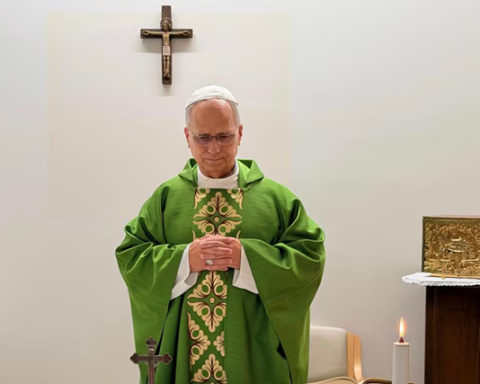
Now, Pope Leo XIV appears determined to chart a different course.
In his first major encyclical, Magnifica Humanitas, the American-born pontiff, formerly known as Robert Prevost, presents a remarkably conciliatory but uncompromising vision for the future of the Church and humanity. According to an analysis published by the German newspaper Die Zeit, the document may become essential reading not only for Christians, but for anyone searching for ethical guidance in an age dominated by technological upheaval and artificial intelligence.
The encyclical’s central message is strikingly simple: the Church must stop lecturing the world from above and instead walk alongside humanity with humility. Rather than condemning modern society or portraying technological change as inherently corrupting, Leo argues that the Church should act as a companion, serving people rather than ruling over them.
Early in the text, the pope asks a question that has haunted Catholicism for generations: what should the Church’s relationship with the modern world actually be? His answer rejects authoritarianism and moral intimidation. Instead, he calls for a Church that respects democratic institutions, recognizes the autonomy of secular life and seeks the common good through dialogue rather than coercion.
The tone matters as much as the content. Unlike some previous Vatican interventions that were perceived as confrontational, Leo’s writing is calm, inviting and notably free of ideological hostility. Yet beneath the gentler language lies a firm directive to the global Church hierarchy. The pope is not merely suggesting reform; he is defining a new institutional identity.
Die Zeit notes that Leo continues the reformist trajectory associated with Pope Francis, particularly the emphasis on compassion, openness and social justice. But while Francis often framed reform as aspiration, Leo presents it as settled reality. The Church, he insists, must already see itself as part of humanity’s shared journey rather than an external judge standing above it.
At the heart of Magnifica Humanitas lies the issue of artificial intelligence. Yet the encyclical is not simply a religious statement about machines or digital ethics. Instead, AI becomes a metaphor for the broader anxieties of the 21st century: technological acceleration, concentrated power, social fragmentation and the fear that humanity may lose control over the systems it creates.
Leo avoids the simplistic anti-technology rhetoric that often emerges from religious or philosophical critics. He explicitly acknowledges that scientific and technological progress has dramatically improved human life over centuries. Technology itself, he argues, is not an enemy of humanity. But every innovation also carries the potential for harm if it is disconnected from moral responsibility and the pursuit of the common good.
This balanced perspective is one reason the encyclical is attracting attention far beyond Catholic circles. Leo reportedly consulted extensively with leading AI experts before writing the document, but he does not attempt to compete with them as a technical authority. Instead, he approaches the AI revolution from the standpoint of enduring human values: faith, hope, love and dignity.
The pope repeatedly returns to a single theme: the preservation of humanity itself. The word “human” dominates the encyclical more than references to God or technology. Leo warns against dehumanization, against reducing individuals to data, productivity metrics or instruments of political and economic power. He argues that modern technological systems risk deepening inequality, distorting justice and concentrating unprecedented influence in private hands that are difficult to regulate or even identify.
The concerns echo wider global debates surrounding artificial intelligence, surveillance capitalism and corporate power. But Leo frames these issues in moral rather than partisan terms. Humanity, he writes, has never possessed so much power over itself. The challenge now is whether that power will be guided by wisdom and responsibility.
Rather than encouraging fear, however, the pope calls for dialogue. He insists that every generation inherits the task of shaping its era in ways that preserve human dignity and solidarity. The answer to division and uncertainty, he argues, is not isolation or ideological warfare, but conversation across political, cultural and religious boundaries.
That message arrives at a moment of intense global instability. Wars, democratic crises, climate fears and rapid technological disruption have fueled widespread anxiety about the future. Populist leaders in many countries have responded by amplifying fear and resentment. Leo consciously rejects that path. Instead of exploiting public panic, he urges institutions — especially the Church — to become credible sources of comfort, encouragement and ethical clarity.
The accessibility of the document itself is also significant. Die Zeit observes that Magnifica Humanitas avoids both dense theological abstraction and overly technical discussions of artificial intelligence. The result is a text intended not for specialists, but for ordinary readers trying to understand the moral consequences of a rapidly changing world.
The encyclical’s message can be reduced to a deceptively simple appeal: remain human. In an era increasingly shaped by algorithms, automation and technological power, Pope Leo XIV argues that preserving compassion, justice and human dignity may become the defining struggle of the century.