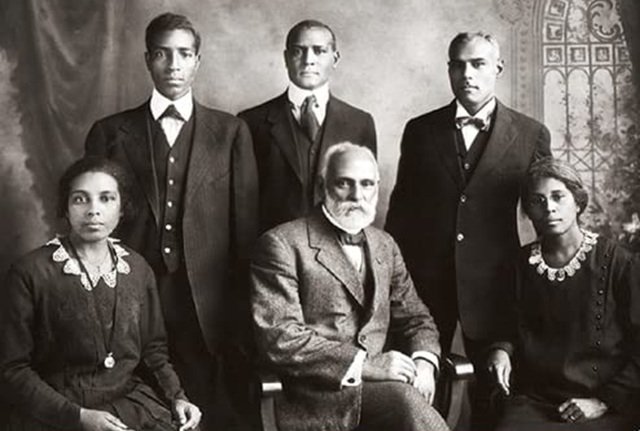
by Eric
A family history can begin with a birth certificate, a grave, a photograph or a name. Edward Ball begins somewhere more difficult: with a sexual encounter whose moral meaning cannot be recovered with certainty, but whose power continues to determine the lives of descendants. In The Sweet Hell Inside, the past does not sit quietly behind the present. It enters bedrooms, courtrooms, churches, funeral parlours and family conversations, carrying with it the unresolved violence of slavery and the strange social afterlife of racial classification. Ball’s history of the Harleston family is therefore not merely a genealogy. It is an investigation into what happens when intimacy, coercion, money, colour and social status become inseparable.
The most unsettling passages concern Kate Wilson and William Harleston. Ball writes that “their initial lovemaking was not consensual” and that William “most likely forced her to have intercourse” (Chapter Two). He then imagines the scene with almost cinematic precision: “A middle-aged man, pale and bony, suspended himself over a slight, brown girl” (Chapter Two). The formulation is deliberately provocative, but it raises an important methodological problem. Ball knows that the archive cannot tell him exactly what happened, yet he repeatedly moves between evidence and reconstruction. He is admirably unwilling to romanticise a relationship born within slavery, but his language sometimes gives imaginative reconstruction the texture of witnessed fact. “By later codes of sexual behavior,” he writes, “the start of the relationship would have to be described as rape” (Chapter Two). The qualification “by later codes” is itself problematic: sexual coercion under slavery need not await modern terminology before being recognised as coercion. Ball’s larger point is nevertheless powerful. The central paradox is that a relationship may begin through domination and later acquire emotional complexity without the later intimacy cancelling the original violence.
That ambiguity becomes the book’s governing moral problem. Ball writes that Kate’s relationship with William “seems to have started with force and ended with resignation, or even comfort” (Chapter Two). He compares her possible attachment to the psychological accommodation of hostages to captors. This is one of the book’s most uncomfortable propositions because it refuses the reassuring simplicity of either romance or pure victimhood. Yet Ball occasionally pushes the analogy too far. The reader is asked to imagine Kate’s interior life while simultaneously being reminded that the surviving evidence cannot securely reveal it. The strongest parts of the book recognise that contradiction; the weaker moments seem tempted to resolve it through narrative invention.
The Harleston story becomes even more revealing when sex gives way to inheritance. William and Kate had eight children, but after William’s death the family was “pushed into black society and into destitution by their white relatives” (Preface). The children had occupied an unstable social position, belonging neither securely to white society nor to poorer black communities. Ball describes them as members of an “in-between class” (Preface), and later calls the Harlestons part of “a new black bourgeoisie” (Chapter Three). Here the book becomes more than a history of interracial relationships. It becomes an anatomy of class formation within a racial order.
The alleged theft of Kate’s inheritance is consequently one of the book’s most important episodes. Ball is careful to admit the evidentiary weakness: “Though no papers survive that would prove it, tradition says” that Benjamin Frost Huger decided to take care of Kate and her money (Chapter Two). The subsequent story is extraordinary. Huger supposedly persuaded Kate, who signed documents with an “X”, to surrender control of her estate; when she realised what had happened, John Harleston allegedly told her, “It’s too late. The cloth has been cut” (Chapter Two). The court then issued a lump-sum payment representing Kate’s inheritance, which her descendants say Huger appropriated (Chapter Two). Ball’s use of phrases such as “family memory”, “tradition says” and “descendants say” is methodologically responsible, but it also exposes the central difficulty of writing family history. Memory preserves what documents destroy, yet memory also acquires legends, moral meanings and retrospective explanations. Ball’s achievement is not that he proves every family story. It is that he shows how the stories themselves became part of the family’s historical inheritance.
The book’s discussion of racial identity is similarly fascinating and occasionally troubling. Ball reconstructs a world in which skin colour could be subdivided into elaborate categories—“chestnut”, “ebony”, “cream”, “chocolate”, “coffee”, “yellow”, “blue-black” and “redbone” (Chapter Three). The 1890 census supposedly classified hundreds of thousands of people as “blacks”, “mulattoes”, “quadroons” and “octoroons”, often according to the judgement of enumerators rather than self-description (Chapter Three). The grotesque precision of such categories exposes race as a bureaucratic technology as much as a social identity. Yet Ball is also interested in the ways African Americans themselves navigated and reproduced these hierarchies. His account of the “colored elite” does not permit the reader to imagine racism as a simple binary relationship between white oppressors and black victims.
That complexity reaches its sharpest expression in the phenomenon of passing. Ball recounts people who simply disappeared from Charleston, crossed into white society and ceased identifying themselves as Black. One recollection describes families who were “tired of being Negroes and all it meant” and moved north to “become white people” (Chapter Seventeen). The rules of passing could even involve collective silence: “if you knew somebody was colored, you didn’t give them away” (Chapter Seventeen). This is one of the book’s strongest themes because it transforms racial identity from something apparently biological into something performed, policed and negotiated. The person who passes is simultaneously escaping racism and demonstrating its power.
Yet Ball does not idealise the black elite created by these circumstances. The Harlestons “knew themselves to be special” (Chapter Three), and their manners, clothing and institutions could become markers separating them from poorer Black communities. The notorious description of St Mark’s Episcopal Church, where admission allegedly depended on skin colour and even a comb test, is almost grotesquely vivid (Chapter Seventeen). Such episodes complicate any straightforward narrative of racial solidarity. Oppression from outside could coexist with hierarchy within.
The Jenkins Orphanage provides an even darker counterpoint. Ball’s account of Parson Jenkins combines institutional achievement with disturbing allegations of physical punishment. Former residents recalled being tied to posts and whipped, while one boy was “stripped, tied to a pole, and whipped with a horse rein” (Chapter Sixteen). At the same time, the orphanage produced musicians who entered the emerging world of jazz. Ball places its band alongside Louis Armstrong and Jelly Roll Morton at the birth of the genre (Chapter Twelve), while describing children who eventually escaped the institution to seek careers in New York and Chicago. The contradiction is extraordinary: an institution capable of producing cultural innovation could simultaneously operate through fear and violence.
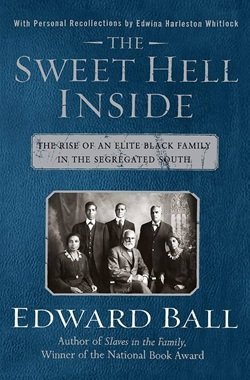
Ball is equally sceptical of heroic institutional narratives when examining the Jenkins family’s wealth. While children survived on “corn bread and molasses”, Ella Jenkins’s household enjoyed servants, property and elaborate meals (Chapter Fourteen). Ball observes that the orphanage could appear “less like a charity and more like a little empire” (Chapter Fourteen). Again, however, the evidentiary language matters. Allegations about financial impropriety and abuse are not always supported by the same documentary density as Ball’s broader historical reconstruction. The book is strongest when it allows that uncertainty to remain visible rather than turning suspicion into verdict.
Perhaps the most compelling achievement of The Sweet Hell Inside lies in its refusal to confine racial history to legislation and violence. Its subjects fall in love, conceal their sexuality, conduct funerals, perform abortions, establish businesses, raise children, make music and attempt to escape classifications imposed upon them. Eddie Mickey’s homosexuality, for example, becomes another form of secrecy within a community already burdened by racial surveillance (Chapter Four). Mamie Randall’s alleged abortion practice reveals a hidden economy operating across racial and class boundaries (Chapter Fifteen). These episodes prevent the history from becoming a conventional morality tale. People remain complicated even when the social structures surrounding them are brutal.
Ball’s narrative method, however, carries a danger. His prose often seeks the startling detail: a dead body appearing in a kitchen, a funeral coffin equipped with a bell, a comb determining church membership, an abortion performed beside an embalming business. Such details make the past extraordinarily vivid, but vividness can become a substitute for historical argument. The reader must continually distinguish documented evidence from family tradition, testimony, inference and Ball’s own reconstruction. This distinction is especially important because the book’s most memorable scenes are sometimes precisely those least susceptible to verification.
The final testimony of Edwina Harleston Whitlock gives the book its emotional centre. Her dream of descending the twenty-three and twenty-five steps of the family staircase while Uncle Teddy assures her that she is not an orphan (Chapter Twenty-One) transforms genealogy into memory and memory into psychological inheritance. Her later reflections on suffering, race and materialism are sweeping and unmistakably shaped by the racial assumptions of her generation. Ball wisely preserves their contradictions rather than smoothing them into contemporary language.
The Sweet Hell Inside is therefore most valuable not as a perfectly settled account of one family’s past, but as an argument about the instability of historical identity itself. Its deepest subject is not interracial sex, nor slavery, nor passing, nor the black bourgeoisie. It is inheritance: the ways violence becomes property, property becomes class, class becomes identity, identity becomes secrecy, and secrecy becomes family memory. Ball sometimes asks the reader to travel further from evidence than a historian ordinarily should. But that very tension makes the book worth interrogating. It forces an uncomfortable question: when the archive falls silent, how much of the past should historians reconstruct—and how much should they leave unresolved? The answer matters because the Harlestons’ history demonstrates that uncertainty is not the opposite of historical truth. Sometimes it is the most truthful thing the historian has left.