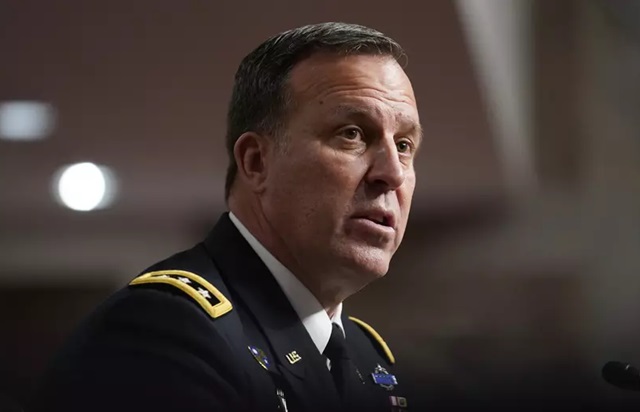
In a statement before the House Armed Services Committee, General Michael Kurilla, head of the US Central Command, emphasized the strategic necessity of maintaining robust ties with both India and Pakistan. Testifying under oath, General Kurilla underscored that Washington’s regional partnerships should not be viewed through a binary lens, suggesting that the United States must engage both New Delhi and Islamabad to further its security and counter-terrorism objectives.
“We need to have a relationship with Pakistan and with India. I do not believe it to be a binary switch,” said General Kurilla. “We should look at the merits of the relationship for the positives that it has.”
The general’s remarks come amid growing concerns in New Delhi regarding Washington’s dual engagements in South Asia, particularly given ongoing tensions between India and Pakistan. His testimony appears to send a clear message: the U.S. will not be forced into a strategic exclusivity between the two nuclear-armed neighbors.
Praising Pakistan’s role in counter-terrorism, General Kurilla called the country a “phenomenal partner,” highlighting its active efforts against ISIS-Khorasan (ISIS-K) — a regional affiliate of the Islamic State. He revealed that Pakistan, with limited intelligence support from the United States, has made substantial gains in targeting ISIS-K operatives.
“Through a phenomenal partnership we have with Pakistan, they have gone after ISIS-Khorasan, killing dozens of them,” said the General. He noted that Pakistani authorities had captured at least five high-value ISIS-K figures, including Jaffar — a key suspect in the 2021 Abbey Gate bombing in Kabul. According to Kurilla, Pakistan promptly coordinated the extradition of Jaffar to the United States, with Chief of Army Staff General Asim Munir personally informing him of the arrest.
General Kurilla also described the intensifying threat posed by ISIS-K, which continues to plan global terror attacks, including potential threats to the U.S. homeland. He pointed out that since the beginning of 2024, Pakistan has faced more than 1,000 terrorist attacks in its western regions, resulting in over 700 deaths and more than 2,500 injuries among civilians and security forces.
“This is an active fight. They [Pakistan] are in a full-fledged counter-terrorism battle,” he noted. “And they’ve been a phenomenal partner in that world.”
While acknowledging the strength of the U.S.-India partnership, Kurilla’s comments make it clear that America’s counter-terrorism strategy cannot ignore Pakistan’s pivotal role in regional security dynamics. His testimony effectively reiterates Washington’s intention to strike a strategic balance between both South Asian powers.
The comments are likely to raise eyebrows in New Delhi, where policymakers have long expressed frustration over continued U.S. military and diplomatic cooperation with Pakistan, which India accuses of harboring terrorist groups targeting Indian interests. However, Kurilla’s assessment reflects a broader U.S. policy approach rooted in pragmatic engagement rather than exclusivity.
The general’s testimony signals a continuation of America’s dual-track approach in South Asia, affirming that while New Delhi remains a vital strategic partner, Islamabad is indispensable in the fight against terrorism — particularly in managing threats emerging from the Afghanistan-Pakistan border.