Prosecutors are facing mounting pressure to explain why a high-profile spying case against two men accused of working for China collapsed, with MPs questioning whether the Crown Prosecution Service (CPS) dropped the trial to avoid formally designating Beijing an enemy of Britain.
The CPS announced at the Old Bailey on Monday that it would offer no evidence against Christopher Berry, 33, and Chris Cash, 30, a former parliamentary researcher, who were due to stand trial next month under the Official Secrets Act. Both had been charged in April last year with collecting and passing information that might be useful to an enemy. The case hinged on a century-old provision requiring prosecutors to prove the information was intended for a hostile state, defined in the legislation as an “enemy.”
Cash and Berry, who denied the charges throughout, were formally acquitted after the CPS declared that “we simply cannot continue to prosecute this case.” In a statement after the verdicts, Cash said his arrest had “destroyed my life and the career I loved,” calling renewed allegations in parliament “disappointing” and “an amplification of the injustice I have already had to face.” Berry’s solicitors said their client had never had access to classified material and did not understand why the prosecution had been brought in the first place.
The decision has triggered anger in Westminster. MPs sanctioned by Beijing wrote to Stephen Parkinson, the director of public prosecutions, asking whether the government’s stance on China had influenced the collapse of the trial. They noted that the CPS had clearly believed the charges met the threshold when filed last year, but that “on the eve of the trial this all seems to have changed without substantive explanation.”
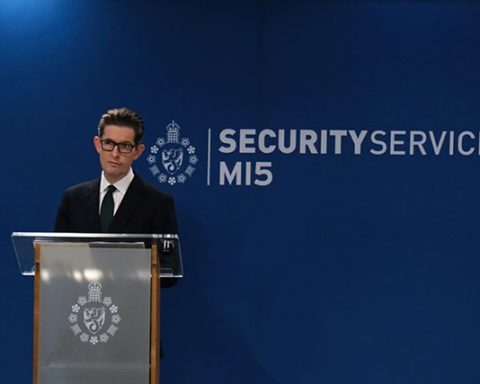
Security Minister Dan Jarvis told the Commons he was “disappointed” with the CPS decision, adding that the new National Security Act has since replaced the Official Secrets Act and removed the “unhelpful ‘enemy’ language.” Jonathan Hall KC, the independent reviewer of state threat and terrorism laws, told The Times UK that Jarvis’s remarks strongly suggested prosecutors were unable to prove the “enemy” element required under the old law. Hall noted that unlike successful prosecutions against Russian spy rings, such a case would have required a security official to testify in court and face cross-examination.
Former security minister Tom Tugendhat, who joined four other MPs in signing the letter to Parkinson, said clarification was urgently needed on whether the government had given advice to the CPS about its position on Beijing. Critics have long accused successive administrations of softening their approach to China in the hope of improving trade and economic ties.
Luke de Pulford, executive director of the Inter-Parliamentary Alliance on China, said it was difficult to reconcile two years of police work with a case that was abandoned at the last minute. “It seems clear that something changed between the charge in 2024 and now, and the public is owed an explanation,” he said.
Cash, who previously directed a parliamentary group focused on China, insisted he had always been law-abiding and that his work was intended to raise awareness among MPs about the risks posed by Beijing. His lawyer Henry Blaxland KC said his client should have been “congratulated rather than prosecuted” for his role in exposing challenges in UK-China relations.
Berry’s representatives echoed that sentiment, saying the 33-year-old had no links to Beijing, no access to state secrets and no pro-China sympathies. Armstrong solicitors confirmed that, had the trial gone ahead, they would have challenged the Crown’s assertion that China constituted an “enemy” under the 1911 legislation.
The CPS has so far refused to provide any further detail on the reasons for its decision.