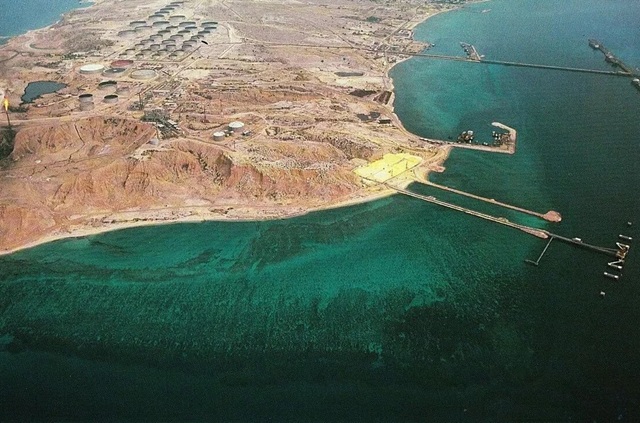
American forces are preparing for a potential amphibious assault on Kharg Island, Iran’s crucial oil export hub, in a scenario that could dramatically reshape the region’s geopolitical landscape. Military planners envision US troops arriving by tilt-rotor aircraft and helicopters, moving under heavy Iranian fire, and positioning themselves near the island’s oil infrastructure to gain control of nearly 90 percent of the Islamic Republic’s oil exports. The operation, experts say, would place Washington in a position to choke Iran’s revenue while avoiding the wholesale destruction of the facilities, a move that could provoke global market turbulence.
President Donald Trump has publicly expressed hope for a diplomatic resolution with Tehran. Yet thousands of US marines are already en route to the region, alongside elite paratroopers from the 82nd Airborne Division, in what the Pentagon describes as precautionary positioning. Seizing Kharg Island remains a military option on the table, designed to provide leverage over the Iranian regime if hostilities intensify. Analysts stress that controlling the island could also allow Washington to pressure Iran to reopen the strategically vital Strait of Hormuz or capture other islands in the strait to assert dominance over regional waterways.
Former intelligence director for US Central Command, Karen Gibson, warned that introducing ground troops carries significant risks. “Introducing ground troops is clearly a riskier operation to our own forces,” she said, noting that the challenge extends beyond merely capturing the island. Holding it under sustained pressure, she added, could divert resources from ongoing strikes on mainland Iran and prioritize the protection of occupying forces over other military objectives.
Supporters of a more aggressive approach, including Republican Senator Lindsey Graham, argue that depriving Iran of its oil exports would strangle the regime. The Pentagon has therefore mobilized substantial forces: two Marine Expeditionary Units (MEUs), each comprising approximately 2,200 marines with infantry, air combat, and logistics support, are en route aboard the USS Tripoli from Japan and the USS Boxer from California. These units carry V-22 Osprey tilt-rotor aircraft, F-35 stealth fighters, and landing craft capable of deploying troops and equipment directly onto Kharg’s shores.
Former military officials maintain that one MEU could take and hold the island. Gibson called it “a classic Marine operation,” but emphasized that it would occur under fire, exposing American forces to likely casualties. Kharg, an eight-square-mile island just 15 miles off Iran’s coast, sits within the range of Tehran’s missile, drone, and artillery systems. Retired Admiral James Stavridis noted that US forces could maintain a presence only if air and sea superiority were uncontested, cautioning that the operation would differ significantly from large-scale historical amphibious assaults like Okinawa or Iwo Jima in terms of both scale and defensive force.
Amphibious warfare remains central to Marine doctrine, rooted in 20th-century battles such as Iwo Jima in World War II and Inchon during the Korean War. Yet the US has not conducted a large-scale amphibious landing under heavy fire since Okinawa. Operations in Iraq’s Al Faw peninsula involved amphibious tactics but met only light resistance, highlighting the increased risk US forces might face on Kharg.
Initial strikes on the island have already targeted over 90 Iranian military installations, including missile and mine storage facilities, potentially setting the stage for a rapid assault. Military strategists like Kalev Sepp and Seth Krummrich describe a likely scenario: a swift, precise attack using munitions to neutralize defenses, followed by helicopter or aircraft insertion of troops to secure key terrain. Krummrich stressed the need for speed to minimize exposure and maintain proximity to the oil infrastructure.
Troop landings could be executed by air from the USS Tripoli, utilizing V-22 aircraft, or by sea via landing craft equipped with armored vehicles, artillery, HIMARS rocket systems, and air defenses. Retired Marine Colonel Mark Cancian explained that forces would establish a beachhead before advancing across the island, but warned that navigating the Strait of Hormuz would pose its own hazards. Potential mines and Iranian fire could require preliminary sweeping operations, delaying the mission and increasing the risk of casualties.
Air-only insertion presents an alternative, though helicopters and aircraft would remain vulnerable to Iranian ground fire and loitering munitions. Another option would involve staging from allied Gulf states or Jordan, demanding diplomatic negotiations for basing and overflight rights, as well as robust logistical support for fuel, medical evacuation, and rapid reaction forces. Strategists also consider capturing smaller islands in the strait, such as Larek, Qeshm, and Hormuz, which are more accessible but still within artillery and drone range.
Beyond military considerations, the operation carries significant economic implications. Any seizure of Kharg Island would constitute “economic warfare,” said Krummrich, complicating messaging to the American public, especially with midterm elections approaching. While seizing the island could enhance US bargaining leverage, analysts caution that Tehran might escalate or implement a scorched-earth strategy, destroying its oil facilities rather than surrendering them.
Nick Reynolds of the Royal United Services Institute highlighted the uncertainty of outcomes. “Even if an operation to seize the island were to go flawlessly, it may change little for the US position in the Iran war,” he said. The question of “what then” looms large, underscoring the profound risks and unpredictable consequences of a direct confrontation over Iran’s economic lifeline.
As Washington deliberates, the potential assault on Kharg Island illustrates the complex intersection of military capability, diplomacy, and global economic stability. The coming weeks may reveal whether the US opts for a high-stakes gamble that could choke Tehran’s oil exports and shift the strategic balance in the Persian Gulf, or whether diplomatic overtures prevail, averting a confrontation with far-reaching consequences for the region and the world.