The United States is closing in on a strategic agreement with the Democratic Republic of Congo (DR Congo) that could reshape the global critical minerals landscape and bolster American influence in central Africa, according to reporting from the Financial Times.
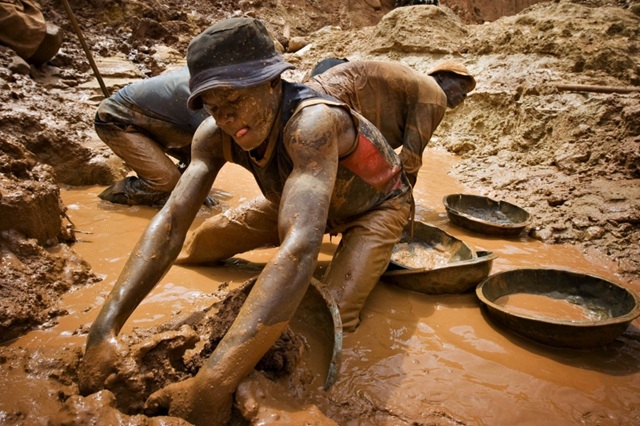
The deal, still in its early stages, would facilitate greater American private sector investment in DR Congo’s vast mineral reserves—particularly in lithium, copper, and cobalt—in exchange for increased U.S. backing for President Félix Tshisekedi’s embattled government.
Massad Boulos, President Donald Trump’s newly appointed Africa adviser, confirmed that a “path forward” had been agreed with President Tshisekedi during recent talks. In a video statement released by the Congolese government, Boulos emphasized U.S. intent to drive mining-sector investment, positioning the U.S. as a key player in a region long dominated by Chinese mining interests.
According to Financial Times sources, the U.S. International Development Finance Corporation is expected to underwrite portions of the planned investments, with American firms taking a larger role in the exploitation of Congo’s rich mineral deposits. These include the Manono lithium project—targeted by Bill Gates-backed KoBold Metals—and copper and cobalt assets currently held by Dubai-based Chemaf, which has struggled to finalize a sale to Chinese interests.
Other potential players include Orion Resource Partners, mining magnate Robert Friedland, British-Australian mining giant Rio Tinto, and Saudi Arabia’s United Mining. While most declined to comment, their interest signals growing international competition over Congo’s resources.
The agreement also has strong geopolitical overtones. By supporting Congolese sovereignty and investing in infrastructure rather than arms, the U.S. hopes to counterbalance not only Chinese economic dominance but also the destabilizing influence of armed groups in the country’s eastern provinces. Over 140 militias, including the Rwandan-backed M23 rebels, currently operate in the region.
Boulos, whose son is married to Trump’s daughter Tiffany, is seen as bringing presidential attention to the region. “If you lie you are talking to the big man’s in-law,” said Washington lobbyist Joseph Szlavik, who is advising the Congolese government. “The president of the US will finally hear directly about what is going on. It is an opportunity to get some chaos organised.”
Szlavik also revealed that the U.S. played a quiet role in brokering a deal that led to the M23’s recent withdrawal from the vicinity of Alphamin Resources’ tin mine—an area responsible for nearly 10% of global tin output and majority-owned by U.S.-based Denham Capital.
While DR Congo first approached Washington in February with a proposal offering mining rights in exchange for political and security support, questions remain about the U.S.’s long-term commitment and the scope of its security involvement. Boulos is currently holding follow-up meetings with leaders from Kenya, Uganda, and Rwanda in hopes of securing regional support for a peace framework.
Despite the uncertainties, officials close to the negotiations say the deal marks a critical step in securing U.S. access to minerals essential for green technologies, while reinforcing the Congolese government’s ability to resist internal and external threats.
As the Biden administration expands a similar minerals initiative in Ukraine, the Congo deal represents both an opportunity and a test for U.S. ambitions to build cleaner supply chains without ceding ground to authoritarian regimes.