As tensions simmer in the Middle East, speculation over a possible U.S. military strike on Iran has intensified. Under a renewed Trump presidency, such an action could reshape the region—and not for the better. Before the first missile is fired, the U.S. would need a pretext. Former President Trump may once again lean on the claim of “preventing Iran from getting a nuclear weapon.” But that justification is flimsy at best. Both the International Atomic Energy Agency (IAEA) and Trump’s own former Director of National Intelligence have confirmed there is no current evidence of Iran pursuing nuclear arms.
Alternatively, Trump could invoke the need to defend Israel, branding it as a move to protect America’s “closest ally.” Yet, public opinion is not on his side. A recent Economist/YouGov poll shows 60% of Americans—and notably, 53% of Republicans—oppose military action against Iran. Such disapproval signals that a war would be not only geopolitically dangerous but domestically unpopular.
Behind the scenes, some fear that a false flag incident could be used to tip the scales. Former Pentagon analyst Karen Kwiatkowski has outlined possible deception scenarios that might be used to justify a war—such as a staged attack on a U.S. embassy or military base blamed on Iran, a domestic terror incident pinned on Tehran, or even a fabricated dirty bomb event. Any of these could serve as the spark to ignite a full-scale confrontation.
If war does break out, the most likely opening move would be an aerial assault. U.S. forces could draw from a vast network of air bases, including Al Udeid in Qatar, Al Dhafra in the UAE, and long-range bomber hubs like Diego Garcia. These facilities house cutting-edge aircraft like the F-22, F-35, B-2, and B-52 bombers, alongside reconnaissance drones. However, Israel’s own costly campaigns over Iranian skies have shown just how hazardous such missions can be. Multiple Israeli aircraft have been downed, and even the most sophisticated U.S. bunker busters offer no guarantee of destroying fortified sites like Fordow.
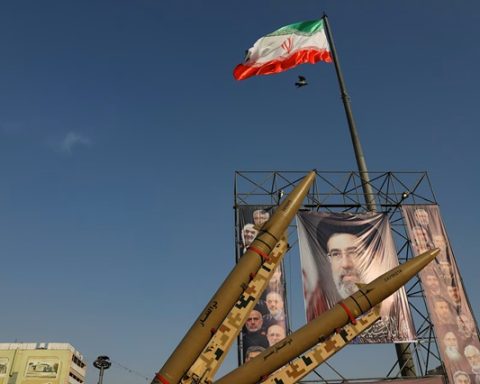
A second path could be a naval barrage. The U.S. Navy’s 5th Fleet, stationed in the Gulf, includes heavily armed Arleigh Burke-class destroyers, Ticonderoga-class cruisers, and Ohio- and Virginia-class submarines capable of launching hundreds of Tomahawk missiles. Yet, Iran has spent years preparing for just such an encounter. Its asymmetric capabilities—ranging from explosive-laden Shahed drones and fast attack boats to mine-laying submarines and mobile coastal missile batteries—make the Persian Gulf a potential death trap for U.S. vessels.
The most extreme—and disastrous—option would be a ground invasion. But unlike Iraq, Iran is no easy target. It is four times larger, with a population nearly double that of Iraq and a military force exceeding 650,000 troops. Its terrain is a defensive dream: mountainous, vast, and unforgiving. Any ground campaign would quickly devolve into a quagmire far bloodier and costlier than anything seen in recent U.S. wars.
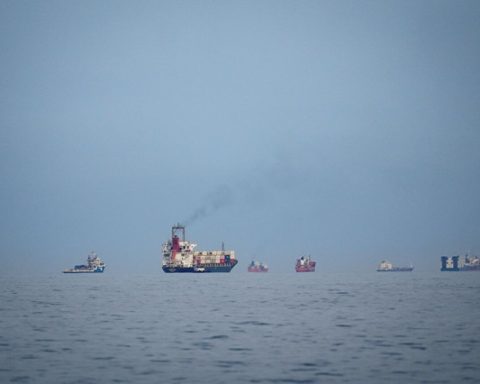
The consequences of attacking Iran would reverberate far beyond the battlefield. U.S. bases across the region would likely face swift retaliation. The Strait of Hormuz, through which a fifth of the world’s oil passes, could be shut down—sending global energy markets into turmoil. And Iran’s allies, from Hezbollah in Lebanon to various militias in Iraq, Syria, and Yemen, would almost certainly respond, engulfing the region in violence. The so-called Axis of Resistance could turn American interests in the Middle East into targets overnight.