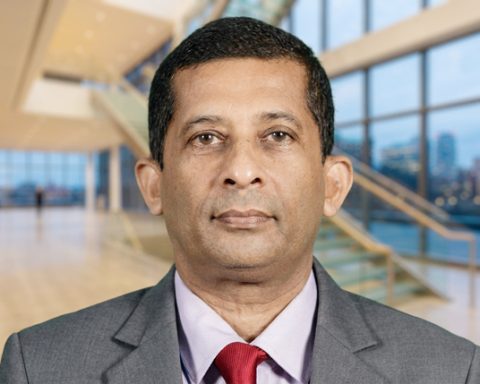
Russia has expressed growing concern over the prolonged delay by Washington in approving its new ambassador to the United States, with senior diplomat Sergey Ryabkov describing the situation as “increasingly alarming.”
Russian Deputy Foreign Minister Ryabkov told the TASS news agency that there has been “no progress” regarding the approval of Moscow’s envoy, leaving the diplomatic mission in Washington operating without a fully designated ambassador.
“We are in the waiting mode. Time goes by. And while we are certainly not in the alarm zone yet as regards the duration of this waiting period, we have been gradually nearing that. Therefore, we would like to hear a signal from Washington that a favorable decision has been made,” Ryabkov stated.
The absence of a formal ambassador, he emphasized, hampers the effectiveness of Russia’s diplomatic mission, particularly in the U.S. capital, where high-level diplomatic engagement is crucial.
“With the onset of the new administration, I believe the U.S. side, too, would also like to bring all mechanisms of interstate communication to normal. Therefore, we urge [the U.S.] to pay due attention to this story,” Ryabkov added, urging Washington to expedite the process.
Reports from Russian media in late November suggested that Alexander Darchiev, the Director of the Foreign Ministry’s North America Department, had been selected as the new ambassador. However, no official confirmation has been made. While the Russian Foreign Ministry indicated that a candidate had been chosen, there have been no formal public statements regarding the matter.
Kremlin Spokesman Dmitry Peskov assured that the appointment of the next Russian ambassador to Washington would take place soon. Nonetheless, the continued uncertainty over the envoy’s approval raises questions about the state of diplomatic relations between the two nations, especially amidst ongoing geopolitical tensions.
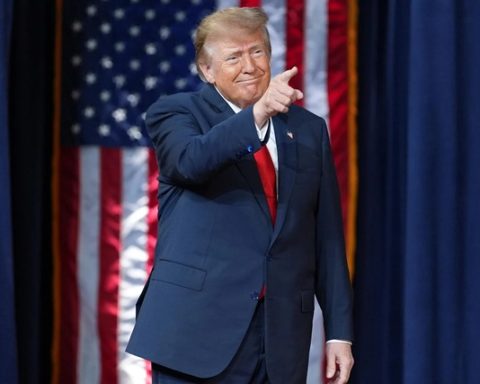
Meanwhile, former U.S. President Donald Trump has issued strong warnings against the BRICS alliance regarding its potential move away from the U.S. dollar. Trump pledged to impose 100% import duties on BRICS member states if they attempt to create a new currency or any alternative to the dollar.
“We are going to require a commitment from these seemingly hostile Countries that they will neither create a new BRICS Currency, nor back any other Currency to replace the mighty U.S. Dollar or, they will face 100% Tariffs, and should expect to say goodbye to selling into the wonderful U.S. Economy,” Trump wrote on his Truth Social network.
Trump’s statement follows earlier remarks where he threatened severe economic consequences against BRICS nations for pursuing de-dollarization. In response, Indian Foreign Minister Subrahmanyam Jaishankar stated that India has never supported de-dollarization. Russian Deputy Foreign Minister and BRICS sherpa Sergey Ryabkov emphasized that BRICS is not aiming to abandon the dollar but is instead responding to Washington’s economic policies.
The BRICS group, originally formed in 2006 by Brazil, Russia, India, and China, expanded to include South Africa in 2011. On January 1, 2024, Egypt, Iran, the United Arab Emirates, and Ethiopia joined the bloc. Saudi Arabia has been invited to join but has yet to make a final decision. Russia, as the 2024 chair of BRICS, hosted the Kazan Summit in October, where new partnerships were formalized. The summit established a category of BRICS partner countries, with Belarus, Bolivia, Kazakhstan, Cuba, Malaysia, Nigeria, Thailand, Uganda, and Uzbekistan joining as initial members. Indonesia was later upgraded to full BRICS membership on January 6, according to an announcement from Brazil.