Editorial
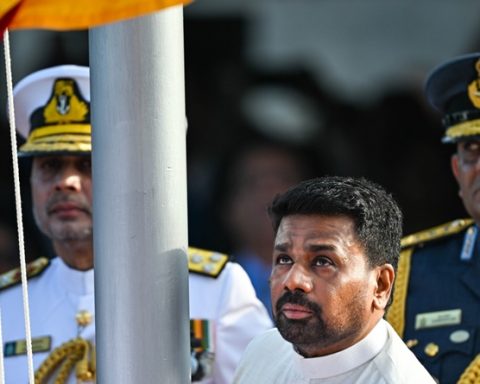
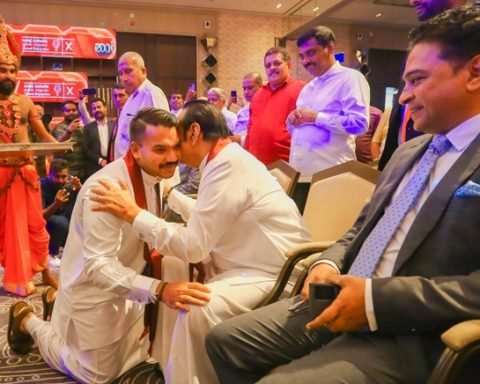
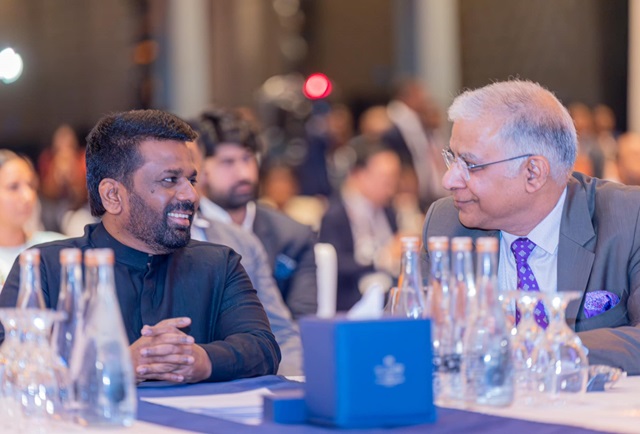
There you go, Mr President. Though overdue, this initiative is timely and necessary. President Anura Kumara Dissanayake’s call for an all-party conference to address the deepening ramifications of global trade dynamics, including the impact of US tariff escalation, stands as a welcome and statesmanlike gesture. It is an uncommon, if not unprecedented, display of inclusive governance—especially for a leader barely six months into office. In extending invitations to every opposition leader, if true, he has not merely sought counsel but has signalled, with both humility and conviction, that Sri Lanka’s mounting economic challenges require collective resolve, not singular ideology.
Sri Lanka, already limping through the wreckage of financial insolvency, is among the nations most susceptible to these global tremors. An economy once precariously tethered to unsustainable debt is now further endangered by the disruption of global trade flows, to which we remain vulnerably exposed. Our supply chains, export markets, and domestic cost structures are not insulated from the reverberations of China–US hostilities; they are directly influenced by them.
Beyond the US–China dispute, however, there are pressing regional and international concerns that must also be addressed. Sri Lanka’s trade relations with neighbouring countries, especially India and the broader South Asian region, are central to our economic future. Our position within the region offers both challenges and opportunities. The Indian market, with its enormous demand potential, holds significant promise for Sri Lanka’s export sectors, yet we must ensure that our trade policies align with regional economic dynamics to avoid unnecessary friction. Furthermore, Sri Lanka’s relationship with the European Union, particularly in light of the GSP Plus trade arrangement, remains precarious. With the GSP Plus status potentially ending by the end of April, it is crucial that Sri Lanka moves swiftly to secure its trade preferences with the EU to avoid economic fallout.
That President Dissanayake has chosen to acknowledge this reality and respond not with insularity but with openness is nothing short of remarkable. It is a posture rarely adopted by national leaders during moments of acute pressure, and yet it is the only viable path forward. His initiative reflects a rare maturity in political conduct, a break from decades of hyper-partisan grandstanding where national crises have often been exploited rather than earnestly confronted.
The call for an all-party conference should not be dismissed as symbolic pageantry. It is a recognition that Sri Lanka’s economic path cannot be forged by any one party, person, or populist impulse. The complexity of our crisis demands a convergence of minds and mandates. In a deeply divided polity, consensus is often elusive—but unity of purpose must now become imperative. We are navigating the eye of an economic storm, buffeted not only by our internal mismanagement but by external shocks over which we exercise little control.
Indeed, the economic terrain confronting Sri Lanka is marked by uncertainty and fragility. A currency that has staggered under inflationary weight; a cost of living that has throttled the middle class and decimated the poor; a dwindling foreign reserve pool still overly reliant on external interventions—these are not problems for one administration to solve alone. The IMF-prescribed reforms, while necessary, remain politically unpopular. In such a context, building consensus is not a luxury; it is an existential requirement. A national economic strategy without national political buy-in is doomed to collapse under the weight of cynicism and obstructionism.
We must also urgently examine our fiscal architecture. The age of debt-fuelled growth is over. As the world begins to reorganise its economic logic—deglobalising in some quarters and regionalising in others—we must not be caught unprepared. It is incumbent upon this administration and those across the aisle to construct a shared understanding of where Sri Lanka sits in this shifting matrix. Are we to be a casualty of global economic rebalancing? Or are we to position ourselves as an agile, reform-minded, and investment-ready economy?
The President’s gesture is an opening, not a conclusion. But in it lies the potential for political maturity to finally eclipse political expediency. In a region where strongmen often silence dissent rather than seek its counsel, Sri Lanka now stands as a rare exception—a democracy striving, however imperfectly, to meet its economic test through consensus.
History will not remember those who shouted the loudest, nor those who stood stubborn in ideological purity. It will remember those who dared to unite in the face of disintegration, who placed nation over narrative. If President Dissanayake’s initiative proves durable and sincere, it could mark the turning point from economic fragility to political maturity, and from rhetorical unity to tangible reform.
The storms ahead are real, and they are unforgiving. But if we are to weather them, it must be together—or not at all.