


Western automakers are poised to launch an aggressive comeback in China’s fiercely competitive car market this week, showcasing smarter, tech-heavy vehicles built in partnership with local companies. At the highly anticipated Shanghai Auto Show, carmakers like Volkswagen, Toyota, and Mercedes-Benz will unveil new models tailored specifically for Chinese consumers, as they try to regain market share lost to domestic rivals.
According to Financial Times, the event will serve as a critical test of these companies’ revamped strategies. After years of struggling against homegrown brands such as Geely and BYD, which have gained dominance, Western automakers are leaning heavily on local knowledge and partnerships to rebuild their positions in China — the world’s largest car market.
Mercedes-Benz is one of the leading companies set to make a statement, with the upcoming launch of its electric CLA model. Developed with a local research and development team, the CLA’s central operating system will be crafted in China to optimize its performance for the local market. The car will feature advanced autonomous capabilities, improved driving range, and faster charging speeds — all key selling points in the rapidly evolving electric vehicle (EV) sector.
“We feel very confident about our technology and intelligence right now,” said Magnus Östberg, Chief Software Officer at Mercedes-Benz, in an interview. “It’s going to be a battle of the numbers — who has the longest range. But I think we are going to stand very firm and in the front row in that competition with the CLA.”
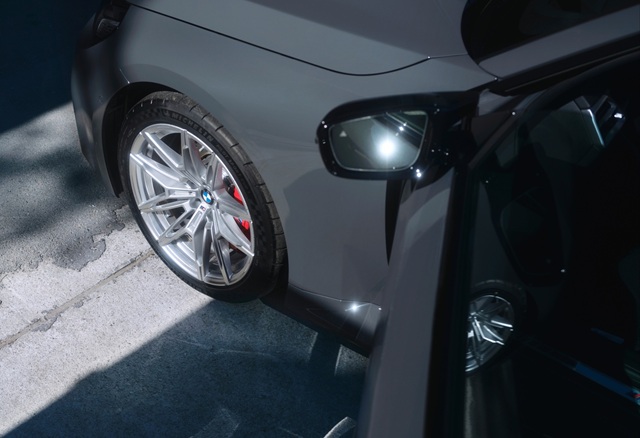
Similarly, BMW is pushing its “Neue Klasse” electric vehicles, which will be produced in China starting next year. These vehicles are a product of collaboration with local R&D teams and technology giants such as Alibaba and Huawei.
But experts like Li Yanwei, a member of the China Automobile Dealers Association, have made it clear that the coming weeks will reveal whether these foreign automakers have successfully adapted to the market. “It’s time to find out if they have made good enough EVs,” said Li.
For Western carmakers, the stakes are high. In the first two months of this year, their market share in China had fallen to just 31%, down from a commanding 64% in 2020. With Chinese brands like Geely and BYD now surpassing Volkswagen as the best-selling brand, foreign companies are under pressure to reclaim their foothold. As Financial Times points out, the rise of electric vehicles and plug-in hybrids, which now account for 45% of new car sales in China, has intensified the competition.
To adapt to Chinese consumer preferences, many Western automakers are forming closer ties with local partners. Audi, for example, will debut its first production model under a China-only sub-brand at the Shanghai Auto Show. This model, developed with local partner SAIC, is specifically designed for younger Chinese buyers. “Last year, we took key steps to secure future success in China,” said Audi CEO Gernot Döllner. “At 2025 Auto Shanghai, we are going to show that Audi delivers in China.”
The strategy of collaboration is not unique to Audi. Paul Gong, an analyst at UBS, explained that joint ventures between foreign carmakers and their Chinese counterparts have evolved. “There are more and more cases where Chinese carmakers provide a model design,” he noted, citing examples like the Mazda EZ-6, an electric sedan developed with Changan, and the Toyota bZ3X, a $15,000 electric SUV co-designed with Chinese state-owned GAC.
Toyota, which has seen a relatively better performance in the market with its luxury Lexus brand, is also shifting its strategy. Despite a slight decline in sales in 2024, the Japanese automaker is increasing its local R&D efforts and empowering its Chinese regional team to take charge of product development. “Rather than Japanese people making cars for the Chinese, it will be more Chinese people making cars for Chinese people,” said Yoichi Miyazaki, Toyota’s CFO.
Toyota’s strategy also includes a significant investment in a battery and EV factory in Shanghai, where it will produce Lexus models. This facility will be only the third in China fully owned by a foreign automaker, reflecting Toyota’s commitment to deepening its presence in the country.
With the auto show set to reveal the latest models, it is clear that Western carmakers are making a determined effort to adapt to China’s rapidly evolving car market. Whether their strategies succeed or not, one thing is certain: the battle for China’s electric vehicle market is far from over.









