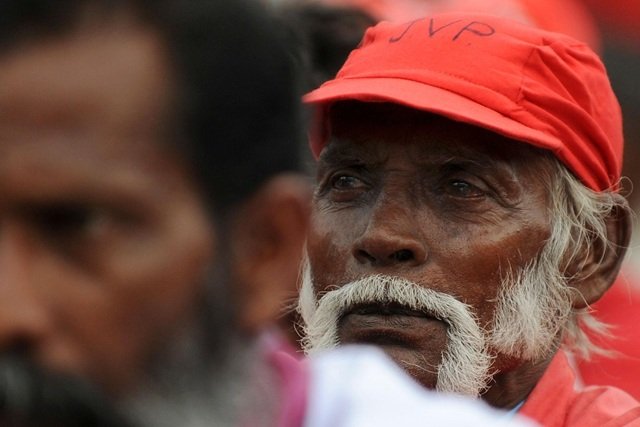
Two years after its electoral breakthrough, the Janatha Vimukthi Peramuna (JVP)-led National People’s Power (NPP) continues to keep Sri Lanka guessing. Is this the dawn of one-party dominance, as some claim, or merely another twist in the island’s turbulent politics? As JVP Politburo member and Cabinet Minister Lal Kantha once declared, “We have the government’s power, but we must continue our struggle to capture state power. Only then will our struggle be complete.” If that is the case, as Tilvin Silva has pointed out, “the government must be protected until the objectives for which it was formed are achieved.”
The JVP’s rise was not born of bold policies but of timing and the hunger of a weary electorate for change. Into this moment stepped Anura Kumara Dissanayake, who emerged as the “hero” of the hour. His plainspoken style and approachable manner ignited a wave that swept across the island. Even many Eelam Tamils, disillusioned with traditional parties, placed their trust in him. Still, that wave has not faded much among Tamils. In my daily interactions, I continue to come across many ordinary Tamils who praise him.
Votes in 2024 were cast more in hope than in political awareness. Most candidates were unfamiliar, yet fortune favoured them. In the Tamil-dominated North and East, victories came more from circumstance than recognition. Politics usually rewards familiarity, but in 2024 it rewarded chance.
The NPP’s 159 seats were not the result of ideology but of desperation during a time of national uncertainty. As the saying goes, “when hunger comes in, all other concerns fly away.” For the JVP, it was nothing short of a political jackpot. Yet among Tamil political circles, many believe the NPP misled them, echoing the failures of past governments. Major Tamil parties even staged a hunger strike in Jaffna, accusing the NPP of failing to deliver on its promises. Against this backdrop, the question arises: having won power through fortune, what is the JVP’s true goal now?
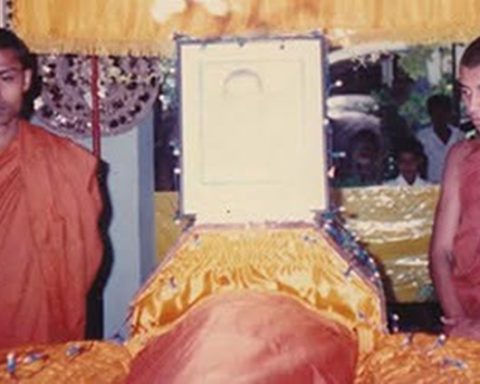
The JVP’s story is tied to its past. Twice, it attempted to seize power through armed insurrection, and twice it was crushed. If the Tamils faced catastrophe at Mullivaikkal, the JVP had already endured its own disaster, losing thousands of members in bloodshed. Its founding leader, Rohana Wijeweera, was captured and killed during the second uprising, and the movement was implicated in documented killings. Long before the Tamils, the JVP had tasted the brutal reality of state repression.
Yet defeat did not end its ambition. Despite devastation, the JVP’s desire for power remained strong. More than five decades later, it finally achieved that long-sought goal through democratic means. Its success came not only from organisation and discipline but also from seizing favourable circumstances and presenting itself as the people’s only hope. Its rise is the result of resilience, timing, and pragmatic manoeuvring.
The question now is how a movement shaped by loss and survival will behave once in authority. Will it cling to power at all costs, or risk it by showing integrity? The answer will define its future.
In Sri Lanka, political power depends on one test: retaining the confidence of the Sinhala majority. Whoever convinces them that their interests are safest will hold authority. Minority preferences matter only when the South is divided, as in 2005, when Ranil Wickremesinghe lost after Eelam Tamils boycotted the election under pressure from the LTTE.
Against this backdrop, the JVP’s main agenda is clear: retaining power. Its guiding principle is to avoid any move that could threaten this objective.
This is where the Tamil national question enters the picture. The JVP needs no external advice on ethnic issues. Its leftist heritage, deeply intertwined with Sinhala nationalism, and its own history have shaped its outlook. For the JVP, the Tamil issue is not primarily about finding a solution; doing so would risk its hold on power. Thus, there is little space in its agenda for a meaningful settlement. Even Provincial Council elections or the gradual implementation of the 13th Amendment appear unlikely. If such steps occur, they will likely be driven only by pressure from New Delhi, which remains the only major power actively advocating for the protection of legitimate Tamil rights in Sri Lanka.
Among Tamil circles, another view has emerged regarding the 22nd Amendment passed by Parliament in September. Does the JVP intend to abolish the 13th Amendment with the support of the judiciary? The JVP’s history of anti‑India sentiment, rooted in its opposition to the Indo-Lanka Accord and the 13th Amendment, is well documented.
Yet politics is never simple. Outcomes depend not only on who holds power but also on circumstances and external forces. One truth remains constant: those in power act first and foremost to remain in power.
The undeniable fact is that the JVP will not waste the opportunity it has secured. Its logic is straightforward: either win outright or, if defeat becomes inevitable, position itself as an unshakable opposition force. To expect more is political naivety. Crucially, it will not, and perhaps cannot, deliver a solution to the Tamil issue. That has been the pattern of Southern politics, and breaking from it would risk its downfall. After all, who willingly gives up power once it has been attained?
Viewed through the lens of political realism, Sri Lanka’s power politics reveals a stark truth: survival and the retention of authority outweigh reconciliation and reform. Within this framework, the Tamil national question is treated not as a problem to solve but as a risk to manage and ultimately sideline. Calls for a solution will continue to echo, but they are destined to remain just that: calls without resolution.