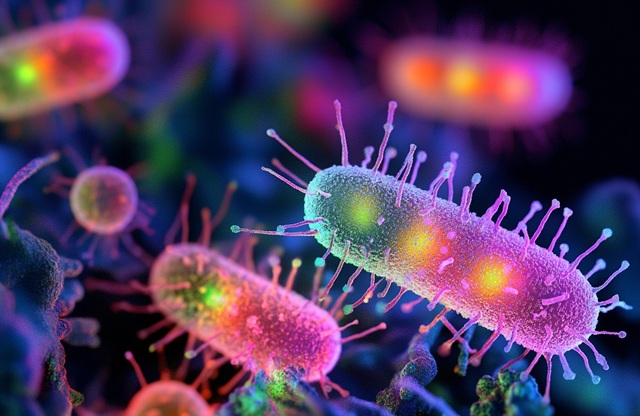
Researchers have stunned the synthetic biology community by resurrecting “dead” bacterial cells through the transplantation of complete genomes from other species. Reported this month on the preprint server bioRxiv, the technique could revolutionise the engineering of microbes, offering a way to endow cells with useful traits such as drug production or biofuel synthesis. By effectively giving life to functionally dead cells, the work could pave the way for unprecedented manipulation of microbial life.
The approach builds on more than 15 years of work in genome transplantation. In 2003, a team led by researchers at the J. Craig Venter Institute (JCVI) chemically synthesised the 1.1-million base-pair genome of Mycoplasma mycoides and transplanted it into living Mycoplasma capricolum cells, creating the first so-called synthetic cell. To verify the success of the experiment, the team added a gene conferring resistance to tetracycline, ensuring that only cells incorporating the synthetic genome would survive when exposed to the antibiotic. This seminal achievement demonstrated that entire genomes could direct the biology of a new host, but was limited to closely related species within the same bacterial class, the Mollicutes.
Subsequent efforts to expand the technique faced a major hurdle: false positives caused by homologous recombination, whereby recipient cells could incorporate individual genes, such as antibiotic-resistance markers, without absorbing the entire donor genome. To overcome this, the latest JCVI study took a radical approach: researchers inactivated the genomes of recipient M. capricolum cells using the chemotherapy drug mitomycin C. These “dead” cells were unable to replicate on their own, preventing the incorporation of foreign DNA through recombination.
Into this defunct cellular environment, the team transplanted engineered M. mycoides genomes. A small fraction of the recipient cells survived, expressing the donor DNA and effectively coming back from the dead. The researchers dubbed these survivors “zombie cells.” “The cell is destined to die, but we give it life,” explained co-author Zumra Peksaglam Seidel, a synthetic biologist at JCVI. This proof-of-concept demonstrates that genome-depleted cells can be reanimated, setting the stage for broader applications in synthetic biology.
The method still faces limitations. The process works efficiently only between closely related Mycoplasma species, and the reasons why it succeeds in these cases remain poorly understood. Researchers like Elizabeth Strychalski at the US National Institute of Standards and Technology emphasise that uncovering the underlying mechanisms will be critical for extending the approach to other bacterial species. In addition, the transplantation of nuclear-scale genomes remains a painstaking process, requiring months of optimisation and careful validation to ensure that transplanted DNA is functional.
Nevertheless, the potential applications are significant. Olivier Borkowski, a synthetic biologist at INRAE and Paris-Saclay University, describes the work as “a significant step forward for genome engineering in synthetic biology.” By combining different genomes with various “cellular chassis,” scientists could explore evolutionary compatibility, testing which genome-cell combinations are viable and which are not. Zombie cells could also provide an ideal platform for evaluating synthetic genomes designed by artificial intelligence, allowing researchers to verify functionality before deploying engineered bacteria in industrial or medical contexts.
Some experts see opportunities for using CRISPR gene-editing alongside zombie cells. Tom Ellis at Imperial College London suggests that CRISPR could be used to selectively inactivate problematic genes in recipient cells, such as those involved in recombination, and to confirm the transfer of large DNA segments without relying on antibiotic selection markers. This combination could make the creation of synthetic organisms more precise, scalable and reliable.
The implications extend beyond synthetic biology. Genome transplantation into inactivated cells provides a unique window into fundamental questions about life and evolution, offering researchers a controlled environment to explore how genomes interact with cellular machinery. Moreover, the technique could eventually enable the resurrection of other bacteria, including laboratory staples such as Escherichia coli, expanding the toolkit for designing microbes with bespoke characteristics.
While the work is still in its early stages, it has captured the imagination of the scientific community. Unlike traditional genetic engineering, which alters existing DNA, the zombie-cell approach replaces the entire genome, effectively rebooting the cell’s identity. The potential applications—from biofuel production and drug manufacturing to fundamental evolutionary studies—position genome transplantation as a transformative technology in synthetic biology.
As researchers continue to refine the method, the hope is that robust protocols for creating zombie cells in diverse bacterial species will emerge. Such advancements could turn genome transplantation into a general-purpose platform, allowing scientists to systematically test, modify and understand microbial life in ways previously thought impossible. For now, the resurrection of dead bacteria marks an audacious leap into the synthetic frontier, demonstrating that even the most seemingly inert life forms can be returned to function—and that dirt, DNA, and dead cells may yet reveal new possibilities for life itself.