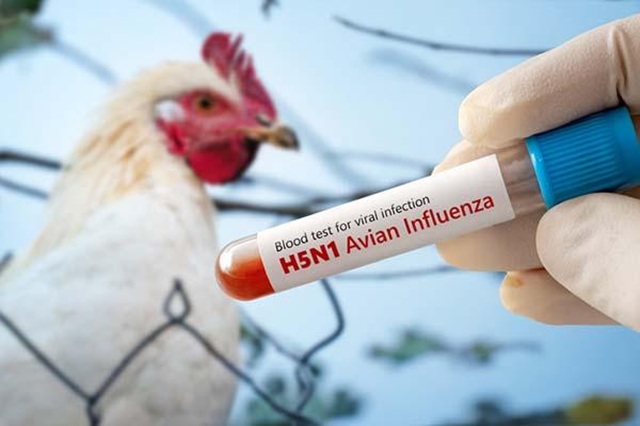
In the wake of egg shortages and soaring prices caused by a recent bird flu outbreak, researchers at Washington University in St. Louis have unveiled a promising new technology that could help prevent similar crises in the future: a biosensor that detects airborne bird flu particles in just five minutes.
The breakthrough, covered by MIT Technology Review, could revolutionize how farms monitor for avian influenza, an airborne virus notorious for rapidly spreading among poultry and dairy animals—and occasionally jumping to humans. Traditional detection methods, such as swabbing and DNA sequencing, can take up to 48 hours. In contrast, this new device offers real-time monitoring by sampling the air and analyzing it every five minutes.
Bird flu outbreaks can devastate agricultural industries, often forcing farms to cull entire flocks to stop the spread. The recent outbreak led to nationwide egg shortages and inflated prices in early 2025, disrupting supply chains and prompting public concern.
Published in ACS Sensors in February, the research details how the device captures virus-laden air, condenses the particles into a liquid, and runs them through a biosensor lined with aptamers—short strands of genetic material that bind specifically to bird flu viruses. When binding occurs, it triggers a measurable electrical signal, instantly alerting users to the presence of the virus.
“The bad apple is surrounded by a million or a billion good apples,” said Rajan Chakrabarty, lead author of the study and professor of energy, environmental, and chemical engineering at Washington University. “The challenge was to take an airborne pathogen and get it into a liquid form to sample.” The team solved this by building a microwave-sized air-sampling box that uses cyclone-like motion to collect and convert airborne particles into a liquid drip, which is then analyzed by the biosensor.
While the technology is still in development, experts are cautiously optimistic. “The study does not extensively discuss the device’s performance in complex real-world air samples,” noted Sungjun Park, associate professor at Ajou University in South Korea. He points out that factors like dust and organic matter on farms could affect its accuracy.
Despite the hurdles, Chakrabarty remains confident in the sensor’s potential. His team is already collaborating with a biotech company to scale up production and hopes to create a biosensor chip capable of detecting multiple pathogens simultaneously.
As reported by MIT Technology Review, this innovation could mark a turning point in epidemic prevention—not just for the agricultural industry, but also for public health more broadly. With faster, more efficient monitoring tools, the hope is to stay one step ahead of future outbreaks before they spiral into global supply chain disruptions.