by Luxman Aravind
What does it mean for a nation’s history to be woven from choices and consequences, rather than a mere sequence of events? How do the decisions made by individuals and societies shape the very essence of a nation? The assertion that history lacks the subjunctive—those “what ifs”—oversimplifies a reality teeming with potentialities and alternate paths. As we traverse this historical landscape, the interplay between inevitability and possibility becomes evident, prompting a deeper examination of how decisions shape the essence of a nation.
In contemplating the reigns of Queen Anula and Queen Lilavati, we uncover significant insights into the dynamics of female agency within a predominantly patriarchal society. Anula, the first recorded queen regnant of Sri Lanka, navigated a treacherous political landscape marked by intrigue and violence. The historical narratives surrounding her often depict her as a manipulative figure, yet such portrayals are laced with the patriarchal biases of the chroniclers. The Mahavamsa, in particular, frames Anula’s ascent and subsequent downfall as a cautionary tale, yet we might ponder: what if the structures of power had been more inclusive? What if the societal norms had permitted a sustained female governance? Her tragic fate serves as a reminder of the fragility of power for women, echoing the wisdom of ancient philosophers like Laozi, who asserted, “Those who govern least govern best.” This suggests that true governance emerges from organic structures rather than the imposition of control.
Queen Lilavati’s tumultuous reign in the 12th century further exemplifies the precarious nature of authority. Her multiple ascensions were less a testament to her power than to the machinations of those who sought to exploit her legitimacy for their gain. In this context, her story underscores the philosophical notion that power is often a façade—a means for others to pursue their ambitions. The question lingers: if Lilavati had wielded genuine authority rather than serving as a pawn in a larger game, could her leadership have fostered a more stable political environment? The resonance of this inquiry reflects Aristotle’s notion of the polis, where governance must reflect the collective will, rather than being a mere instrument of individual ambition.
As we transition to the colonial era, the implications of historical choices become even more pronounced. Sri Lanka’s encounter with European powers transformed its social and political landscape, raising profound questions about sovereignty and identity. The colonial imposition of foreign governance structures stifled indigenous agency and reshaped the nation’s trajectory. We must ask ourselves: what if Sri Lanka had successfully resisted colonial encroachment, as some nations managed to do? The potential for an uncolonised trajectory is tantalising, illuminating how choices made in the face of external pressures can forge distinct paths.
When Sri Lanka gained independence in 1948, it was hailed as a democratic success story, a promising nation that inherited the parliamentary structures of the British system. But almost immediately, it became clear that democracy in Sri Lanka would not be free from tension and conflict. The newly independent country faced ethnic and social divisions that simmered beneath the surface. Sri Lanka’s post-independence history could be seen as a case of what historian Fernand Braudel referred to as the clash of competing wills—options that existed but were constrained by the choices made by political elites.
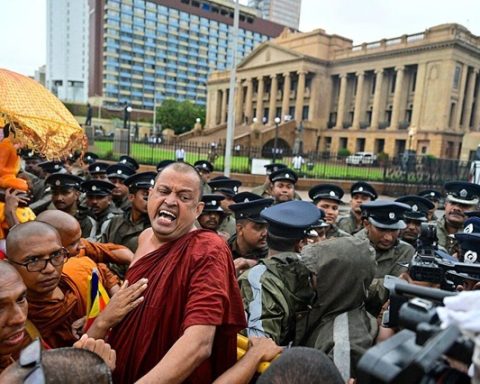
The Sinhala Only Act of 1956 stands as a pivotal decision that exacerbated ethnic divisions, transforming what could have been a harmonious multicultural identity into a landscape rife with discord. This legislative choice reflects a deeper philosophical truth about the nature of governance: that the decisions of the powerful can resonate through generations, shaping societal dynamics in profound ways. As Hannah Arendt posited, “Power is actualized only when word and deed have the same meaning.” The discord between the ideals of democracy and the exclusionary policies enacted reveals a chasm between intent and outcome, one that has perpetuated cycles of discontent.
The ethnic conflict that erupted in the latter half of the 20th century is often framed as an inevitable consequence of these divisions; however, this deterministic view fails to account for the agency of political leaders and the decisions they made. The emergence of the LTTE was not a foregone conclusion but rather a response to systemic exclusion and disenfranchisement. The historical narrative surrounding this conflict must be reframed to acknowledge that different choices were possible—choices that could have nurtured reconciliation rather than igniting violence. As the philosopher Friedrich Nietzsche observed, “He who has a why to live can bear almost any how.” The absence of a shared national identity and purpose in Sri Lanka reflects a failure to cultivate a collective “why,” one that might have united rather than divided its peoples.
Economically, the post-independence era also illuminates the power of historical choice. The initial embrace of a socialist welfare state, intended to rectify inequalities, ultimately resulted in stagnation and dependency. What if Sri Lanka had pursued a more aggressive export-led growth strategy, akin to those of emerging Asian economies? Such a choice could have altered not only the economic landscape but the social fabric as well. The philosopher Amartya Sen’s capability approach suggests that economic development should be measured not merely by growth metrics but by the enhancement of individual freedoms and opportunities. The failure to embrace such an approach during pivotal moments in Sri Lanka’s history highlights the missed opportunities that echo through time.
In the geopolitical arena, Sri Lanka’s position within the Non-Aligned Movement during the Cold War accentuates the intricate interplay between internal choices and external pressures. The absence of significant external intervention allowed for the emergence of local dynamics; yet this very localism often obscured the potential for broader, more inclusive governance. The philosophical implications of this interplay remind us that nations are not isolated entities but rather part of a complex web of global relations. The choices made within these contexts have the power to shape not only national destinies but also the geopolitical landscape.
The post-war period, particularly under President Mahinda Rajapaksa, presented a critical juncture for Sri Lanka—a moment where genuine reconciliation could have taken root. Instead, the consolidation of power and the emergence of authoritarian practices curtailed possibilities for healing and democratic renewal. The notion of a “false renaissance” becomes especially poignant here. Superficial progress, celebrated through military victories and economic recovery, often obscured the unresolved tensions that continued to simmer beneath the surface. As the historian Eric Hobsbawm noted, “The greatest danger in periods of crisis is the emergence of a false sense of stability.” The danger lies in believing that external achievements can mask deeper societal discontents, a misapprehension that history repeatedly cautions against.
This philosophical reflection resonates with the teachings of ancient wisdom. In the Mahabharata, the sage Vidura warns that “a kingdom sustained on unjust foundations cannot stand.” This notion underscores the imperative of addressing structural inequities rather than allowing the facade of progress to obscure deeper issues. The dissonance between surface-level achievements and the underlying realities of discontent presents a perennial challenge for societies striving for unity and coherence.
In reflecting on the philosophical notion that history is a competition of wills and possibilities rather than a predetermined course, we must also confront the dangers of what can be termed a false renaissance—a revival or reform that appears to bring progress but only deepens the contradictions between a society’s structures and the facade it presents. This danger arises when a nation or community fails to reconcile its underlying discontents with the superficial image of progress it projects. As seen in Sri Lanka’s political history, especially in the post-independence era, there have been moments that seemed to offer renewal—whether through economic reforms or military victories—but these often masked deeper, unresolved ethnic and social divisions. When the structures of power remain exclusionary or corrupt, and the rhetoric of progress is only skin-deep, the risk of further instability becomes almost inevitable.
This philosophical warning, however, is not unique to Sri Lanka but resonates across world history. The Soviet Union’s post-Stalin reforms, particularly under Khrushchev and Brezhnev, presented a veneer of stability and progress, even as the system rotted from within. The détente of the 1970s, when the Soviet leadership opted for coexistence with the West rather than challenging the global capitalist system, seemed like a renaissance of Soviet power. Yet, it was, in reality, a false renaissance. The disconnect between the ideological facade of communism and the increasingly bureaucratic, inefficient structure of the state led to the system’s ultimate collapse, a fact often overlooked until it was too late. As historian Eric Hobsbawm noted, the decline of the Soviet Union was not marked by a singular event but a series of missed opportunities, where systemic contradictions deepened while leaders failed to address the true rot at the core of their society.
False renaissances, wherever they occur, are dangerous because they lull societies into complacency, making them believe that structural issues—be they political, economic, or social—can be ignored as long as appearances are maintained. This is why Sri Lanka, like many countries, must be wary of celebrating superficial progress at the cost of deepening internal divides. As global history shows, the facade can only hold for so long before it crumbles, revealing the unresolved tensions that threaten the foundation of any society. Understanding this dynamic, through both historical and philosophical lenses, allows us to better comprehend the complex forces that shape not only Sri Lanka’s destiny but the fate of nations throughout history.
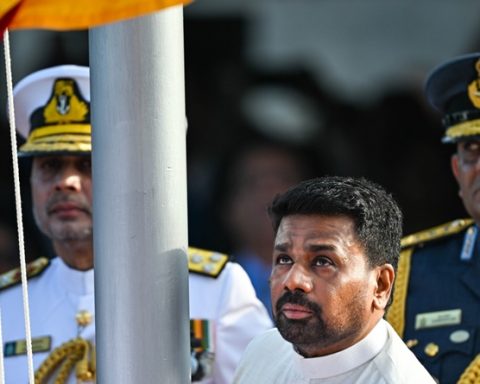
After the presidential elections conducted yesterday and the swearing-in of the ninth executive president of Sri Lanka, the island nation stands at a crossroads. Grappling with its historical legacy, the imperative remains clear: to recognise and address the underlying discontents that threaten the fabric of society. The philosophical inquiry into alternative paths serves not only as a reflection on Sri Lanka’s past but as a guide for its future. Understanding that history is a competition of options, where each choice reverberates through time, allows us to appreciate the profound complexity of the human experience. In this light, the journey of Sri Lanka becomes a microcosm of the broader human condition—an exploration of how choices made in the crucible of history shape the very essence of societies, illuminating the path forward amid the shadows of the past.