




Please click here to read the Part One of this interview.
Moving from Europe to the Middle East, Friedman provides a sobering assessment of the region’s challenges, particularly in the aftermath of the October 7th attack by Hamas on Israel. He begins by pointing out Israel’s failure to detect and prevent the attack, which he compares to the intelligence failure during the 1973 Yom Kippur War. “This is the second time in my life that Israel has had a massive intelligence failure,” he notes, highlighting the vulnerability that stems from overconfidence in military strength without understanding the enemy’s intentions.
Israel’s Fatal Flaw
For Friedman, the failure of Israeli intelligence is not just a tactical issue but a deeper problem of misreading the situation. He argues that Israel has often been too focused on military solutions, rather than recognising the potential for diplomacy and negotiation. “Israel has got to…understand that a military problem does not have to be settled militarily,” he asserts. This inability to transform adversaries into allies, as the U.S. did with Japan after World War II, has kept Israel locked in a cycle of conflict.
“The Israelis are not likely to recognise that they had a failure,” Friedman says. He believes that Israel’s current strategy is unsustainable, and that it must change its approach to dealing with its neighbours. The repeated failures in intelligence and the continuous reliance on military solutions have, in his view, created enemies that need not exist. This, he argues, is the central tragedy of Israel’s position in the Middle East.
Friedman acknowledges, however, that groups like Hamas complicate the possibility of peaceful resolutions. “Hamas wouldn’t exist if Israeli intelligence had detected their attack,” he notes, suggesting that much of the current conflict could have been prevented with better foresight. Nonetheless, he remains hopeful that a long-term solution could be found, provided Israel is willing to rethink its approach. “There could be [a solution], but recognising that the Arabs will not give up until the Palestinian problem is settled,” he states, pointing to the importance of addressing the underlying issues that fuel the region’s tensions.
When asked about the rise of nationalism and protectionism, George Friedman offers a nuanced perspective on the ongoing debate surrounding globalisation, free trade, and the inevitable reality of selective protectionism. He challenges the widely held view that protectionism is inherently harmful, suggesting that while it may carry certain negative consequences, it is also an essential tool for national sovereignty and economic survival.
Friedman begins by addressing the common misconception that protectionism is universally detrimental. He argues that the critical factor is not whether protectionism exists, but rather how it is applied and what is being protected. “When you talk about protectionism, it’s not of everything. It’s of something that’s critical to you,” he explains. In this sense, protectionism is less about rejecting free trade entirely and more about ensuring that certain vital industries or products remain secure for a nation’s well-being.
The demonisation of protectionism, according to Friedman, overlooks its practical necessity in many cases. He highlights how countries often come under fire for implementing protective measures, despite those measures being essential for their economic health. “Protectionism has become like the devil. If you have protectionism, then you’re evil and you must be destroyed,” Friedman notes with a hint of irony. This widespread condemnation of protectionist policies, he argues, fails to acknowledge that every nation has specific needs and vulnerabilities that cannot be addressed by a blanket commitment to free trade.
For Friedman, selective protectionism is not only inevitable but also essential. “Each nation is different. Each nation has different needs. It cannot throw its market open to everyone,” he asserts. He emphasises that while free trade is beneficial in many areas, it cannot be applied indiscriminately without harming critical domestic industries. Friedman also points out that protectionist policies do not necessarily need to result in isolation or economic conflict. Countries can reach agreements and find ways to balance protectionism with international cooperation, as long as the policies are applied flexibly.
One of the central issues Friedman raises is the ideological nature of free trade, which he refers to as a “religion of free trade.” This ideology, he argues, often ignores the real-world complexities that nations face. While most global trade is likely to remain free, he cautions against the idea that countries should fully embrace free trade at the expense of their own industries and workers. Using a hypothetical example, he points out that “Sri Lanka can’t put everybody out of a job just for the philosophy of free trade.” This illustrates his belief that countries must strike a balance between participating in global markets and safeguarding their own economic interests.
China’s Biggest Mistake: Threatening Its Own Lifeline
Turning to the rising tensions between the United States and China, Friedman provides an insightful analysis of the economic relationship between these two superpowers and the concept of decoupling. He explains that the U.S.-China relationship has historically been built on mutual economic benefits. The U.S. benefited from low-cost Chinese goods, which helped reduce the cost of living for American consumers, while China enjoyed massive investments from American banks and businesses, fuelling its rapid economic growth. “The relationship economically between the U.S. and China was that the U.S. bought cheap products for its market… At the same time, the U.S. was the major investor in China,” he elaborates.
However, according to Friedman, China made a strategic error by shifting from an economic focus to a military posture, which alienated its biggest customer and investor. “The Chinese made a massive mistake… in turning to a military solution, which the United States does not take well to,” he argues. By threatening its most important trading partner, China essentially undermined the very economic relationship that had been the foundation of its growth. Friedman likens this to a business making the fatal mistake of threatening its own customer, observing that “when you have a business, you have a customer, don’t threaten to shoot him. That’s a very bad idea.”
Friedman goes on to explain that China’s leadership has since recognised the danger of this approach and has made efforts to mend relations with the U.S. He references Xi Jinping’s visit to the United States, noting that while the official meeting with the American president was symbolic, the real action took place behind the scenes. “Xi came to the United States and met with the American president, which was not an important meeting. All the businessmen were available in the other room. That was an important meeting,” he explains. This, Friedman argues, demonstrates China’s understanding that its economic relationship with the U.S. remains vital and that threatening this relationship with military posturing is not in its best interest.
In his analysis of the broader U.S.-China dynamic, Friedman stresses an important lesson about dealing with America: “The world does not understand America. If you want to do business with America, don’t go to the president. He doesn’t have anything to give you. Go to the people who really have it.” By this, Friedman means that while political relationships between the U.S. and other nations are important, the real power in shaping U.S. foreign policy often lies in its economic interests and the private sector. China, realising this, focused its efforts on engaging with American businesses, understanding that the economic ties between the two countries are more influential than political rhetoric.
The question of economic decoupling between the U.S. and China, which has been a hot topic in recent years, is something Friedman approaches with caution. He does not see a full-scale decoupling as feasible, primarily because the economic interdependence between the two nations is too deeply entrenched. However, he acknowledges that tensions between the U.S. and China are likely to persist, particularly as both countries seek to assert their dominance on the global stage. “The Chinese completely understand the importance of their relationship with the United States,” Friedman notes, but this understanding does not eliminate the underlying competition between the two powers.
Ultimately, Friedman’s insights on both protectionism and the U.S.-China relationship highlight the importance of pragmatism in global economic affairs. He challenges the idea that free trade is an absolute good, arguing instead for a more balanced approach that allows nations to protect their critical industries while remaining engaged in the global economy. Similarly, he sees the U.S.-China relationship as one that is based on economic necessity rather than ideological alignment, with both nations needing to navigate their differences carefully to avoid conflict.
In his response to why many Asian countries remain economically challenged today, George Friedman attributes the issue primarily to a misguided sense of urgency and unrealistic expectations. He believes that the pursuit of rapid economic growth, combined with a lack of long-term planning, has hindered development in these nations. “They expect to become rich fast. In other words, they are in a hurry. They don’t take the time,” he explains, suggesting that the impatience for wealth has led to flawed economic strategies that fail to deliver sustainable progress.
Friedman contrasts this with the slow, methodical growth experienced by countries like the United States and China, which took years of effort, discipline, and long-term thinking to build their economies. “It takes time. It takes discipline to get out of poverty,” he asserts, emphasising that the path to prosperity requires careful, measured steps rather than rushing for immediate results. This highlights one of the key problems in the development strategies of many Asian nations: an overreliance on short-term solutions, often driven by a desire to see quick improvements in living standards.
Moreover, Friedman points out that these nations often deflect responsibility for their economic shortcomings by blaming external factors. “They have all sorts of theories of how they do it. And then they blame somebody, usually the United States,” he notes. While historical grievances, such as colonialism, are real and significant, he believes that many countries use these narratives as a way to avoid confronting the deeper, structural issues within their own economic systems. By constantly shifting blame to external powers like former colonisers or global superpowers, these nations may be neglecting the internal reforms and long-term strategies necessary for growth.
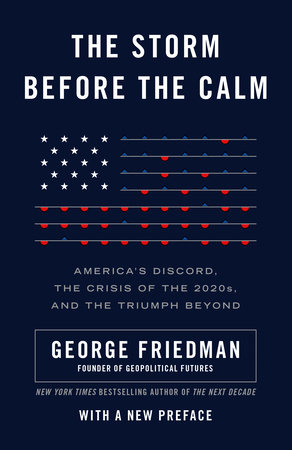
Friedman’s perspective also touches on the importance of patience and realistic expectations from the general population. Citizens, he argues, often demand miracles from their governments, expecting rapid solutions to deeply entrenched problems. This, in turn, puts pressure on political leaders to promise unrealistic outcomes. “They expect miracles. And they don’t understand how long it took the United States or China or any of these other countries,” Friedman says. His point is that economic development is a gradual process that requires citizens to be patient and for governments to manage expectations rather than offering quick fixes that may not be sustainable.
Sri Lanka’s Missed Destiny: A Nation Without Strategy
Turning to Sri Lanka, Friedman offers some pointed advice. He describes the country’s unique history—one of the oldest democracies in Asia, with a colonial legacy and decades of post-independence experience in democratic governance. However, he also highlights the challenges that Sri Lanka faces as a small nation in the region dominated by larger, more powerful neighbours like India. “A small country will develop in the context of larger countries. India is your neighbour. And India, like the United States, is ruthless in how it does business,” he observes. This underscores the need for smaller nations to carefully navigate their relationships with powerful countries, recognising their own limitations while seeking opportunities to thrive in this competitive environment.
Friedman warns against confronting or resisting larger powers like India, advising instead that smaller nations develop strategies to engage with them pragmatically. “If it’s ruthless and you’re weak, think through the strategy that you use. Don’t try to fight them or refuse to do business with them,” he advises. One of the key messages Friedman emphasises for Sri Lanka’s leadership is the importance of transparency and honesty with the public. He argues that governments often try to shield their citizens from the painful realities of economic challenges, which can ultimately lead to greater instability. “Many governments, let’s say Sri Lanka, try to hide the pain that we’re now going to have. And then they get instability in the country,” he notes. His advice is that political leaders must be upfront with their populations about the difficulties they face and the long-term efforts required to overcome them.
Friedman also reflects on the missed opportunities Sri Lanka has had to find its place on the global stage. “Sri Lanka was a country that never found its place as it became a nation,” he says, lamenting the fact that while the country had flexibility, it failed to fully utilise it. This flexibility could have allowed Sri Lanka to explore innovative economic partnerships and strategies, but it lacked the decisive action needed to capitalise on its potential. He gives an example: “Let me make a deal with Mexico. Why not?”
Another key observation Friedman makes is that political leaders often do not approach governance with the mindset of business leaders. “Political leaders tend not to be business leaders. They don’t think in terms of business,” he remarks. This, he believes, is one of the major obstacles to economic development in countries like Sri Lanka, where leadership may not always prioritise the business acumen necessary for economic growth. He highlights the need for governments to better understand how global business operates and to make strategic decisions that foster economic prosperity.
In his final thoughts, Friedman speaks positively about Sri Lanka as a nation. He notes its beauty and the affection that people who have visited the country have for it. “I’ve had friend who went there. It was a beautiful country,” he shares. This serves as a reminder that, despite its challenges, Sri Lanka holds great potential if it can harness its resources, adopt effective strategies, and take a long-term view of its development.
Concluded












Great Interview Nilantha!
Sri Lanka. Needs to do much more than what George has recommended! GOSL needs to make Peace with the Tamils and The Tamil Diaspora! Not with a few jokers like the Himalayan Declarations people who are Carpet Baggers!
That only demonstrates the Government’s lack of understanding and knowledge with the, and diaspora! Also don’t comprehend the Tamil Freedom Fighters 30 year Civil war with 2 governments, with the full support of the Tamil peoples in Sri Lanka and abroad!
Labeling them as Terrorist does not resolve the problem but only exaggerates the problem! Even Nelson Mandela was labeled a Terrorist by the South. African government followed by the Is. British and the European governments!
Eventually what happened? They could not suppress the people!
Same thing is happening with the Tamils in Sri Lanka! The recent Presidential elections proves my point! We witnessed the leading 4 candidates and Common Tamil candidate was lobbying for the Tamil and Muslim Votes in the North and East! All 4 were given the same answers and the SJB was given the approval of support! The next time there will be no UNP or SLPP candidate! Ranil. Rajapakses, Bandaranayakes, will be Non Existent or Non factors! It will be a straight fight.
The revenge factor would not be there anymore! JVP will be blamed for their inability to resolve the economic problems!
In conclusion JVP needs to resolve the Tamil problem, Return Tamil Land occupied by the military, Reduce the size and expenses of the military. Agree to provide accountability to the 150,000 War Dead, 100,00 missing, and share the budget with the minority Tamils and Muslims! Just be Fair and Reasonable with them, since they pay more than their share in their TAXES, and a LION Share of the inward remittances and Tourism revenues!
Best Wishes
Donald Jayantha Gnanakone.